15 Things I Wish I Knew Before My First Trip to China (2026 Edition)

A Canadian traveler I know landed in Beijing with a hotel reservation, a credit card, and Google Maps. By hour three, she was standing outside Beijing Capital Airport, unable to call a taxi, unable to pay for one if it arrived, and unable to look up her hotel because Google Maps thought it was in a different province.
She figured it out. Everyone does. But she lost the first two days of her trip to problems she could have solved in an hour at home.
China is not a difficult country to travel. It is a country that punishes arriving unprepared and rewards doing the homework. The preparation is not complicated. You just have to know what to prepare.
Here are 15 things that will save you days of frustration on your first trip.
1. Your Phone Is Your Wallet, Your Map, Your Translator, and Your Lifeline
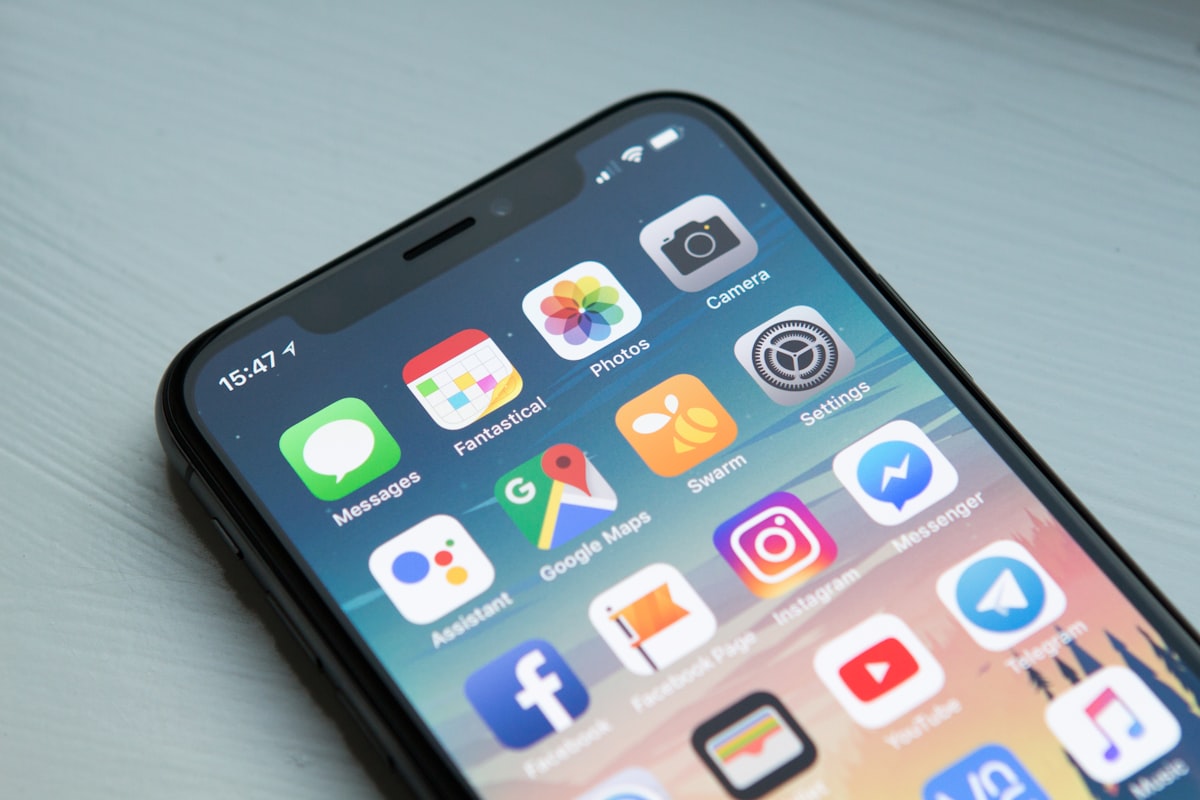
China runs on phones in a way that makes the West look like it’s still using paper. Everything — paying for street food, unlocking a shared bike, ordering in a restaurant, hailing a taxi — happens through a phone screen. Cash exists. Nobody uses it.
This means two things. First: your phone is the most important item you bring. Second: if your phone dies or loses connectivity, you are functionally stranded in a way that doesn’t happen in most countries.
Carry a power bank. Not a small one — a 20,000 mAh brick. Your phone will burn battery faster than usual because translation apps, map apps, and Alipay are all running constantly.
2. Install a VPN Before You Leave Home. Test It. Then Test It Again.
Google, Gmail, Google Maps, WhatsApp, Instagram, Facebook, YouTube, Twitter, and most Western news sites are blocked in China. This is not a secret. What surprises people is how thoroughly they are blocked — you cannot just “try a different browser” or “connect to hotel WiFi and it works.”
A VPN (virtual private network) routes your traffic through a server outside China, making blocked services accessible. Free VPNs almost always fail. They work for a few hours, then stop. Buy a reputable paid VPN, install it, test it, and make sure your subscription is active before you board the plane.
An alternative: eSIMs from providers like Airalo or Holafly often route data through Hong Kong or Singapore, which means your data bypasses the firewall even without a VPN. This only works for data, not calls or SMS. It’s a good backup even if you have a VPN.
Do not count on downloading a VPN after you arrive. The app stores that carry VPN apps are themselves blocked or inaccessible without one.
3. Your Credit Card Is Almost Useless on the Ground
Outside of international hotel chains and high-end restaurants, almost nobody accepts foreign credit cards directly. Visa and Mastercard logos on a storefront mean nothing in China. The country skipped credit cards entirely and went straight from cash to mobile payments.
The solution is Alipay (支付宝). Install it before departure. Link your foreign Visa or Mastercard during setup. Verify your identity using your passport photo. Do a test payment — send ¥1 to a friend if you can, or find a Chinese website that accepts Alipay — before you leave home.
Alipay’s international version supports English and works for most daily transactions: street food, supermarkets, Didi rides, metro cards, attraction tickets. WeChat Pay is the alternative. Most travelers set up both as backup.
Keep ¥300-500 in cash as a fallback. Your phone will die at some point, or Alipay will throw an error, and a red ¥100 note still solves every problem in China.
4. Google Maps Does Not Work. At All.
Google Maps shows China with significant GPS offset — your blue dot jumps across streets and rivers. Transit directions are missing or wrong. Business listings are years out of date.
Apple Maps works reasonably well in China, including transit directions, because it uses local map data. If you have an iPhone, use Apple Maps.
If you have an Android phone, download Amap (高德地图) before departure. The interface is in Chinese, but the English voice guidance is functional. Alternatively, Baidu Maps has a basic English mode.
Download offline maps of your destination cities before arrival. Hotel WiFi is a thing, but you don’t want your first interaction with China to be “I can’t load a map at the airport.”
5. Your Hotel Might Not Accept Foreign Guests
Not every hotel in China is licensed to accept foreign passports. Small guesthouses, budget hotels in rural areas, and even some mid-range chains lack the required registration permit. If you book on Booking.com or Agoda, the listing may not check this for you.
Trip.com (formerly Ctrip) clearly labels which properties accept “foreign guests” or “港澳台/外宾.” Use Trip.com for your first booking. Confirm with the hotel directly if you’re heading somewhere rural.
Always carry your passport. Hotels scan it at check-in. Train stations check it. Major attractions require it for ticket purchase. Police can ask for it. A photo on your phone is better than nothing but not always accepted.
6. You Can’t Drink the Tap Water. You Also Can’t Find Toilet Paper.
Tap water is not safe to drink anywhere in China. Boiled water (开水, kāishuǐ) is the local standard — every hotel room has an electric kettle, and every restaurant serves hot water or tea by default. Bottled water costs ¥2-3 for a 550ml bottle at any convenience store.
The bathroom situation genuinely surprises first-timers. Most public restrooms do not provide toilet paper or soap. Carry pocket tissues and hand sanitizer. Always. You will need them at train stations, tourist sites, parks, and some restaurants.
Western-style toilets exist in international hotels, major airports, and shopping malls. Squat toilets are the default everywhere else. If you’re not familiar with them, practice your balance.
7. The Language Barrier Is Real, and Translation Apps Only Kind of Help
Outside of international hotels, airport information counters, and a handful of expat-oriented businesses, almost nobody speaks conversational English. This includes taxi drivers, restaurant staff, convenience store clerks, and metro ticket machines.
Translation apps (Google Translate, Microsoft Translator, Pleco) work for basic needs: reading a menu, translating a sign, conveying “where is the bathroom.” Download the offline Chinese language pack before departure so they work without data.
But the apps are blunt instruments. They cannot handle the nuance of a taxi driver asking which specific hotel entrance you want. They will not translate the cultural expectation that a restaurant server is not being rude, they are just direct.
Learn three phrases: Nǐ hǎo (你好, hello), Xièxiè (谢谢, thank you), and Zhège (这个, “this one” — point at a menu item and say it). A smile and Zhège will feed you for a month.
8. Screenshots Save Trips
Before you leave WiFi in the morning, screenshot:
- Your hotel name and address in Chinese characters
- The nearest metro station exit
- The Chinese name of the attraction you’re heading to
- The Chinese name of the dish you want to eat for dinner
These screenshots function as flashcards. Show them to taxi drivers, metro staff, restaurant servers, and anyone you need help from. They eliminate the need to pronounce anything correctly or type characters into a translation app while standing in the rain.
Set your hotel address as your phone’s lock screen wallpaper. If your phone dies and you charge it just enough to turn on, the address is there before you unlock anything.
9. Book Major Attractions Before You Arrive
The Forbidden City caps daily visitors at 80,000 and regularly sells out a week ahead. Tickets release 7 days before the visit date on the official website and WeChat mini-program. They disappear within minutes during peak seasons.
Zhangjiajie National Forest Park, Tianmen Mountain, and the Mogao Caves in Dunhuang all use timed entry systems that sell out. The Potala Palace in Lhasa requires a reservation ticket (free) before you can buy the actual entry ticket (¥200).
For international travelers, Trip.com sells advance tickets for most major attractions with a small service fee. It’s worth it. Showing up at the Forbidden City ticket window on the day and expecting to walk in is the single most common China travel mistake.
10. Pick the Right Great Wall Section
Badaling (八达岭) is the most famous, most restored, and most accessible Great Wall section — 70 kilometers from Beijing, connected by highway and high-speed train. On any given day, it’s packed. During holidays, it’s a human wall, not a Great one.
Mutianyu (慕田峪) is 70 kilometers north of Beijing, beautifully restored, with a cable car up and a toboggan slide down. Fewer crowds, better experience, same Great Wall.
Jinshanling (金山岭) is 130 kilometers from Beijing, partially restored, partially wild. Dramatic ridgeline views, almost no crowds, no toboggan slide. The best photography section.
Huanghuacheng (黄花城) is 60 kilometers north, wild and unrestored, sections submerged in a reservoir. No facilities. No crowds at all. You need a private driver.
For a first visit: Mutianyu. Book a private car or join a small group tour. Get there when it opens at 8:00 AM. You’ll have the wall almost to yourself for the first hour.
11. China Is Bigger Than Your Brain Thinks
The distance from Beijing to Shanghai is roughly equivalent to New York to Chicago. Beijing to Chengdu is like New York to Denver. Beijing to Urumqi is like New York to Los Angeles, except there’s a desert in between.
Chinese high-speed trains run at 350 km/h (215 mph) and make domestic flights obsolete for many routes. The Beijing-Shanghai train takes 4.5 hours city center to city center versus a 2-hour flight plus 2 hours of airport transfers. The train is more comfortable, more reliable, and the view is better.
But do not plan a trip that tries to cover Beijing, Xi’an, Chengdu, Guilin, and Shanghai in 10 days. You will spend half your trip in transit. Pick two or three regions and actually experience them. China rewards depth. It punishes checklist tourism.
12. Check the Chinese Holiday Calendar Before Booking Flights
The single most expensive China travel mistake is booking a trip that overlaps with Chinese New Year (Spring Festival, usually late January to mid-February) or Golden Week (October 1-7) without knowing it.
During these periods, 1.4 billion people are simultaneously traveling. Train tickets sell out within minutes. Hotels triple in price. The Forbidden City, the Great Wall, and every domestic tourist attraction hit maximum capacity. The country essentially shuts down for family time during Spring Festival, and goes sightseeing en masse during Golden Week.
A complete holiday survival guide exists elsewhere on this site. The short version: check the dates before you book flights, avoid these two periods unless you are specifically seeking the cultural experience, and if your trip must overlap with a holiday, stay in one city and book months in advance.
13. Tipping Does Not Exist in Chinese Culture
Do not tip. Not at restaurants, not in taxis, not for hotel staff, not for tour guides (unless it’s an international tour operator that explicitly includes gratuities). Tipping can confuse or offend.
The one exception: high-end international hotels where foreign business travelers have created a tipping culture among bell staff. Even there, it’s unnecessary.
The price on the menu is the price you pay. No tax added. No service charge (except at high-end restaurants, where it’s included and listed on the bill). This is one of the genuinely nice things about traveling in China.
14. Public Transit Is Excellent and Dirt Cheap
Chinese metro systems are clean, safe, modern, and astonishingly cheap. A ride on the Beijing or Shanghai metro costs ¥3-8 ($0.40-1.10). Trains arrive every 2-3 minutes. Stations are air-conditioned. Every entrance has an X-ray scanner for bags, which takes 10 seconds and keeps the system weapon-free.
High-speed trains are the best way to move between cities for anything under 1,000 kilometers. Book on Trip.com. Your passport is your ticket — the gate scans the photo page. Arrive at the station 45-60 minutes before departure to clear security and find your gate.
City transit tip: Alipay has a built-in transit card function. Scan a QR code to enter the metro in most cities. No need to figure out the ticket machine.
15. The China You’ll Find Is Not the China You’ve Heard About
This is the thing that hits every first-timer hardest, and it’s not a logistical issue. It’s a perception issue.
Western media coverage of China emphasizes geopolitics, censorship, surveillance, and human rights. Those things exist and they matter. But the China you encounter as a traveler is mostly: modern infrastructure, safe streets, friendly curiosity toward foreigners, incredible food, and a civilization that has been doing organized society for 4,000 years and has gotten very good at some parts of it.
The surveillance cameras that sound dystopian in news articles feel unremarkable in person — they’re on every street corner, and you stop noticing after a day. The internet restrictions that sound frustrating from abroad are real, and the VPN + eSIM combination solves them reliably. The language barrier is steep, and the screenshot method bridges it.
Chinese people are overwhelmingly helpful to lost-looking foreigners. A restaurant owner will walk you to the right bus stop. A metro worker will gesture directions until you understand. A stranger will use their own phone to translate a question for you. This is not universal. But it is common enough that most travelers come home with stories of unexpected kindness.
The Pre-Flight Checklist
| Task | When |
|---|---|
| Install and test VPN (or buy eSIM) | Week before departure |
| Set up Alipay, link Visa/Mastercard, verify identity | Week before departure |
| Download translation app + offline Chinese pack | Before departure |
| Download Amap (Android) or confirm Apple Maps works | Before departure |
| Screenshot hotel name/address in Chinese | Before departure |
| Book major attraction tickets (Forbidden City, etc.) | 1-2 weeks before |
| Book intercity train tickets | 1-2 weeks before |
| Buy travel insurance | At booking |
| Pack power bank, tissues, hand sanitizer | Night before |
| Print hotel reservation + flight itinerary | Night before (backup if phone fails) |
You will get things wrong. You will order something unrecognizable from a menu. You will board the wrong subway train. You will have a conversation entirely in gestures. These are not failures. They are the trip.
The difference between a frustrating first day and a smooth arrival is about two hours of phone setup at home. Do the prep. Then get on the plane. China is waiting, and it is weirder and better and more interesting than you expect.