Datong & Pingyao Guide: Shanxi's Ancient Cities Without the Crowds (2026)
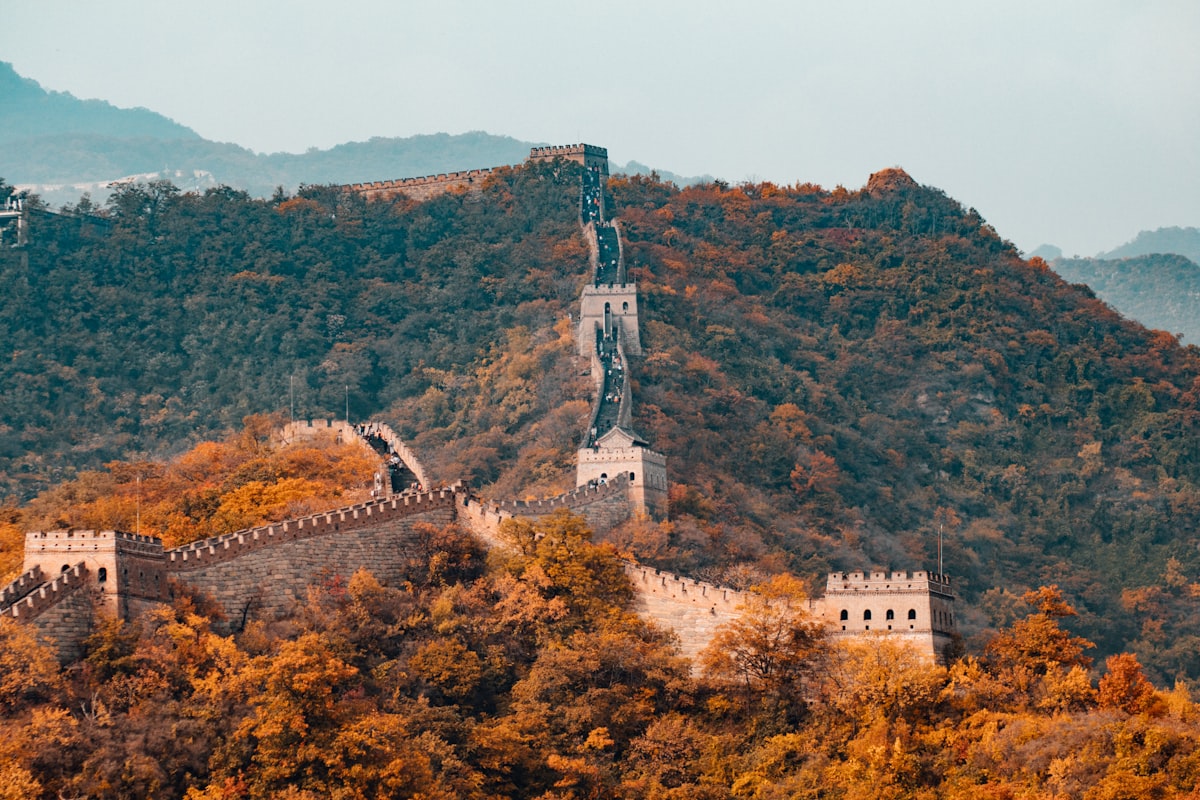
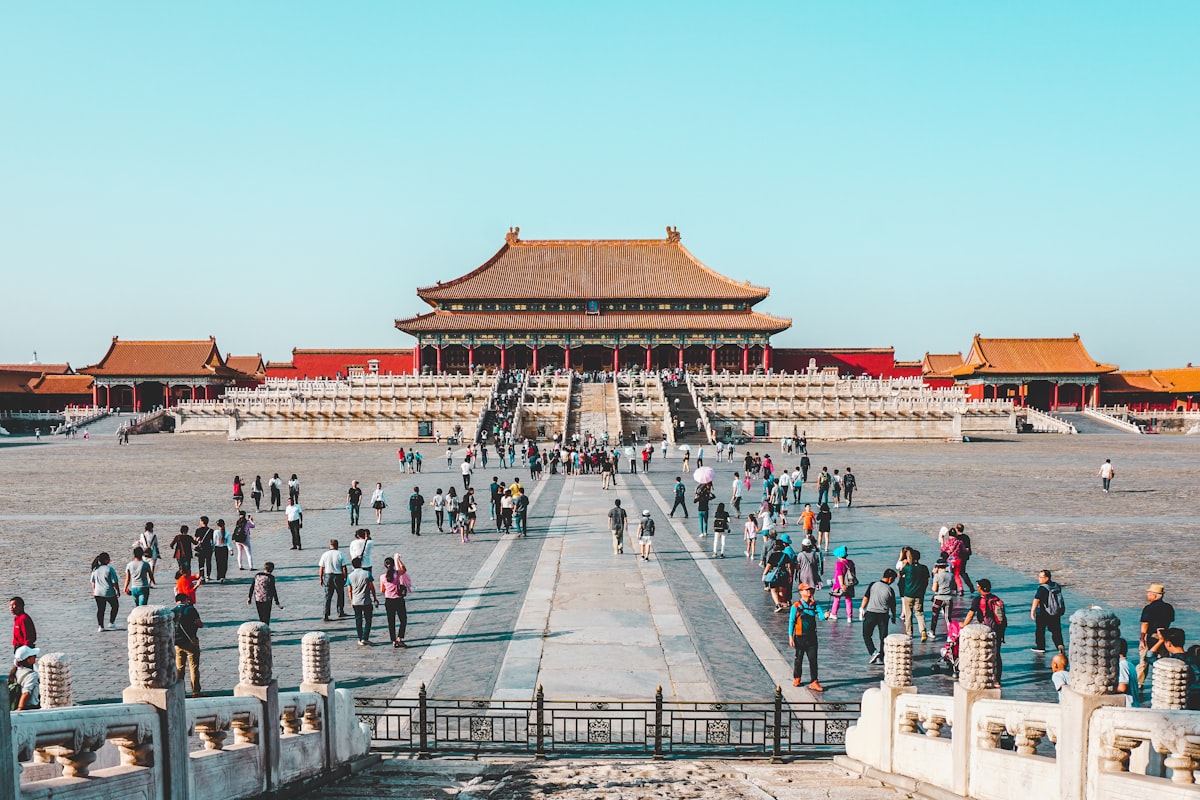
Most travelers to China land in Beijing, spend three days ticking off the Great Wall and Forbidden City, then fly to Shanghai. Nothing wrong with that. But if you want to see something that feels less like a postcard and more like the China that existed before tour buses and selfie sticks took over, point yourself toward Shanxi province.
Shanxi sits right next to Beijing — close enough that you can get there in two hours, far enough that the international tourism infrastructure hasn’t caught up. That last part is a feature, not a bug. In Datong, you will stand inside 1,500-year-old Buddhist caves with maybe 20 other people. In Pingyao, you will walk the only intact Ming dynasty city walls in China and eat knife-cut noodles for ¥12 while lanterns flicker on above you.
This guide covers both cities, how to connect them, and exactly what is worth your time.
Why Datong and Pingyao instead of Beijing or Shanghai?
Beijing is the obvious first stop. The Forbidden City, the Great Wall, the duck. It is also crowded, expensive, and curated to within an inch of its life. By your third day, you have seen a lot of China’s greatest hits and also a lot of other tourists’ selfie arms.
Shanxi gives you something different:
| Beijing/Shanghai | Datong & Pingyao | |
|---|---|---|
| Crowds | Heavy, year-round | Light except Chinese holidays |
| Cost | ¥600-1,500/day mid-range | ¥300-600/day mid-range |
| UNESCO sites | 7 (Beijing) | 3 between two cities |
| English signage | Good | Spotty — bring a translation app |
| Authenticity | Curated for tourism | Still a working province |
| Photo ops | You and 200 others | Often just you |
Datong and Pingyao each hold UNESCO World Heritage status, but neither has been polished into a theme park version of itself. Pingyao’s old city still has 30,000 residents living inside the walls. Datong’s knife-cut noodle shops are where construction workers eat lunch, not where tour groups stop for a “cultural experience.”
If you have already done Beijing and Xi’an, Shanxi is the logical next step. If this is your first China trip and you want one stop that is not a megacity, tack Datong onto the Beijing leg and thank yourself later.
Datong: Caves, Cliffs, and Knife-Cut Noodles
Datong is an industrial city of 3 million people that happens to sit next to some of the most important Buddhist art on the planet. The city itself is nothing special: wide boulevards, Soviet-style apartment blocks, coal dust on the windier days. But 16 km west of town is the Yungang Grottoes, and 50 km south is the Hanging Temple. Those two sites justify the entire trip. Everything else is a bonus.
Yungang Grottoes: 51,000 Buddhas in a Cliff Face
Carved between 460 and 525 AD, the Yungang Grottoes contain 45 major caves and over 51,000 Buddhist statues. The largest Buddha is 17 meters tall. The smallest are the size of your thumb. The site stretches for about one kilometer along a sandstone cliff, and walking it takes 2–3 hours at a reasonable pace.
The caves fall into three phases. The early ones (Caves 16–20, the “Five Caves of Tan Yao”) have the colossal Buddhas, each linked to a Northern Wei emperor, which was a shrewd political move by the monk who commissioned them. The middle-period caves are more elaborate, with painted ceilings and narrative carvings showing scenes from Buddhist texts. The later caves get smaller and more repetitive as imperial funding dried up.
Cave 20 is the one you have seen in photographs: the giant seated Buddha with the collapsed front wall, open to the sky. It is the first thing you reach when you enter, and it sets the bar impossibly high for everything that follows. Caves 5 and 6 are the other standouts: Cave 5 has the tallest Buddha, Cave 6 has the most intricate carvings, including a pagoda pillar covered in scenes from the Buddha’s life.
A few things the brochures do not tell you: many caves are dimly lit and the sandstone has eroded in places, so some carvings are hard to make out. The site gets direct afternoon sun with zero shade. Bring water, wear a hat, and do not plan anything physically ambitious afterward. You will be tired.
Practical details:
| Item | Detail |
|---|---|
| Hours | 8:30–17:00 (last entry 16:30) |
| Peak season (Apr–Oct) | ¥120 |
| Off-peak (Nov–Mar) | ¥100 |
| Getting there | Bus from Datong South Station, ¥10, every 20 min, ~40 min ride |
| Time needed | 2–3 hours minimum, 4 if you are thorough |
| Audio guide | ¥20, worth it — signage is limited |
Go in the morning. The light on the cliff face is better, the tour groups have not arrived yet, and you can actually hear yourself think inside the caves.
Hanging Temple (Xuankong Temple)
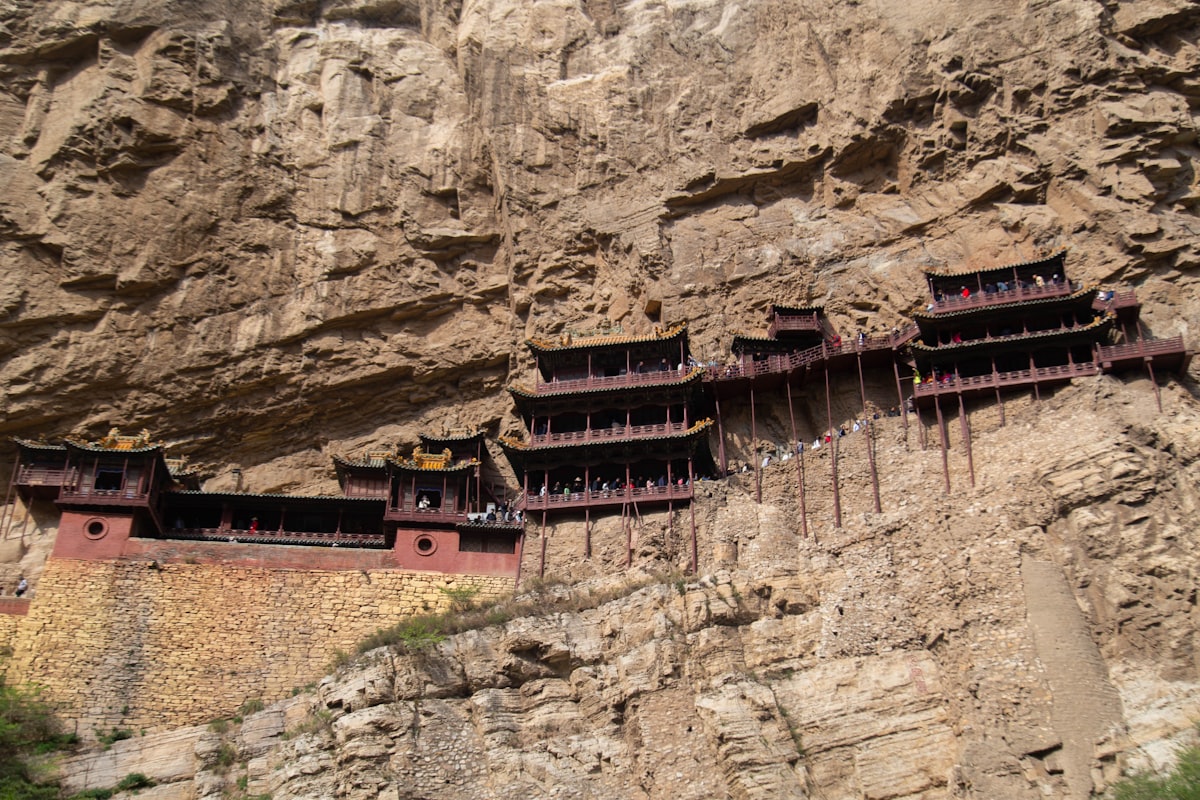
About 65 km southeast of Datong, the Hanging Temple is exactly what it sounds like: a temple complex pinned to a vertical cliff face, 75 meters above the canyon floor. It has been there for 1,500 years and somehow has not fallen down, which is either impressive engineering or stubborn luck, depending on who you ask.
The temple was built by a single monk named Liaoran, who started construction in 491 AD. Over the centuries, more halls were added, and the temple became a rare example of a site that houses Buddhist, Taoist, and Confucian elements together under one (very precarious) roof. The halls are connected by narrow wooden walkways and steep staircases that creak underfoot. If you are afraid of heights, the climbing section will test you. The railings are low, the planks are old, and the crowds push from behind.
Entry to the temple area is ¥15, but the climbing ticket (the one that lets you actually walk through the halls) is ¥100. Buy the climbing ticket. The view from below is fine. Being inside, looking down through gaps in the wooden floorboards at the canyon 75 meters below, is the whole point.
Critical: Book climbing tickets at least three days ahead. The temple limits capacity, and walk-up tickets sell out by mid-morning during peak season. Book through Trip.com or the official mini-program on WeChat.
Getting there from Datong: take the direct tourist bus (¥39, runs from Datong’s main bus station, about 90 minutes each way). A taxi for the day costs ¥400–500 round-trip with waiting time. The bus is fine if you do not mind the schedule. A taxi gives you flexibility to also hit Yingxian Wooden Pagoda on the same loop.
Yingxian Wooden Pagoda: Worth the Detour?
At 67 meters, the Yingxian Wooden Pagoda is the oldest all-wood pagoda in the world, built in 1056 AD without a single nail. That is genuinely impressive. Whether it justifies going 50 km further south from the Hanging Temple depends on your tolerance for long days.
If you are traveling by taxi from Datong, you can do Hanging Temple + Wooden Pagoda in one long day: leave at 7:30 AM, arrive at the temple by 9:00, spend two hours there, drive 40 minutes to Yingxian, spend an hour, and be back in Datong by 3:00 PM. The pagoda entry is ¥50. You cannot climb it (the structure is too fragile), so you are looking at it from the outside. The ground floor is open and has a massive Buddha statue.
If you have three days in Datong, go. If you have two, skip it and spend the extra afternoon eating noodles in the old city instead.
Datong Ancient City
The city walls and gates are a 21st-century reconstruction, not original Ming dynasty stonework. The project was controversial and cost a fortune. The result is a clean, wide, walkable wall circuit that looks impressive at night when the lights come on. It is free to walk.
Inside the walls, Huayan Temple is the real historical prize. Built during the Liao Dynasty (907–1125 AD), it faces east, toward the rising sun, rather than south, because the Khitan people who built it worshipped the sun. The main hall contains five massive Buddha statues and an entire wall of Ming dynasty sutra cabinets. Entry is ¥50.
The Nine Dragon Screen (Jiulongbi) near the east gate is a glazed tile wall from the Ming dynasty, 45 meters long. It is the oldest and largest of its kind in China, older than the more famous one in Beijing’s Forbidden City. Free to view from the street.
Datong Food
Shanxi is noodle country, and Datong’s version of the regional staple is daoxiao mian — knife-cut noodles. The cook holds a block of dough in one hand and shaves thin strips directly into boiling water with a curved blade. The noodles are thick, chewy, irregularly shaped, and usually served in a mutton or tomato-egg broth for ¥10–15 a bowl. This is not restaurant food as much as it is the thing everyone eats for lunch. Shops are everywhere.
Other things to try:
| Dish | Description | Price |
|---|---|---|
| Daoxiao mian (刀削面) | Knife-cut wheat noodles in broth | ¥10–15 |
| Liangfen (凉粉) | Cold jelly noodles with vinegar and chili | ¥8–12 |
| Youmian (莜面) | Oat noodles, served steamed or stir-fried | ¥15–25 |
| Shanxi aged vinegar | Not a dish, but it is on every table and in everything | Free at the table |
Shanxi vinegar deserves a mention. The province has been making it for 3,000 years. It is darker, smokier, and more complex than the rice vinegar you get in southern China. Locals drink a small cup of it before meals. You do not need to do that. But do put it on your noodles.
Pingyao: China’s Best-Preserved Walled City
If Datong is about Buddhist art and engineering ambition, Pingyao is about stepping into a Ming dynasty city that never got torn down. UNESCO listed it in 1997, and walking through the gates feels like entering a film set, except the 30,000 people living inside are not extras. They are residents who have been here for generations.
The Walls and the Grid
Pingyao’s city walls run for 6.4 km, were built in 1370, and are fully intact. You can walk the entire circuit (takes about two hours) or just do the north and south gate sections for the best views over the gray-tiled rooftops. The walls are 10 meters high and wide enough at the top for three people to walk abreast. At sunset, the rooftops turn gold and the lanterns start coming on along the main streets. It is the kind of scene that would have a professional photographer setting up a tripod every 20 meters. On a Tuesday in November, you might have the view to yourself.
The city is laid out on a strict grid — a rectangle with four main gates and 72 watchtowers, said to represent the 72 disciples of Confucius. The central axis is South Street (Ming-Qing Street), the commercial spine where most of the souvenir shops, restaurants, and evening crowds cluster. The side alleys are where you find quieter guesthouses, neighborhood dumpling shops, and actual residential life.
Rishengchang: The Bank That Changed China
In 1823, a Pingyao merchant named Lei Lutai founded Rishengchang, China’s first draft bank. Before Rishengchang, merchants had to transport silver physically between cities: slow, heavy, and an open invitation to bandits. Rishengchang invented a system of promissory notes (basically paper checks) that let merchants deposit silver in one city and withdraw it in another. It was revolutionary, and within decades Pingyao became the financial center of Qing dynasty China, with over 20 banks operating inside its walls.
The Rishengchang museum occupies the original bank building, a modest courtyard compound that does not look like the birthplace of modern Chinese finance. The exhibits include original ledgers, promissory notes, and the underground silver vault. Entry is included in the Pingyao Ancient City pass. Give it 45 minutes. It is more interesting than it sounds, especially the security measures: the bank’s codes and anti-counterfeiting techniques were elaborate enough to stump forgers for decades.
County Government Office (Yamen)
The Pingyao county yamen is the best-preserved feudal government complex in China. It functioned as the local courthouse, tax office, and prison for over 600 years. The main hall has the original magistrate’s bench, and the rear sections show the living quarters where the magistrate and his family resided. The prison cells in the back are cramped stone chambers with ankle chains still attached to the walls. It is worth an hour.
See You Again Pingyao (又见平遥)
This is an immersive theater performance with no stage and no seats. You walk through a series of set pieces as the story unfolds around you, following actors through courtyards, streets, and interiors built inside a dedicated performance complex near the west gate. The plot follows a Pingyao merchant family in the late Qing dynasty and involves a body escort (a real historical profession) returning a fallen merchant’s body home.
Tickets cost ¥238. It is produced by Wang Chaoge, who co-directed the 2008 Beijing Olympics opening ceremony, and the production values are serious. The show runs in Mandarin with no English translation, so you will miss the dialogue. The visual storytelling and physical immersion still carry it.
Book at least a day ahead. Evening shows sell out. The performance complex is a 10-minute walk from the west gate.
Pingyao Food
Pingyao beef is the local specialty — braised with soy sauce, star anise, cassia bark, and other spices, served cold in thin slices. It is salty, slightly sweet, and has a firmer texture than Western braised beef. Every restaurant sells it. Quality varies; the ones closer to South Street charge more and are not necessarily better. Walk two blocks east or west and the prices drop by 30%.
| Dish | Description | Price |
|---|---|---|
| Pingyao niurou (平遥牛肉) | Cold spiced braised beef | ¥25–45/plate |
| Wantuo (碗托) | Steamed wheat starch noodles with sesame-vinegar dressing | ¥10–18 |
| Youmian kaolaolao (莜面栲栳栳) | Oat noodle tubes in a bamboo steamer, dipped in sauce | ¥15–25 |
| Shanxi noodles | Various — knife-cut, hand-pulled, cat’s ear | ¥10–20 |
Wantuo is the dish that surprises people. It looks like a white pancake but is cut into strips and tossed with sesame paste, vinegar, chili oil, and garlic. It is cold, refreshing, and costs about ¥12. A perfect lunch when the afternoon heat kicks in.
The Combined Itinerary: 5 Days in Shanxi
Here is how to connect Datong and Pingyao into a single trip that does not feel rushed.
| Day | Morning | Afternoon | Evening | Sleep In |
|---|---|---|---|---|
| 1 | Arrive Datong (HSR from Beijing, 2 hrs) | Yungang Grottoes (2–3 hrs) | Datong Ancient City walls, Huayan Temple | Datong |
| 2 | Hanging Temple (bus/taxi, arrive by 9:00 AM) | Yingxian Wooden Pagoda (optional) | Daoxiao mian dinner, city wall night walk | Datong |
| 3 | Morning train to Pingyao via Taiyuan (~3.5 hrs total) | Check in, orientation walk | Ming-Qing Street at night, find dinner | Pingyao |
| 4 | City wall walk (north to south), Rishengchang, Yamen | Side alley exploration, Pingyao beef lunch | See You Again Pingyao (evening show) | Pingyao |
| 5 | Morning free for last exploration | Depart Pingyao (train to Xi’an, Beijing, or Taiyuan airport) | — | — |
If you only have 4 days, cut Day 2’s Yingxian Pagoda and do Hanging Temple as a half-day, then take an evening train to Pingyao. You lose one Pingyao evening but keep both cities.
If you have a week, add a day trip to the Wang Family Compound (Wangjia Dayuan) 35 km from Pingyao — a sprawling Qing dynasty merchant mansion with 123 courtyards and 1,118 rooms. It is less crowded than the more famous Qiao Family Compound and architecturally more interesting. Entry is ¥66.
Transportation: Getting There and Getting Around
Getting to Datong
| From | Method | Duration | Cost |
|---|---|---|---|
| Beijing | High-speed rail from Beijing North or Beijing Qinghe | 2 hours | ¥150–200 |
| Xi’an | High-speed rail | 3 hours | ¥220–280 |
| Taiyuan | High-speed rail | 1.5 hours | ¥80–100 |
Datong South Station is the HSR hub, about 10 km south of the city center. Taxi to downtown takes 20 minutes and costs ¥25–30. Didi is cheaper.
Datong to Pingyao
The direct route: take a high-speed train from Datong South to Taiyuan South (1.5 hours), then transfer to another high-speed train to Pingyao Ancient City Station (30–40 minutes). The layover in Taiyuan is usually 30–60 minutes. Total travel time is about 3.5 hours door to door.
There is no direct train. You must change at Taiyuan. This is annoying but not complicated — Taiyuan South Station is modern, well-signed, and the transfer is straightforward.
Pingyao Ancient City Station is about 8 km from the old city. A taxi takes 15 minutes and costs ¥15–20. The station also has a bus (¥3) but it is slower and stops frequently.
Getting Out
| Destination | From | Duration | Cost |
|---|---|---|---|
| Xi’an | Pingyao Ancient City Station | 1.5 hours | ¥140–160 |
| Beijing | Pingyao Ancient City Station | 3 hours | ¥220–260 |
| Taiyuan (fly out) | Pingyao Ancient City Station | 30 min | ¥40 |
Taiyuan Wusu Airport is the nearest airport with decent domestic coverage. For international flights, return to Beijing.
Best Seasons to Visit
Shanxi has a continental climate. Winters are harsh. Summers are hot but manageable. Spring and autumn are ideal.
| Season | Months | Temp Range | Verdict |
|---|---|---|---|
| Spring | Apr–May | 8–25°C (46–77°F) | Best overall. Pleasant days, fewer tourists, everything is open. |
| Summer | Jun–Aug | 20–35°C (68–95°F) | Hot but doable. Pingyao’s stone streets radiate heat. Start early, rest midday. |
| Autumn | Sep–Oct | 8–22°C (46–72°F) | Excellent. Clear skies, golden light on the grottoes, perfect wall-walking weather. Avoid Oct 1–7 (Golden Week). |
| Winter | Nov–Mar | -15–5°C (5–41°F) | Brutally cold. The Hanging Temple canyon becomes a wind tunnel. Pingyao gets snow and looks beautiful but is freezing. Hotels are cheap. Yungang Grottoes are empty. |
Spring day/night temperature swings are extreme in Datong — 20°C (68°F) during the day can drop to 2°C (35°F) at night. Pack layers.
Do not visit during Chinese New Year (late January/February) unless you enjoy fighting crowds for everything. Do not visit during Golden Week (October 1–7). Both periods are domestic tourism chaos.
Accommodation
Datong
| Area | Vibe | Price/Night | Best For |
|---|---|---|---|
| Near the ancient city walls | Walkable to Huayan Temple and Nine Dragon Screen, evening atmosphere | ¥200–500 ($28–70) | First-timers who want to explore on foot |
| Near Datong South Station | Chain hotels, convenient for early trains | ¥150–300 ($21–42) | Short stays, early departures |
| City center (Pingcheng district) | Most food options, local atmosphere | ¥180–400 ($25–56) | Food-focused travelers |
The area just outside the south gate of the ancient city has the best balance of price, location, and food access.
Pingyao
Inside the walls is where you want to be. The guesthouses are converted courtyard homes (siheyuan) with traditional architecture: wooden lattice windows, stone courtyards, kang beds (heated brick platforms in winter). Staying inside the walls is why you came to Pingyao.
| Location | Vibe | Price/Night |
|---|---|---|
| Inside walls, near South Street | Central, atmospheric, can be noisy at night | ¥200–600 ($28–84) |
| Inside walls, side alleys | Quieter, more authentic, shorter walk to everything than it looks on a map | ¥150–400 ($21–56) |
| Outside walls | Modern hotels, cheaper, you miss the point of being in Pingyao | ¥100–250 ($14–35) |
Book a courtyard guesthouse on a side alley, 2–3 blocks from South Street. You get the atmosphere without the noise. The city is small enough that nothing is more than a 15-minute walk from anything else.
Tickets and Costs
| Item | Price (RMB) | Price (USD) | Notes |
|---|---|---|---|
| Yungang Grottoes (peak) | ¥120 | $17 | Apr–Oct |
| Yungang Grottoes (off-peak) | ¥100 | $14 | Nov–Mar |
| Hanging Temple entry | ¥15 | $2 | Ground area only |
| Hanging Temple climbing | ¥100 | $14 | The part you actually want — book 3+ days ahead |
| Yingxian Wooden Pagoda | ¥50 | $7 | Exterior viewing only |
| Huayan Temple | ¥50 | $7 | |
| Pingyao Ancient City pass | ¥125 | $18 | Covers 22 sites, valid 3 days |
| See You Again Pingyao | ¥238 | $33 | Evening show |
| Wang Family Compound | ¥66 | $9 | Optional day trip |
Total Budget Estimate (5 days, per person, mid-range)
| Category | Cost |
|---|---|
| Transport (Beijing–Datong–Pingyao–Beijing) | ¥500–700 ($70–98) |
| Accommodation (4 nights) | ¥600–1,200 ($84–168) |
| Entry tickets | ¥400–500 ($56–70) |
| Food | ¥400–600 ($56–84) |
| Local transport (taxis, buses) | ¥200–300 ($28–42) |
| Total | ¥2,100–3,300 ($294–462) |
You can do it for less by staying in hostels, eating street noodles every meal, and skipping the theater show. You can spend more by hiring private drivers and staying in the nicest courtyard guesthouses. The numbers above represent a comfortable mid-range trip — private rooms, mix of street food and restaurant meals, public transport with occasional taxis.
Digital Tips for Shanxi
Shanxi is not Beijing. English is less common, international credit cards are less accepted, and you will rely on Chinese apps more than you do in the big cities.
Alipay and WeChat Pay work everywhere — noodle shops, ticket counters, street vendors. Set these up before you arrive. Our China mobile payment guide walks through the setup.
Amap (Gaode Maps) gives accurate walking directions inside Pingyao’s alleys and bus routes to the grottoes. Google Maps does not. Download Amap before you go.
A translation app with camera functionality helps enormously with menus. Many small restaurants in Datong and Pingyao have Chinese-only menus with no pictures. Baidu Translate or the translate feature inside WeChat both work.
For the complete app toolkit, read our China Digital Survival Guide.
What to Skip
Not everything in Shanxi deserves your limited time.
The Datong City Walls are a reconstruction and feel like one. Walk a section at sunset for the atmosphere, but do not budget more than 30 minutes. Huayan Temple is the real historical site inside the walls.
The Qiao Family Compound near Pingyao is the one everyone goes to because it was in Zhang Yimou’s film Raise the Red Lantern. It is overrun with tour groups. The Wang Family Compound is larger, more architecturally varied, and half as crowded. Go there instead.
Datong’s Nine Dragon Screen is worth a 10-minute stop if you are walking past it. It is not worth a special trip.
How to Fit Shanxi Into a Larger China Trip
Shanxi plugs naturally into the standard Beijing–Xi’an corridor:
Beijing (3–4 days) → Datong (2 days) → Pingyao (2 days) → Xi’an (3 days)
This gives you ten days that cover four UNESCO sites, two ancient capitals, and one walled city, all connected by high-speed rail. The train rides between stops are all under 4 hours. For more on train travel, see our China High-Speed Rail Guide.
If you are entering China under the new visa-free policies, check our China visa-free entry guide to confirm your country’s eligibility and the permitted stay duration.
Bottom Line
Datong gives you two sights that justify a trip on their own, the Yungang Grottoes and the Hanging Temple, which most first-time visitors to China have never heard of. Pingyao gives you a Ming dynasty city you can walk across in 20 minutes but will spend two days exploring. Together they form a corridor through Shanxi that costs half what Beijing does and rewards you with the kind of travel experience that big cities stopped offering a decade ago.
Book the Hanging Temple climbing ticket before anything else. Go in spring or autumn. Eat knife-cut noodles until you are tired of them, then eat more. And do not skip the vinegar.
Related guides you will need:
- China High-Speed Rail Guide — booking, seat classes, station navigation
- China Mobile Payment Guide — Alipay and WeChat Pay setup
- China Digital Survival Guide — apps, VPN, SIM cards, maps
- China Visa-Free Entry Guide — current visa-free policies and eligibility
- First-Timer’s Xi’an — the natural next stop on the Beijing–Shanxi–Xi’an corridor