Which Great Wall Section Should You Visit? Badaling vs Mutianyu vs Simatai (2026)
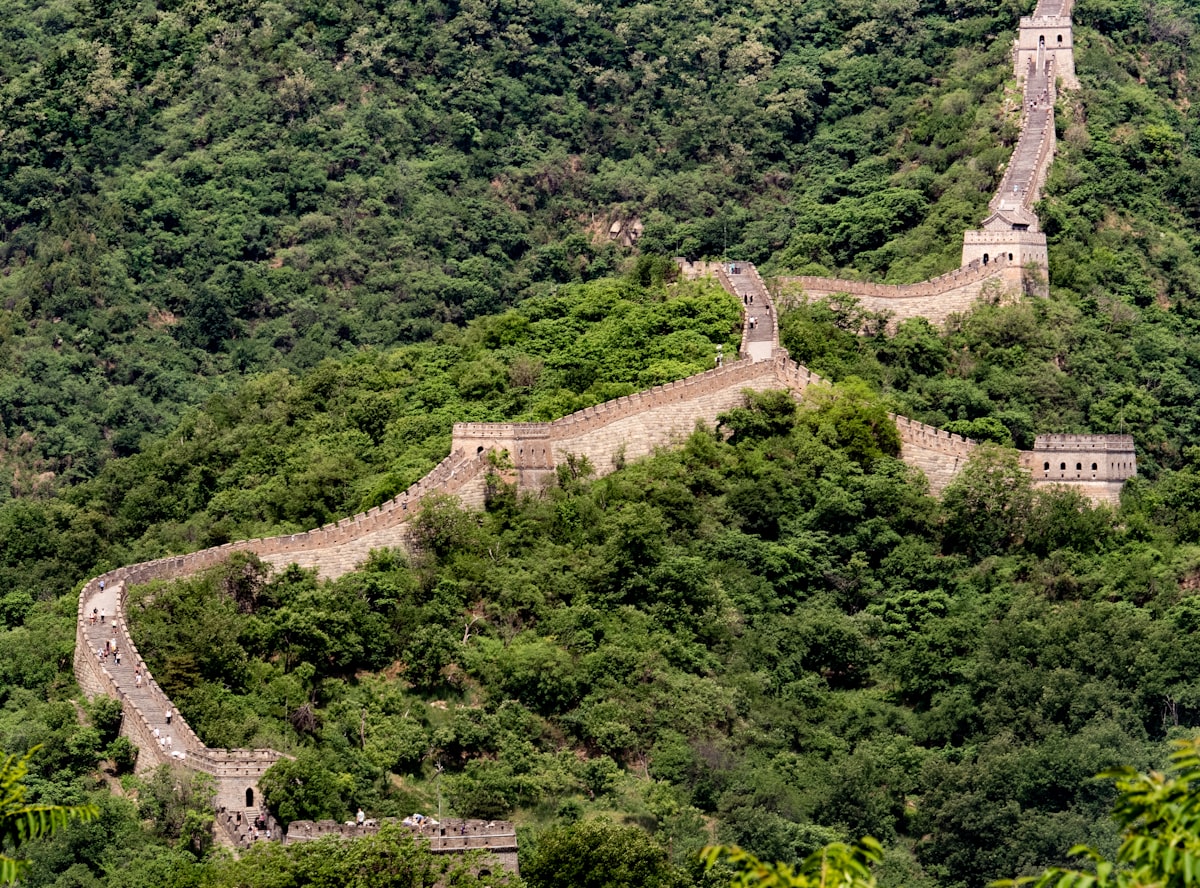
The Great Wall isn’t one wall. It’s 21,000 kilometers across multiple provinces, built over 2,000 years by multiple dynasties. Within reach of Beijing alone, there are at least six major sections open to visitors — and they’re wildly different.
Pick wrong, and you’re shoulder-to-shoulder with tour buses on restored brick, fighting selfie sticks for a view. Pick right, and you’re alone on a wild, crumbling ridge at sunrise, hearing nothing but wind through the watchtowers.
This guide breaks down exactly which section matches your travel style. No vague recommendations — real prices, real travel times, and a clear answer at the end.
The Quick Comparison Table
If you read nothing else, read this:
| Section | Crowds | Condition | Difficulty | Travel Time | Best For |
|---|---|---|---|---|---|
| Badaling | Extreme | Fully restored | Easy | 1-1.5 hrs | First-timers wanting maximum convenience |
| Mutianyu | Moderate | Restored | Easy-Medium | 1.5-2 hrs | Best all-rounder for foreign travelers |
| Jinshanling | Light | Semi-wild | Medium-Hard | 2.5-3 hrs | Hikers, photographers, sunrise chasers |
| Simatai | Light | Semi-wild | Hard | 2.5-3 hrs | Adventure seekers, night wall experience |
| Huanghuacheng | Very light | Wild/unrestored | Medium | 2 hrs | Off-the-beaten-path, lakeside scenery |
Badaling (八达岭) — The Famous One
Badaling is the section your tour guide’s grandmother visits. It’s the most famous, most restored, and most crowded section of the Great Wall by an enormous margin. This was the first section opened to tourists in 1957, and it has been on the receiving end of China’s domestic tourism boom ever since.
What It’s Like
The wall here is wide, smooth, and fully restored. Handrails everywhere. Smooth stone underfoot. It’s the only section with wheelchair-accessible portions and the only one with a proper visitor center, museum, and vast parking infrastructure.
During peak times — weekends, holidays, any nice day between April and October — the wall becomes a solid mass of people. Not an exaggeration. The walkways fill shoulder-to-shoulder, and you’ll move at the pace of the slowest person ahead of you.
The Good
- Easiest to reach. The high-speed train from Beijing North Station or Qinghe Station takes just 20-30 minutes and costs ¥23-36 ($3-5). It drops you at Badaling Great Wall Station, a 10-minute walk from the entrance.
- Cheap public transport. Bus 877 from Deshengmen (under the arrow tower) runs every 10-20 minutes, takes about 1.5 hours, and costs ¥12 ($1.65) — or ¥6 with a transport card. Last return bus leaves at 5:00 PM (peak) or 4:30 PM (off-peak).
- Best facilities. Real bathrooms (by Chinese public toilet standards), snack shops, souvenir stalls, and a proper visitor center with lockers and information.
- Accessible. Cable car available, wider paths, gentler grades on the south route. The only section you can take a wheelchair onto (limited portions).
- Open earliest and closes latest. Peak season hours are 6:30 AM-4:30 PM (last entry). The early opening means you can beat the crowds if you arrive at 6:30 AM sharp.
The Bad
- Crowds. This cannot be overstated. On a Saturday in October, you’ll see more selfie sticks than wall.
- Over-restored. The brickwork in some places looks barely 20 years old. It feels less like an ancient monument and more like a theme park interpretation of one.
- Tour bus central. Every budget Great Wall tour in Beijing comes here. Buses disgorge hundreds of people simultaneously.
- Vendors. Persistent. Everywhere.
Prices
| Item | Peak (Apr-Oct) | Off-Peak (Nov-Mar) |
|---|---|---|
| Entrance (adult) | ¥40 ($5.50) | ¥35 ($4.80) |
| Cable car one-way | ¥100 ($14) | ¥100 ($14) |
| Cable car round-trip | ¥140 ($19) | ¥140 ($19) |
Students get half-price entry. Seniors 60+ and minors under 18 are free but must reserve in advance. Tickets must be booked online 1-7 days ahead — no on-site ticket sales. Use the official WeChat mini-program or an authorized platform like Trip.com.
How to Get There
| Method | From | Time | Cost |
|---|---|---|---|
| High-speed train (best) | Beijing North / Qinghe Station | 20-30 min | ¥16-36 ($2-5) |
| Bus 877 (budget) | Deshengmen Arrow Tower | ~1.5 hrs | ¥12 ($1.65) |
| S2 suburban train | Nankou Station (far from city) | ~45 min | ¥7 ($1) |
The S2 train historically departed from Huangtudian (黄土店) near Huoying subway station, but in late 2025 the departure point moved to Nankou (南口) — deep in the northwestern suburbs, further from central Beijing than the airport. Skip the S2 line. The high-speed train is faster, more frequent, and departs from stations actually in Beijing.
Verdict
Only pick Badaling if mobility is a serious concern, you have literally a single free morning, or you’re traveling with elderly family who need the smoothest path. Otherwise — go further.
Mutianyu (慕田峪) — The One You Should Actually Visit
If you ask me “which Great Wall section should I visit?” and I only get to say one sentence, the sentence is: Mutianyu, on a weekday, arrive by 8:30 AM.
This is the sweet spot. Restored enough to be safe and walkable, but not so restored it feels counterfeit. Roughly one-tenth the crowds of Badaling even on busy days. The forested mountain setting is genuinely beautiful. The watchtowers are photogenic. And the toboggan slide down is not a gimmick — it’s a genuinely fun way to end the hike.
What It’s Like
Mutianyu sits in a valley of chestnut trees and pine forest about 70 km north of Beijing. The wall snakes along a high ridge, with 23 watchtowers spread across roughly 3 km. The masonry is original Ming Dynasty work that has been stabilized and repaired — it looks old and feels old, but you’re not going to twist an ankle on loose stone. The views stretch across forested mountains in every direction. No high-rises. No highways. Just green ridges and the wall disappearing into the distance.
The Good
- Manageable crowds. Even during peak season weekends, you’ll have stretches of wall to yourself — especially if you walk east past Tower 14.
- Beautiful setting. Dense forest, mountain views, and the wall rising dramatically above the tree line.
- The toboggan slide. A 1,580-meter wheeled sled track that snakes down from Tower 6 through the forest. You control your own speed with a brake lever. It takes about 5-7 minutes and is genuinely thrilling. (Not suitable for travelers over 60 or with heart conditions — but for everyone else, it’s the highlight of the trip.)
- Good facilities. Clean bathrooms (relative to other sections), a small food court at the base, proper parking, and English signage.
- Cable car + toboggan combo. You can take the enclosed cable car up to Tower 14, hike east to Tower 6, then toboggan down. Best of both worlds. Important: The enclosed cable car (Tower 14) and the chairlift/toboggan (Tower 6) are operated by different companies — tickets are NOT interchangeable. A Tower 14 cable car ticket won’t work at Tower 6, and vice versa.
- 23 watchtowers. Plenty to explore. Tower 20 is the highest point — a steep climb but worth it for the panoramic view and the satisfaction of reaching the end of the accessible section.
The Bad
- Further than Badaling. Plan 1.5-2 hours each way from central Beijing.
- No direct train. You’re taking a bus or hiring a driver. There is no rail connection.
- Higher total cost. Once you add entry, shuttle, cable car, and transport, you’re looking at ¥250-350 ($34-48) per person all-in. Worth it. But more than Badaling.
- The 400-step climb from the shuttle drop-off to the actual wall if you don’t take the cable car. It’s steep. Budget your energy.
Prices
| Item | Price |
|---|---|
| Entrance (adult) | ¥45 ($6.20) |
| Entrance (student/senior) | ¥25 ($3.45) |
| Shuttle bus (mandatory, round-trip) | ¥15 ($2) |
| Cable car round-trip (Tower 14, enclosed gondola) | ¥140 ($19) |
| Chairlift up + toboggan down combo (Tower 6) | ¥140 ($19) |
| Best-value package (entry + shuttle + cable car RT) | ¥200 ($28) |
Like Badaling, all tickets must be booked online in advance with real-name ID. The toboggan stops operating at 4:00 PM — plan your descent accordingly.
How to Get There
| Method | Details | Time | Cost |
|---|---|---|---|
| Private driver (recommended) | Book through hotel or Trip.com | 1.5 hrs | ¥600-800 ($83-110) round trip (split 3-4 ways = cheap) |
| Bus 916 Express (budget) | Dongzhimen Hub → Huairou Beidajie → local H23/H24 bus or DiDi taxi | 2-3 hrs | ¥12 bus + ¥5 local bus or ¥20 DiDi |
| Organized tour | Trip.com, Viator, Klook | Full day | ¥200-400 ($28-55) including transport + entry |
Bus route step-by-step: Take subway Line 2 to Dongzhimen, exit B/E/F into the bus hub. Board 916 Express (¥12, ~1-1.5 hrs). Get off at Huairou Beidajie. Cross the road and either (a) wait for local bus H23/H24 to Mutianyu Roundabout (¥5, 30-60 minute wait between buses, 30-40 min ride) or (b) call a DiDi taxi (¥20-40, 15-20 min — this is the move). Total one-way cost: ¥20-60 ($3-8). Budget-conscious travelers should do this; time-conscious travelers should hire a driver.
Pro Tips
- Go on a weekday. Monday through Thursday, Mutianyu is peaceful. Friday through Sunday, domestic tourists arrive — still manageable, but noticeably busier.
- Arrive by 8:30 AM. You’ll have the wall nearly to yourself for the first hour. By 10:30 AM the first tour groups appear.
- The ideal route: Cable car up to Tower 14 → walk east, taking in the views → push to Tower 20 (the high point, steep but rewarding) → walk back west → reach Tower 6 → toboggan down. This covers the best of both sections and takes 2.5-3 hours.
- Eat before you go. The food court at the base is overpriced and mediocre. Bring snacks and water. There are no vendors on the wall itself (a good thing).
Jinshanling (金山岭) — The Photographer’s Wall
If Mutianyu is the sensible choice, Jinshanling is the romantic one. This section is partially restored, partially wild, and stretches 10.5 km along dramatic mountain ridges with 67 watchtowers — the densest concentration of any Great Wall section. The brickwork undulates over the terrain in a way that photographs like nothing else. Sunrise here is legendary. If you’ve seen those misty Great Wall photos where the wall vanishes into clouds — they were probably taken at Jinshanling.
What It’s Like
The wall here alternates between restored stretches — smooth dark brick, stable parapets — and wild sections where the stone is crumbling, the guardrails have vanished, and you’re picking your way across 500-year-old masonry. It feels like discovering the wall, not visiting it. The watchtowers are two and three stories tall, each with its own character. The views stretch across Hebei province’s mountains with no development in sight.
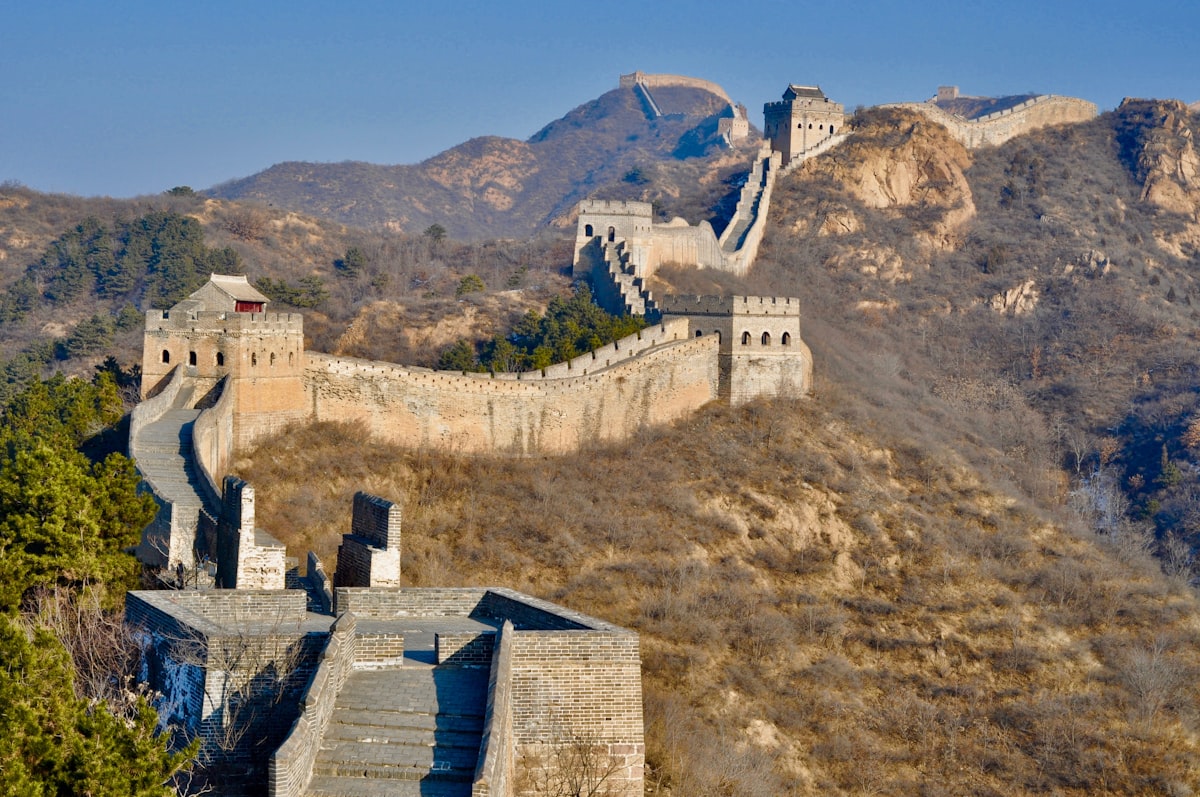
Crowds are light even during peak seasons. On a winter weekday, you might see fewer than 20 other people in 4 hours of hiking.
The Good
- Spectacular photography. The density of watchtowers and the dramatic ridge-line make every frame a composition. No power lines. No tourist stalls on the wall. No modern intrusions.
- Very few tourists. Domestic tour groups largely skip Jinshanling — it’s too far and the hiking is too demanding for the standard bus-tour crowd.
- The “real” Great Wall feel. Crumbling sections, unrestored watchtowers, sections where you have to think about where you put your feet. This is what the wall actually looks like across most of its length.
- Sunrise access. The main gate opens at 4:00 AM specifically to accommodate sunrise viewers. Watching first light hit the wall from a watchtower with no one else around is one of the best things you can do in China.
- Cheap cable car. ¥40-45 one-way, ¥60 round-trip — a fraction of Mutianyu’s prices.
The Bad
- Far from Beijing. 2.5-3 hours each way by car. You cannot do this on public transport — it doesn’t exist in any practical form.
- Physically demanding. Many steep staircases (some with steps higher than your knee), sections with no guardrails, loose stones on unrestored portions. You need to be comfortable on your feet for 3+ hours of ridge hiking.
- Limited facilities. Bring everything you need — water, food, toilet paper. There are bathrooms at the entrance and virtually nothing on the wall.
- Weather-dependent. The wall is exposed on high ridges. Rain makes the bricks dangerously slippery. Fog means you’ll see nothing. Check the forecast and don’t go if it looks bad.
Prices
| Item | Peak (Apr-Oct) | Off-Peak (Nov-Mar) |
|---|---|---|
| Entrance | ¥65 ($9) | ¥55 ($7.60) |
| Cable car one-way | ¥40-45 ($6) | ¥40-45 ($6) |
| Cable car round-trip | ¥60 ($8.30) | ¥60 ($8.30) |
| Shuttle bus | ¥20 ($2.75) | ¥20 ($2.75) |
How to Get There
Public transport is not a realistic option. You have two choices:
| Method | Details | Time | Cost |
|---|---|---|---|
| Private driver | Book through hotel or a Beijing-based hiking tour company | 2.5-3 hrs | ¥1,000-1,200 ($138-165) round trip |
| Organized hiking tour | Small-group tours with English-speaking guide, transport included | Full day | ¥400-800 ($55-110) per person |
If you book a driver, confirm they know Jinshanling specifically — some drivers only know Badaling and will need the Chinese name (金山岭长城) and potentially GPS coordinates. The wall is in Luanping County, Hebei province, not Beijing municipality.
Verdict
Jinshanling is for hikers, photographers, and anyone who wants to feel like they’re discovering the wall rather than visiting an attraction. If the phrase “sunrise alone on a 500-year-old watchtower” makes your pulse quicken, this is your section.
Simatai (司马台) — The Only Section Open at Night
Simatai’s unique selling point is genuinely unique: it’s the only Great Wall section officially open for night visits. The wall is dramatically illuminated after dark — lit from below so it glows golden against the black mountain. Combine it with a daytime visit to Gubei Water Town (古北水镇), a reconstructed canal town at the base of the wall, and you have a full-day experience that no other section offers.
What It’s Like
Simatai is steep. Genuinely, seriously steep. Some sections climb at 80+ degrees with only a chain handrail. The original Ming Dynasty builders incorporated the natural cliff faces into the wall’s defenses, and the result is a section that demands respect. During the day, you can climb portions that will test anyone with even a mild fear of heights.
At night, only Towers 5 and 6 are open — a flat, safe section. The cable car is mandatory after dark (hiking trails are closed), and the experience is more about atmosphere than hiking: the wall lit up like a golden dragon, the lights of Gubei Water Town twinkling below, and — if you’re lucky — no one else on the wall but you.
The Good
- Night visit. There is exactly one Great Wall section where you can be on the wall after dark. This is it. It’s romantic, atmospheric, and unlike anything else in China.
- Gubei Water Town combo. The water town at the base is a constructed tourist complex, but it’s a well-executed one — canals, stone bridges, lantern-lit streets, traditional architecture, craft workshops, and a genuinely good nighttime drone show (hundreds of drones forming shapes over the water, nightly at 8:20 PM and 9:50 PM).
- Steep and dramatic. During daytime hours, Simatai offers the most thrilling climbing of any Beijing-area section. The views from the higher towers are staggering.
- Stay overnight. Hotels inside Gubei Water Town range from budget inns to luxury hot-spring resorts. Waking up to the wall outside your window is worth the splurge.
The Bad
- Very steep. Not for anyone with a fear of heights, bad knees, or general physical uncertainty. Some sections have deteriorated to the point where you’re climbing on all fours.
- Gubei Water Town is manufactured. It opened in 2014. It was built to look 500 years old. If you want authentic ancient China, this isn’t it. If you want a pleasant canal town experience with the Great Wall looming overhead, it works.
- Far from Beijing. 2.5-3 hours driving. The direct bus from Dongzhimen takes 2 hours and costs ¥48 ($6.60).
- Night access is restricted. You can only visit a small, flat portion of the wall at night. The dramatic steep sections are daytime-only. And you must book night tickets in advance — they sell out.
Prices
| Item | Price |
|---|---|
| Simatai Great Wall (day) | ¥40 ($5.50) |
| Gubei Water Town entrance | ¥120-140 ($17-19) |
| Cable car one-way | ¥90 ($12.50) |
| Cable car round-trip | ¥160-220 ($22-30) |
| Night combo (water town + wall + cable car) | ~¥280 ($39) |
Hotel guests inside Gubei Water Town often get discounted night tour tickets (~¥120/$17) and may have water town entry included.
How to Get There
| Method | Details | Time | Cost |
|---|---|---|---|
| Direct tourist bus (best) | Dongzhimen bus hub, look for “古北水镇” bus | 2 hrs | ¥48 ($6.60) one-way |
| Train + taxi | Beijing North/Qinghe to Gubeikou Station, then taxi | 1.5 hrs + 20 min | ¥12 train + ¥30-40 taxi |
| Private driver | Door-to-door | 2-2.5 hrs | ¥500-600 ($69-83) one-way |
Night Visit Rules
- Must reserve in advance. Tickets are capacity-controlled. Book through the Gubei Water Town official website or a platform like Trip.com.
- Cable car is mandatory after dark. You cannot hike up.
- Open hours: 6:00 PM-10:00 PM (May-October), 5:30 PM-9:00 PM (November-April).
- Only Towers 5-6 are accessible at night. The steep sections are closed.
- Dress warmly. Even in summer, the ridge wind after sunset is cold. Bring a jacket.
Verdict
Simatai + Gubei Water Town is the best Great Wall experience for couples, photographers (night wall!), and travelers who want a full-day outing rather than a morning hike. It’s also the only option if you want to be on the wall after dark. If you can swing it, stay overnight — sunrise on the wall with zero crowds is a core memory.
Huanghuacheng (黄花城) — The Lakeside Wall
Huanghuacheng is what people mean when they say “I want to see the REAL Great Wall.” It’s wild. It’s unrestored. Sections of it plunge directly into a reservoir — parts of the wall are actually submerged, disappearing into the lake and emerging on the other side. You can hike along crumbling ridges above the water, scrambling over fallen bricks and through watchtowers that escape’t seen restoration in centuries.
What It’s Like
There are three distinct sections at Huanghuacheng, accessed from different entry points. The main scenic area has a dam, a lake, and a restored path that lets you walk a short section of the wall. The wild sections — accessed via village paths and informal trails — take you onto unrestored wall where the brickwork is collapsing, trees grow through the parapets, and you’re genuinely alone.
The lake is the feature. No other Beijing-area section has the wall meeting water like this. In summer the contrast of grey brick against green water and forest is spectacular. In autumn the surrounding hills turn red and gold. You can take a boat ride on the reservoir (¥25-45) for a view of the wall from below.
The Good
- Almost no tourists. Even on weekends, you’ll see more local villagers than foreign travelers.
- The lake. The wall plunging into water is a genuinely unique Great Wall sight. Photos from the boat or from the ridges above the reservoir are unlike anything at other sections.
- Completely authentic. No restoration. No handrails. No snack shops on the wall. This is the wall as it has existed for centuries.
- Half-day doable. At 2 hours from Beijing, you can leave at 7 AM, hike for 3-4 hours, and be back by early afternoon.
The Bad
- Not restored — dangerous in places. Loose bricks, unstable sections, no guardrails, steep drops. Not suitable for children, elderly travelers, or anyone unsure on their feet.
- No practical public transport. You need a driver. No exceptions.
- Navigation can be confusing. There are multiple entry points and trailheads. Having a driver who knows the area (or a GPS pin for the specific entry you want) is essential.
- Limited facilities. The main scenic area has basic bathrooms. The wild sections have nothing. Bring everything.
- The wild sections are technically off-limits. Local villagers may collect a small fee (¥10-20) to let you through, but the unrestored wall is not officially open to the public. Access is tolerated rather than sanctioned. Conditions change — check recent TripAdvisor or Reddit reports before going.
Prices
| Item | Price |
|---|---|
| Main scenic area entrance | ¥45-60 ($6-8) |
| Boat ride (short) | ¥25 ($3.50) |
| Boat ride (long) | ¥45 ($6.20) |
| Wild section (informal, paid to locals) | ¥10-20 ($1.50-3) |
How to Get There
Driver required. Approximately 70 km north of central Beijing, about 2 hours each way. Expect to pay ¥600-800 ($83-110) for a round-trip driver. The driver should know Huairou district and specifically Huanghuacheng (黄花城水长城). If booking through a hotel concierge, show them the Chinese characters.
The public transport option exists on paper: Bus 916 Express from Dongzhimen to Huairou, then local bus H21 to “Small West Lake” (小西湖) stop. But the local buses are infrequent, and you’ll still need to walk or taxi from the stop. Budget 3+ hours each way. Only attempt this if you have patience, Chinese language skills, and more time than money.
Verdict
Huanghuacheng is for experienced hikers, off-the-beaten-path seekers, and people who say “I want the REAL Great Wall” and mean it. If your ideal wall experience involves scrambling over 500-year-old bricks with a lake below and no one else in sight, this is it. If you want bathrooms and handrails, go to Mutianyu.
The Jinshanling to Simatai Traverse — What You Need to Know
For years, the Jinshanling to Simatai hike was the bucket-list Great Wall experience: 10 km, 3-4 hours, across increasingly wild terrain, ending at Simatai’s dramatic steep ridges. You saw every state of the wall — restored to semi-restored to wild to “how is this still standing?”
As of 2026, the full cross-border traverse is closed. The unrestored section that connects Jinshanling to Simatai straddles the Hebei-Beijing provincial border and has been officially blocked by authorities. You can no longer hike continuously from one to the other.
What You Can Still Do
You can still hike substantial portions of each section independently:
- Jinshanling: Hike east gate to middle gate (6-7 km, 3-4 hours, ~22 watchtowers) — a fantastic hike within the Jinshanling section alone.
- Simatai: Climb the open daytime towers (1-5, with Tower 8 being the defining photo spot), then descend before the night closure.
If you want to see both sections, visit them on separate days (they’re about 16 km apart, ~30 minutes by car). Some tour operators offer “Jinshanling + Simatai” two-day packages that handle the logistics.
Tour Costs
| Type | Price |
|---|---|
| Jinshanling day hike (small group, from Beijing) | ¥400-600 ($55-83) |
| Simatai + Gubei Water Town day/night tour | ¥500-800 ($69-110) |
| Two-day combo (both sections + accommodation) | ¥1,200-1,800 ($165-250) |
Practical Tips for ALL Sections
These apply regardless of which section you choose.
What to Wear
- Hiking shoes. Not sneakers, not running shoes, and absolutely not sandals or flip-flops. The wall is uneven even on restored sections. Bricks worn smooth by millions of feet are slippery when dry and treacherous when wet. You need shoes with grip.
- Layers. The wall sits on mountain ridges. It’s always 5-10°C (10-20°F) colder than Beijing city, and windier. Even in summer, bring a light jacket for the ridge. In spring and autumn, bring a proper warm layer.
- Sun protection. There is essentially zero shade on the wall. Hat, sunscreen, sunglasses. You will burn if you don’t prepare — the combination of altitude, exposure, and reflection off pale brick is intense.
What to Bring
| Item | Why |
|---|---|
| Water | 2 liters minimum in summer. 1 liter in cooler months. There are no shops on the wall at most sections. Dehydration on an exposed ridge in summer heat is dangerous. |
| Snacks | Energy bars, nuts, fruit. You’ll be walking for hours. The food stalls at the base (where they exist) are overpriced and not good. |
| Toilet paper + hand sanitizer | Bathrooms exist only at entrance/exit areas. They are squat toilets. Paper is rarely provided. No facilities on the wall itself. |
| Portable charger | Your phone will work harder (GPS, photos, translation apps) and the cold drains batteries faster. |
| Cash | Some smaller sections and local vendors don’t accept foreign cards or Alipay linked to foreign accounts. ¥200-300 in cash covers emergencies. |
Best Time of Day
- Arrive at opening (7:30-8:30 AM depending on section). You’ll have 1-2 hours of relative peace before tour groups arrive. Morning light is better for photos.
- Late afternoon (after 2 PM). Morning tour buses have left. The light turns golden. This works especially well at Simatai, where you can transition into the night visit.
- Avoid midday (10 AM-2 PM). Peak crowds, harsh overhead light for photos, hottest temperatures.
Best Season
| Season | Verdict |
|---|---|
| April-May | Excellent. Spring flowers, comfortable temperatures (14-26°C), clear skies. Skip the May 1-5 Labor Day holiday. |
| September-October | The best. “Beijing Blue” skies, autumn foliage on the mountains, crisp air, perfect hiking weather. Skip October 1-7 (Golden Week) at all costs — every section is packed with domestic tourists. |
| June-August | Tolerable but hot (35°C+, humid). Start at 6:30 AM and finish by 11 AM. Bring extra water. Summer holiday crowds in July-August. |
| November-March | Cold (-10°C to 5°C), wind chill on the ridge is brutal, worst air quality of the year. But: rock-bottom crowds, dramatic winter landscapes, and snow on the wall is beautiful. Avoid Chinese New Year (late January/February — transport chaos). |
Weather Check
The wall is on mountain ridges. It’s colder, windier, and more exposed than Beijing. Rain makes the bricks dangerously slippery. Fog means zero visibility — you’ll see nothing from the watchtowers. Always check the forecast the night before. If heavy rain or dense fog is predicted, reschedule. You cannot get this experience back if you can’t see anything.
Which Great Wall Section Is Right for YOU?
Here is the decision matrix. Find your traveler type and go:
| You Are… | Go To… | Why |
|---|---|---|
| A first-timer who wants the easiest, most convenient option | Badaling | High-speed train, facilities, accessibility. Manage your crowd expectations. |
| A first-timer who wants the best overall experience | Mutianyu | This is the answer for 90% of travelers. Beautiful, manageable, fun. Just go to Mutianyu. |
| A photographer or serious hiker | Jinshanling | Sunrise on the ridge, 67 watchtowers, wild sections, zero crowds. |
| A couple or someone who wants something unique | Simatai (night) | The only wall you can visit after dark. Combine with Gubei Water Town. Romantic and memorable. |
| Someone who wants to be completely alone on the wall | Huanghuacheng | Wild, unrestored, lakeside, almost no tourists. Bring a driver and hiking boots. |
| Traveling with kids (under 12) | Mutianyu | Cable car up, toboggan down. The slide alone will make your kids’ trip. Moderate walking distances. |
| Traveling with elderly parents | Badaling or Mutianyu | Badaling has the widest, smoothest path and wheelchair access. Mutianyu’s cable car makes the wall reachable with less walking. |
| Limited time (single morning) | Mutianyu | Leave Beijing at 7 AM, on the wall by 8:30 AM, back in the city by 2 PM. |
| Limited time but must be easy | Badaling | High-speed train gets you there in 30 minutes. Be on the 7 AM train. |
| ”I want the ULTIMATE Great Wall thing” | Jinshanling sunrise hike | Get up at 4 AM. Drive 2.5 hours. Watch the sun rise from a 500-year-old watchtower with no one else there. Train for this. It is worth it. |
If you’re unsure: go to Mutianyu. It is the best all-rounder for foreign travelers. The cable car + toboggan combo is fun, the crowds are manageable, the setting is beautiful, and it’s restored enough to be safe without feeling fake. You cannot go wrong with Mutianyu on a weekday morning.
Common Mistakes
People make the same mistakes over and over. Here they are, so you don’t:
-
Going to Badaling and thinking you’ve “seen” the Great Wall. You’ve seen one heavily restored face of a 21,000 km structure. It’s like seeing the lobby of a museum and thinking you’ve seen the collection. If you go to Badaling, go knowing it’s the most accessible — but not the most authentic — version.
-
Wearing the wrong shoes. Sandals. Flip-flops. Ballet flats. Fashion sneakers with zero tread. You will genuinely hurt yourself. The wall is uneven, often steep, and the bricks are slippery. Every section requires proper footwear with grip.
-
Not bringing water. There are no shops on the wall at most sections. At Badaling and Mutianyu there are vendors at the base, but once you’re on the wall you’re on your own. Dehydration in summer heat on an exposed ridge is a real risk. 2 liters minimum.
-
Going during Golden Week (October 1-7). Every section — every single one — is packed with domestic tourists during this week-long national holiday. You will see more selfie sticks than wall. Hotels triple in price. Trains sell out. Avoid Golden Week.
-
Booking a cheap “Great Wall tour” that includes a shopping stop. Read the itinerary. If it says “jade factory,” “silk workshop,” “tea ceremony,” or “shopping stop” — skip it. These tours spend 2+ hours at commission-paying shops and give you 90 rushed minutes on the wall. Book transport independently or through a reputable hiking tour company.
-
Not checking the weather. Fog on the wall means you will see exactly nothing from the watchtowers. Rain makes the bricks dangerously slippery. If the forecast is bad, reschedule. You cannot get this experience back.
-
Going on a weekend during peak season. If your schedule allows it, go Tuesday through Thursday. Friday through Sunday brings domestic weekend travelers. The difference between a Tuesday morning at Mutianyu and a Saturday morning is the difference between peace and a queue for the cable car.
-
Assuming all sections are like the photos. The professional photos you see online — empty wall, dramatic lighting, mist rising through watchtowers — were taken at Jinshanling or Simatai, at sunrise, on a weekday, in autumn. You can absolutely see that version of the wall. But you have to choose the right section and the right time.
What to Read Next
- First-Timer’s Beijing: 4-Day Itinerary & Essential Tips — How to fit the Great Wall into a sensible Beijing itinerary, plus Forbidden City tickets, where to stay, and what to avoid.
- China High-Speed Rail Guide: Book, Board & Ride Like a Pro — How to book trains to Badaling (and everywhere else), seat classes, and mistakes to avoid at Chinese stations.
The Bottom Line
The Great Wall is one of those rare things that exceeds expectations. Even the “touristy” sections are genuinely impressive when you’re standing on them — the sheer scale, the engineering, the fact that this thing has stood on mountain ridges for 500 years. It hits you.
But the difference between Badaling at noon on a Saturday and Mutianyu at 8:30 AM on a Tuesday is the difference between a stressful checkbox and a genuinely moving experience. The same structure. The same history. Completely different memories.
Go further. Go earlier. And you’ll understand why this thing is one of the wonders of the world.