Guilin & Yangshuo First-Timer's Guide: Skip the City, Head to the Karst (2026)
“Guilin’s landscape is the best under heaven” — this Chinese saying has been drawing travelers for a thousand years. The photos look like classical ink paintings come to life: misty karst peaks, bamboo rafts on glassy rivers, fishermen with cormorants at dawn.
But here is the truth no one tells you: the city of Guilin is a 5-million-person industrial city with one or two photo spots. The scenery you came for is in Yangshuo (阳朔), 1.5 hours away.
This guide fixes the #1 mistake first-timers make — and gives you the honest playbook for finding the magic.
Guilin City vs Yangshuo — The Truth
Most travelers book a Guilin hotel expecting to wake up to karst peaks outside their window. They arrive to find a drizzly industrial city with factories, KFCs, and exactly one mountain that looks like an elephant. The disappointment is real and entirely preventable.
| Guilin City | Yangshuo | |
|---|---|---|
| What it is | Industrial city of 5 million people | Countryside town surrounded by karst peaks |
| Worth staying? | 1 night max — or skip entirely | YES — this is your base |
| Best thing | Reed Flute Cave, night pagodas | E-bike countryside, Yulong rafting, Xianggong sunrise |
| Elephant Trunk Hill | Free (reservation required via WeChat). The defining rock formation at the Li River confluence. | Not applicable |
| Food | Rice noodles for ¥5–8 | Beer fish, bamboo rice, farmhouse restaurants |
The move: Land at Guilin airport or train station. Transfer directly to Yangshuo. Do not book a Guilin hotel “with mountain views” — the mountains are 1.5 hours away. This single decision determines whether your trip succeeds or fails.
Getting There & Transfers
Guilin is the gateway. Yangshuo is the destination. Here is how to connect them.
By Air
Guilin Liangjiang Airport (KWL) is about 1.5 hours from Yangshuo. From the airport:
- Airport shuttle bus: ¥50 to Yangshuo. Drops you at the Fengming Tourist Center, then a short ¥10–15 Didi to your hotel.
- DiDi or taxi direct: ¥250–350. Faster, door-to-door, worth it if you are splitting with a travel partner.
- There is no metro or train from the airport. You are choosing between the shuttle and a private car.
By High-Speed Train
Guilin has three train stations. For Yangshuo, the relevant ones are:
| Station | To Yangshuo | Ticket (2nd Class) | Duration | Notes |
|---|---|---|---|---|
| Guilin West (桂林西) | ~25 trains daily | ¥23–38 | 20–25 min | Most departures. But 15 km from downtown Guilin — limited public transport, taxi recommended. |
| Guilin North (桂林北) | Frequent | ¥25–35 | 23–27 min | Easier city access than Guilin West. |
| Guilin Station (桂林站) | Limited departures | ¥25–35 | ~30 min | Most central. Fewer Yangshuo-bound trains. |
Critical: Yangshuo Railway Station is NOT in Yangshuo town. It is near Xingping (兴坪), about 35 km from West Street. After arriving:
- Shuttle bus: ¥20, 50–60 minutes to Fengming Tourist Center. Bright blue buses, ticket counter outside the station exit. Timed to meet arriving trains.
- DiDi from station to town: ~¥80–100, 30–40 minutes.
Total door-to-door from Guilin to your Yangshuo hotel: approximately 1.5–2 hours, including the train and transfer.
By Bus
Direct buses from Guilin to Yangshuo: 1.5 hours, ¥30–50. Departures throughout the day from Guilin Bus Station. Less comfortable than the train, but simpler — no transfer at the Yangshuo end.
From Other Cities
| From | Method | Time | Cost (¥) |
|---|---|---|---|
| Hong Kong | Direct HSR to Guilin West | ~3 hrs | ¥350–450 |
| Guangzhou | HSR to Guilin | ~2 hrs | ¥180–250 |
| Shenzhen | HSR to Guilin | ~2.5 hrs | ¥230–300 |
For booking trains, seat classes, and station navigation, read our China High-Speed Rail Guide.
Where to Stay in Yangshuo
Your accommodation choice is the second-most important decision of the trip. The wrong hotel — on West Street — can ruin it. The right one — by the Yulong River — can be the thing you talk about for years.
| Area | Vibe | Price (¥/night) |
|---|---|---|
| Yulong River area | Peaceful, mountain-view mornings, close to rafting docks. Wake up to karst peaks in the mist. Best choice. | ¥300–800 |
| Just outside West Street (1–2 blocks) | Convenient access to restaurants, but quiet enough to sleep. Hospital Road / Shenshan Lu area. | ¥200–500 |
| Riverside countryside guesthouses | Most atmospheric. Rice paddies, karst views from bed, absolute quiet. Worth the extra logistics. | ¥300–1,000 |
| West Street itself | AVOID. Bars and nightclubs until 2 AM. Paper-thin walls. You will not sleep. | ¥150–400 |
Recommendation: Stay near the Yulong River. The mornings — stepping onto your balcony and seeing mist rise off the karst peaks — are the reason you came. A ¥400 room is about $56. A ¥600 mid-range room with a mountain view is about $84. It is extraordinary value for what you get.
Convert at approximately ¥1 = $0.14 USD.
4-Day Itinerary
Four days is the sweet spot for Yangshuo. Three is tight but doable. Two is a mistake — you will spend half your trip in transit. If you have five days, add the Longji Rice Terraces as a day trip.
Day 1: Arrival & First Taste
Arrive in Yangshuo by early afternoon. Check into your hotel — ideally in the Yulong River area. Drop your bags. Breathe. Look out the window. That is the first moment the trip becomes real.
Late afternoon: Walk or bike toward Gongnong Bridge (工农桥). This is your introduction to what you came for. Bamboo rafts glide under the stone bridge. Karst peaks silhouette against the gold of late afternoon. The Yulong River winds through it all. This is your first “I am in a Chinese painting” moment. It will not be your last.
Evening: Go to West Street for dinner — but eat 1–2 streets OFF the main strip. Hospital Road (神山路 / Shenshan Lu) and the lanes around it are where locals eat. The food is better, cheaper, and served without a laminated menu in six languages.
Order beer fish (啤酒鱼) — the Yangshuo signature. Fish from the Li River, braised with local beer, tomatoes, and peppers. The scales are left ON — do not be alarmed. It is how the dish is done. Critical: order a fixed-price portion (¥60–80/person), not by weight. Ordering by weight is how a ¥60 meal becomes a ¥500 surprise.
After dinner, walk West Street once. See the neon, the souvenir shops, the nightclubs. Take it in. Then leave. You have seen it. Tomorrow begins the real Yangshuo.
Day 2: Bamboo Rafting & Countryside
This is the centerpiece day. The Yulong River bamboo raft in the morning. An e-bike through the countryside in the afternoon. This is the day that will be in your photos for years.
Morning — Yulong River Bamboo Rafting
Book in advance. Tickets can be purchased via the WeChat mini-program (the green chat app — look for the scenic area’s official booking), through Trip.com, or at your hotel front desk. During peak seasons (summer, Golden Week), book 2–3 days ahead. Routes sell out.
Which route?
| Route | Distance | Duration | Weir Drops | Price (per raft) |
|---|---|---|---|---|
| Jinlong Bridge → Jiuxian (Old County) ⭐ | 6 km | ~90 min | 9 | ¥320 |
| Jima Wharf → Gongnong Bridge | 6 km | ~80 min | 9 | ¥320 |
| Shuidi Dock → Gongnong Bridge (shorter) | 3 km | ~40 min | 4 | ¥200 |
| Xiatang Dock → Jima Wharf (upper section) | 3 km | ~45 min | 4 | ¥200 |
One price covers the entire raft — two people. Solo travelers pay the full raft price. Combined passenger weight limit: 160 kg. Children under 1 meter and adults over 70 are not permitted.
The best route for first-timers: Jinlong Bridge to Jiuxian (Old County). This is the upper section — fewer rafts, more bamboo groves, ancient bridges reflected in still water. The nine weir drops — small rapids where the boatman poles the raft over a stone dam — are genuinely fun. You will get a little wet. The photo of your boatman silhouetted against the karst at the crest of a weir is the shot.
This is human-powered. The boatman pushes with a bamboo pole. No motor. No noise. Just the sound of the pole slicing water, the raft sliding over limestone shelves, and the karst peaks getting closer. This is not the motorized Li River cruise. This is what you actually want.
What to bring:
- Passport — required at the dock. A photo on your phone will not work.
- Waterproof phone pouch (¥10–15 at any shop near the dock).
- Quick-dry clothes and sandals or water shoes. You will get splashed at the weirs.
- Sun protection. The raft has an umbrella, but the reflection off the water is strong.
Hours: Generally 7:30 AM – 5:30 PM (Jinlong Bridge and Jima Wharf start at 7:30; other wharves at 8:00). Go early — the morning light on the river is spectacular, and the rafts are fewer.
Lunch
Farmhouse restaurant along the Yulong River. Look for hand-painted signs, plastic chairs, and a view of the water. Order bamboo tube rice (竹筒饭) — glutinous rice with cured meat, steamed inside a bamboo tube. ¥15–25. Earthen oven chicken (窑鸡) if you want something more substantial. These are the meals that cost nothing and taste like everything.
Afternoon — E-Bike the Countryside
Rent an e-bike. ¥30–60 per day. This is the single best money you will spend in Yangshuo.
The Ten-Mile Gallery (十里画廊) is the classic route — flat, paved, and spectacular. Gongnong Bridge, the Big Banyan Tree (a 1,400-year-old specimen), Moon Hill (a karst peak with a natural arch through its summit). But the real magic is not the named attractions. It is the unnamed roads between them.
Turn off the main path. Follow a dirt lane between rice paddies. Stop by a bridge with no name and watch a water buffalo standing in the river. An elderly farmer cycles past with a basket of vegetables. Two children wave from a farmhouse doorway. This is the Yangshuo that package tourists never see because they never leave the bus.
The e-bike gives you range and freedom. You cover 20–30 kilometers without breaking a sweat. When you see something interesting, you stop. That is the entire strategy.
Evening
Option A: Impression Liu Sanjie (印象刘三姐)
Zhang Yimou’s outdoor light-and-sound spectacle. 600 performers on the Li River, using the karst peaks as a backdrop. The scale is genuinely staggering. The narrative — based on the local legend of Liu Sanjie, the “Third Sister” folk singer — is secondary to the visuals. Section C middle row offers the best value (~¥200+). It is touristy. It is also memorable. Both things are true.
Option B: Find a rooftop
Skip the show. Find a bar or cafe with a rooftop view of the karst peaks. Yangshuo has several — ask your hotel or wander toward the river. A cold beer as the peaks fade from gold to grey to silhouette. This costs ¥20 and competes with anything staged.
Day 3: Sunrise & The Li River
This is the early morning. The one you will dread when the alarm goes off at 4:30 AM and remember for the rest of your life by 6:00 AM.
Pre-Dawn — Xianggong Mountain (相公山)
Wake up at 4:30 AM. Arrange a DiDi or a pre-booked driver the night before — there is no public transport to Xianggong Mountain, and Didis at 4:45 AM are not guaranteed. From Yangshuo town, it is 40–60 minutes by car. From Yulong River area hotels, slightly less.
Xianggong Mountain: ¥60 entry. The gate opens approximately 30 minutes before sunrise. A 15–20 minute climb up stone steps — moderately steep, with handrails. Four viewing platforms staggered up the hillside. Go to the top platform. Arrive by 5:15–5:30 AM to secure a spot at the railing.
What happens next: the sky lightens behind you. The Li River’s great S-bend emerges below — the “First Bend” — a ribbon of water winding through a forest of karst peaks. Mist rises from the river valley. The peaks change from black silhouettes to golden-lit monoliths in the space of fifteen minutes. Photographers with tripods line the railings. But even with just your phone, you will leave with the photo of your trip.
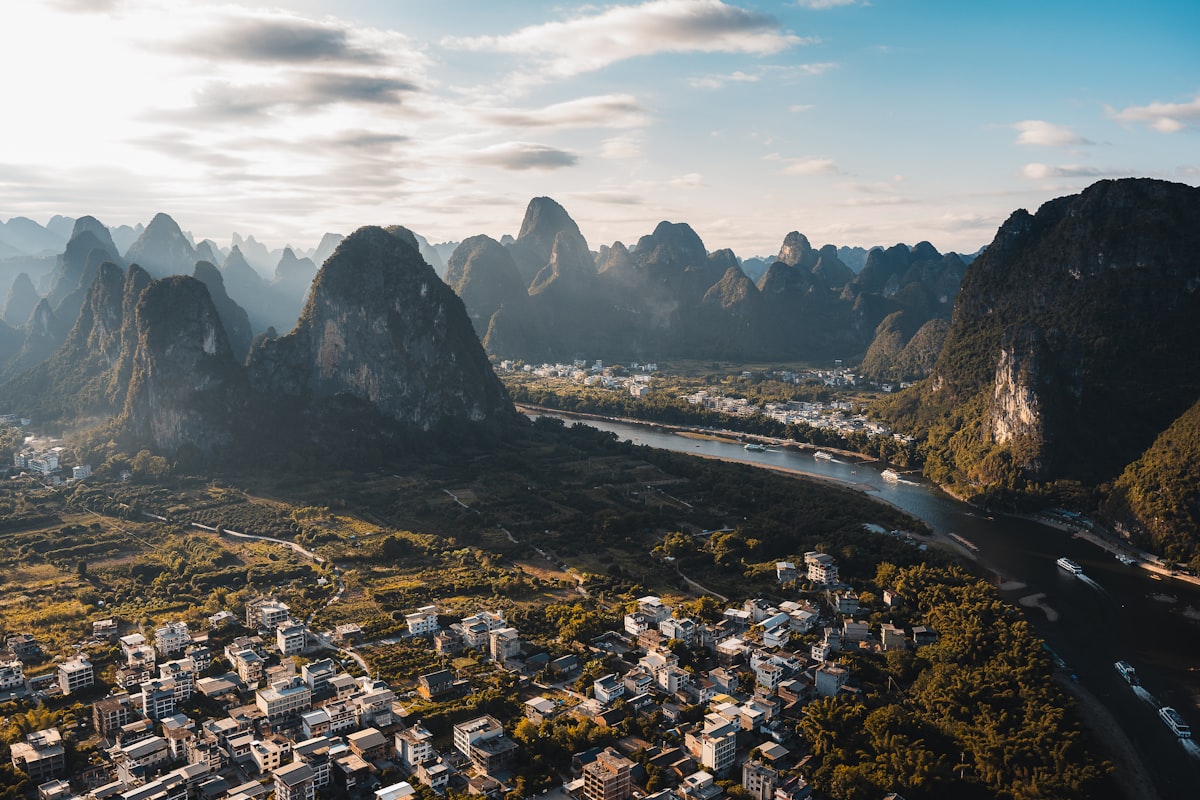
This is not an exaggeration. It is simply what happens. Every. Single. Morning.
Xianggong Mountain faces east. The best conditions are July through December for clear skies, or April through June for sea of clouds. Wear shoes with grip — the steps can be slippery after rain. Bring a jacket — the summit is cold before sunrise, even in summer.
Mid-Morning — Xingping & The 20 RMB Note
After descending, head to Xingping (兴坪). This ancient town sits on the Li River and holds the most recognizable view in the region: the scene printed on the back of the 20 RMB banknote.
The 20 RMB Viewpoint: Yuanbao Mountain at Yellow Cloth Shoal. Free. Walk from Xingping town along the river path. The main viewing platform is small and can be crowded with tour groups by mid-morning. Walk 100 meters further along the path. You will find a less crowded spot with the same view. Hold up a 20 RMB note for the photo — it is a cliche, but the best cliches are cliches for a reason.
A note on the cormorant fishermen: At the viewpoint, you may see an elderly fisherman with cormorant birds on a bamboo raft, backlit by the river. The image is defining — a thousand postcards and Instagram posts. Here is the truth: these fishermen are paid models. The cormorants do not actually fish — cormorant fishing has been extinct as a livelihood for decades. The photos are beautiful. The staging is an open secret. Appreciate the image for what it is — a piece of living cultural theatre — but do not mistake it for documentary photography. Tipping the fisherman ¥10–20 for a photo is customary if you take one.
Afternoon — Choose Your Climb
Option A: Laozhai Mountain (老寨山)
Free. Challenging. A 30–40 minute climb up approximately 1,100+ steep stone steps and iron ladders. The trailhead is near the Xingping ferry dock. This is not a casual walk — it is a genuine climb, and the final section involves a near-vertical ladder bolted to the rock. Not for the faint of heart or anyone with mobility concerns.
The reward: a 180-degree panorama of the Li River’s “Great Bend” from a viewpoint above everything — higher than Xianggong, wilder, with no railings and no ticket office. Best at sunset, but do not climb down in the dark. Go mid-afternoon and allow time.
Option B: Fuli Bridge (富里桥)
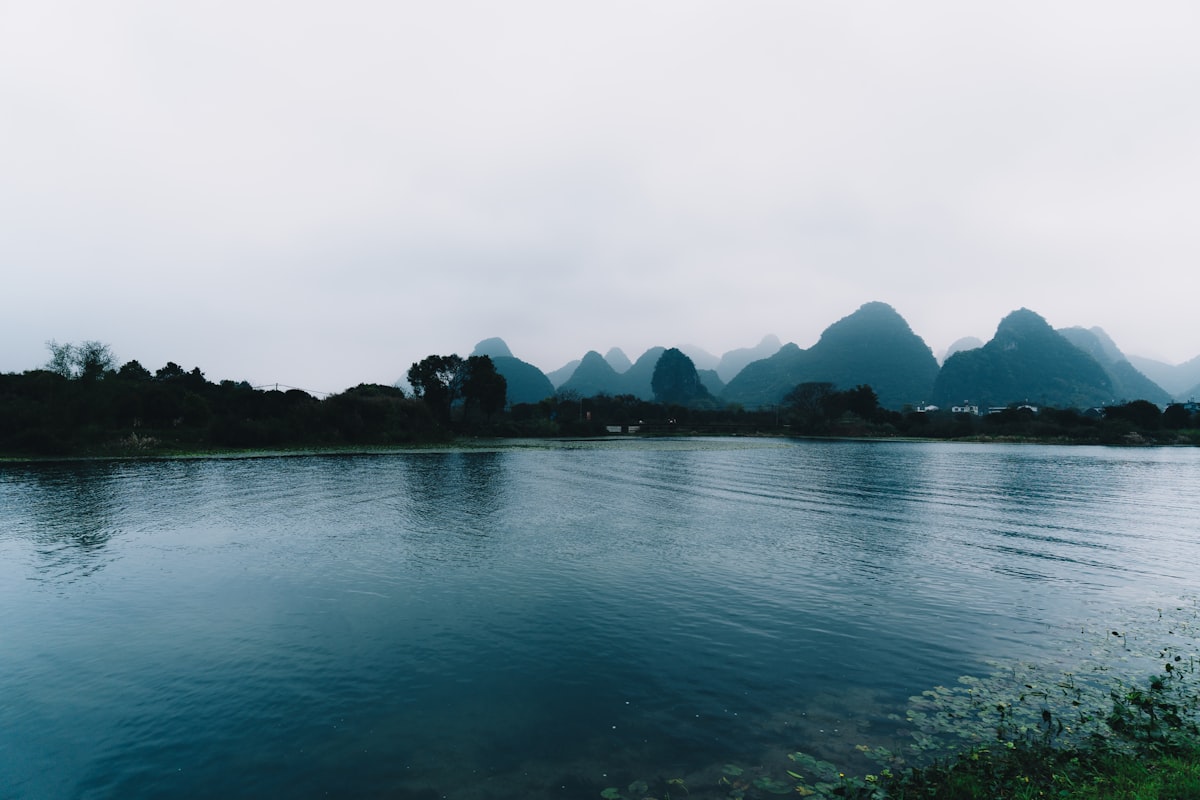
No climbing. No tickets. A 500-year-old Ming Dynasty stone arch bridge spanning a quiet stretch of the Yulong River. Perfect mirror reflections in still water. Cowherds leading water buffalo across the bridge. Nearly empty — most tourists never find it. Cycle or DiDi from your hotel. Late afternoon light is best here.
Day 4: Deep Cuts & Departure
Morning — One Last Ride
Rent the e-bike one more time. Use it differently now — not following a route, but exploring a single village.
Jiuxian Village (旧县): The endpoint of yesterday’s bamboo raft route. Qing Dynasty courtyard houses with grey brick walls and carved wooden doors. Some have been converted into guesthouses and small restaurants. Walk the narrow lanes. The village is quiet in the morning — you might see residents washing vegetables at a communal well or hanging laundry under the eaves. This is not a tourist village. It is a village that happens to have tourists. The difference matters.
Alternative: Fuli Ancient Town (福利古镇) — known for hand-painted fans, a craft practiced here for centuries. Smaller than Xingping, less visited. Buy a fan from an artist who painted it in front of you.
Alternative: Rock climbing. Yangshuo is China’s premier climbing destination. Hundreds of bolted karst routes from beginner to expert. Several operators in town offer half-day trips with equipment and instruction. If you climb, or want to try, this is the place.
If You Have 5 Days — Longji Rice Terraces
Add the Longji Rice Terraces (龙脊梯田) as a day trip from Guilin. Dragon’s Backbone — rice terraces cascading down mountain slopes, built by the Zhuang and Yao ethnic minorities over 650 years. Best in late May to early June (water-filled, reflecting sky) or late September to early October (golden harvest). Read our Longji Rice Terraces guide for full logistics.
Departure
Reverse your arrival route. Yangshuo → Guilin by bus (1.5 hrs, ¥30–50) or via Yangshuo Station (20 min shuttle to the station, 25 min train to Guilin). If flying out of Guilin that day, allow 3+ hours door-to-gate.
Li River Cruise vs Yulong Bamboo Raft — How to Choose
This is the most common decision travelers face. The answer is straightforward, but the tourism machine works hard to obscure it.
| Li River Cruise | Yulong Bamboo Raft | |
|---|---|---|
| Type | Large motorized boat (80–120 passengers) | Small bamboo raft (2 people + boatman with pole) |
| Duration | 4–5 hours | 40–90 minutes |
| Cost | ¥215–360/person (3-star); ¥360–530 (4-star) | ¥200–320 per raft (2 people) |
| Noise | Loud motor, PA announcements | Quiet — human-powered, pole-pushed |
| Vibe | Crowded, assembly-line, fixed route | Intimate, peaceful, gentle weir drops |
| Scenery | Iconic Li River stretch, 20 RMB view from the water | Karst peaks at water level, bamboo groves, old stone bridges |
| Best for | One-way transport Guilin → Yangshuo (a scenic bus alternative) | The EXPERIENCE you actually want |
| Verdict | SKIP unless you need transport from Guilin | DO THIS |
The move: Take the train or bus from Guilin to Yangshuo. Book a Yulong bamboo raft for the intimate river experience. Visit Xingping by land for the Li River views (20 RMB viewpoint, Xianggong Mountain). Do not do the big cruise boat. You are trading 4 hours of motor noise and a buffet lunch for 90 minutes of silence and a bamboo pole. This is not a difficult calculation.
The Li River cruise made sense in the 1990s, when the road between Guilin and Yangshuo was rough and the train did not exist. It was a practical way to travel the 83 kilometers between the two cities while seeing the scenery. That purpose no longer exists. The road is smooth. The train takes 25 minutes. The cruise is now a vestige — a habit the industry has not broken because tour groups keep booking it. Do not be that traveler.
The Honest Truth About Commercialization
West Street (西街) was once an atmospheric ancient lane with backpacker cafes, a legendary expat bar called MC Blues, and a genuine bohemian scene. That was the 1990s and early 2000s.
Today it is a theme park. Identical souvenir shops selling identical wooden frogs and silk scarves. Loud nightclubs thumping bass until 2 AM. Restaurants with laminated picture menus and prices 3x the real rate, serving tour groups that eat once and never return. The expat community has largely left. What remains is the husk of what was.
Walk 20 minutes outside town, and Yangshuo is still dramatic.
The karst peaks do not care about gift shops. The Yulong River does not know about the nightclubs. The rice paddies flood in spring and turn gold in autumn. Farmers still pole bamboo rafts. Children still wave from farmhouse doorways. The scenery that inspired a thousand years of Chinese poetry is intact — you just have to walk a little further to find it.
Wake up early. The magic window is 5:30 AM to 8:00 AM, before the tour buses arrive. Rent an e-bike. Take the back roads — any road without a parking lot at the end. Eat on Hospital Road instead of West Street. The difference between a disappointing trip and a life-changing one is not the scenery. It is the time you wake up and the roads you choose.
Scam Warnings
| Scam | How to Avoid |
|---|---|
| ”Tea tasting” or “tea ceremony” invitation | Politely decline and keep walking. You will be taken to a shop, sat down, and pressured to buy overpriced tea. It is a sales trap, not hospitality. |
| ”That attraction is closed today” | The driver or tout is lying. They are redirecting you to a shop that pays commission, or to an attraction where they earn a kickback. Verify hours yourself. |
| Beer fish ordered by weight | One fish can cost ¥500+. There is no way to verify the weight before the bill arrives. Order fixed-price portions only. |
| ”Discounted” show tickets from touts | The seats are in the back corner behind a pillar. Book officially through your hotel or the ticket office. |
| Rice noodles priced ¥20+ | Real Guilin rice noodles cost ¥5–8. If you are paying more than ¥10, you are in a tourist trap. Walk. |
| ”Free” guided tours from friendly strangers | They are not guides. They are shopping commission agents. The tour ends at a jade factory or tea market. |
| Beggars with photocopied “hospital bills” | A known scam. The documents are fake. Do not engage. |
The Food Playbook
Yangshuo and Guilin share a cuisine shaped by the Li River, the Zhuang ethnic minority, and centuries of trade. It is simple, fresh, and radically different from the fiery Sichuan food or delicate Cantonese dim sum you may have encountered elsewhere in China.
| Dish | What It Is | Real Price (¥) | Where |
|---|---|---|---|
| Guilin Rice Noodles (桂林米粉) | Breakfast staple. Round rice noodles dry-tossed with marinated pork or beef, pickled long beans, peanuts, chili. Add bone broth from the communal pot at the end — locals drink it straight from the bowl. | ¥5–8 | Any small shop with a queue at breakfast. Lao Dongjiang (老东江) and Axiu Rice Noodles (阿秀米粉) in Guilin are legendary. In Yangshuo, follow the construction workers — they know where the ¥5 bowls are. |
| Beer Fish (啤酒鱼) | The Yangshuo signature. Li River fish braised with local Li Quan beer, tomatoes, green peppers, and garlic. Scales left ON — they crisp up in the cooking and are eaten with the meat. Served in a sizzling pan. | ¥60–80 (fixed price) | Xie Dajie (谢大姐 / Sister Xie) and Master Chef (大师傅) are the two big names. Stay off West Street for this — the branches on Shenshan Lu are more honest. |
| Bamboo Tube Rice (竹筒饭) | Glutinous rice with cured pork belly and mushrooms, steamed inside a fresh bamboo tube over an open fire. Cracked open at your table. Smoky, fragrant, chewy. | ¥15–25 | Farmhouse restaurants along the Yulong River. The ones with smoke rising from the backyard fire pit. |
| Stuffed River Snails (螺蛳酿) | River snail meat chopped with pork and seasonings, stuffed back into the shell, and braised. Pick out with a toothpick. A Zhuang specialty. | ¥38–58 | Local restaurants, not tourist menus. Ask your hotel for a recommendation. |
| Osmanthus Ice Cream (桂花冰淇淋) | Floral, delicately sweet, made with local osmanthus flowers. A Yangshuo staple that tastes like the region smells in autumn. | ¥9 | Osmanthus Commune (桂花公社) shops around town. |
| Earthen Oven Chicken (窑鸡) | Whole chicken slow-roasted in a clay oven buried in the ground. Cracked open at the table. Juicy, smoky, falling off the bone. | ¥68–98 | Farmhouse restaurants. Call ahead — it takes 40+ minutes. |
| Oil Tea (油茶) | A savory Zhuang drink — tea leaves fried with ginger and garlic, pounded, boiled, and served with puffed rice and peanuts. An acquired taste. Warming in winter. | ¥8–15 | Small family-run breakfast spots. |
The Guilin rice noodle ritual: Point at the meat you want (marinated beef, crispy pork, or sausage). Watch the vendor boil your noodles for 30 seconds. At the condiment bar, add pickled beans, chopped chili, cilantro, peanuts, and a splash of black vinegar. Eat the noodles dry-tossed first. When only a few noodles remain, ladle bone broth from the communal pot into your bowl, swirl, and drink. You have now eaten rice noodles like a local. You paid ¥6. You are winning.
Budget Planning
Four days, per person, excluding accommodation. Convert at approximately ¥1 = $0.14 USD.
| Level | Daily (¥) | Daily ($) | Includes |
|---|---|---|---|
| Budget | ¥150–300 | $21–42 | Rice noodles for breakfast, farmhouse lunches, Yulong rafting (split with partner), e-bike rental, free viewpoints |
| Mid-range | ¥400–700 | $56–98 | Restaurant meals (beer fish, farmhouse dinners), Xianggong sunrise, Impression Liu Sanjie show, DiDi rides, drinks |
| Comfort | ¥800–1,200+ | $112–168+ | Private car transfers, fine dining, best hotels, private rafting tours, rock climbing guides |
Sample mid-range Day 2 breakdown:
- Yulong bamboo raft (Jinlong→Jiuxian, split 2 ways): ¥160
- Bamboo tube rice lunch: ¥20
- E-bike rental: ¥50
- Beer fish dinner (fixed price): ¥75
- Two bottles of Li Quan beer: ¥20
- DiDi ride: ¥25
- Total: ~¥350 ($49)
Yangshuo is extraordinary value. The best thing in the region — a bamboo raft on the Yulong River at sunrise — costs ¥160 per person. The second-best thing — an e-bike through country lanes with no destination — costs ¥50.
Common Mistakes First-Timers Make
Staying in Guilin city. There is no karst scenery in Guilin. The city is an industrial hub of 5 million people with two photo spots. This is the #1 mistake and it wrecks trips. Transfer to Yangshuo immediately.
Doing the Li River cruise instead of Yulong bamboo rafting. Four hours on a loud motorized boat with 100 strangers versus 90 minutes of silence on a pole-pushed bamboo raft through karst peaks. This is not a close decision. Take the train to Yangshuo and do the bamboo raft.
Booking a West Street hotel. Nightclubs thump until 2 AM. Walls are paper-thin. You came for peaceful karst scenery, not a club district. Stay by the Yulong River or 1–2 blocks off West Street.
Not waking up early. The magic window is 5:30 AM to 8:00 AM. After 9:00 AM, the tour buses unload and the serenity evaporates. Xianggong Mountain, the 20 RMB viewpoint, the Yulong River — all of them are different places after 9:00 AM. Set the alarm.
Eating beer fish by weight. An unregulated scale. A fish of unknown size. A bill that arrives at ¥500+. This is the most common food scam in Yangshuo. Fixed-price portions only.
Paying for Elephant Trunk Hill (象鼻山). The park is permanently free — no ticket needed. Just reserve a time slot on the official WeChat mini-program before you go. Any guide telling you to pay ¥55 or “go after 5 PM” is working off outdated information.
Visiting during Golden Week (October 1–7). The entire region — roads, viewpoints, rafting docks — becomes a parking lot. Hotels triple in price. Rafting tickets sell out instantly. Do not do this. If Golden Week is your only window, arrive 3 days early and leave 2 days late.
Not downloading Amap (高德地图) or a VPN before arriving. Google Maps is unreliable in China. VPNs — needed for Gmail, Instagram, WhatsApp — must be installed and tested before you leave your home country. Once inside China, many VPN websites are blocked, and you cannot download them.
Not setting up Alipay before arriving. Yangshuo is aggressively cashless. Even the vegetable vendor at the side of a country road expects a QR scan. Read our China Mobile Payment Guide and set it up before you leave home.
Bringing only 2 days. You will spend half your trip in transit between Guilin and Yangshuo. Three days is the minimum. Four is the sweet spot. Five if you are adding Longji.
Bottom Line
Guilin and Yangshuo deliver one of those rare travel experiences where the scenery actually lives up to the thousand-year-old poetry. But only if you know where to look.
Skip the city. Stay by the Yulong River. Wake up before the tour buses. Explore on two electric wheels. Eat the ¥5 rice noodles. Skip the ¥500 fish.
The karst peaks are still there. The bamboo rafts still glide. The mist still rises off the river at dawn. They have been doing this for millions of years. They will still be doing it long after the last nightclub on West Street has closed. You just have to know where to show up.
Related guides you will need:
- Yangshuo Cycling & Outdoor Guide — routes, bike rentals, rock climbing, and more
- Longji Rice Terraces Guide — how to add the Dragon’s Backbone to your trip
- China High-Speed Rail Guide — train classes, booking, station navigation
- China Mobile Payment Guide — Alipay and WeChat Pay, step by step