Hangzhou Travel Guide: West Lake, Tea Villages, and the City Chinese People Actually Vacation In (2026)
Shanghai gets the business travelers. Beijing gets the first-timers. Hangzhou gets the Chinese tourists on their actual vacations.
That distinction matters. When a Chinese family saves up for a trip, many of them go to Hangzhou. A city of 12 million people with a lake at its center, hills covered in tea bushes, temples tucked into forested valleys, and a pace of life that makes Shanghai feel like a pressure cooker.
Marco Polo called it “the city of heaven.” The Chinese have a saying: “Above there is heaven; below there is Suzhou and Hangzhou.” It rhymes in Mandarin. It’s also, for a change, not an exaggeration.
Hangzhou is 45 minutes by high-speed train from Shanghai. Somehow, most Western travelers skip it. This guide exists to fix that.
Why Hangzhou Hits Different
Most Chinese mega-cities are intense by design. Beijing is imperial scale. Shanghai is vertical ambition. Chongqing is a sci-fi fever dream built on a mountain. Hangzhou is none of those things.
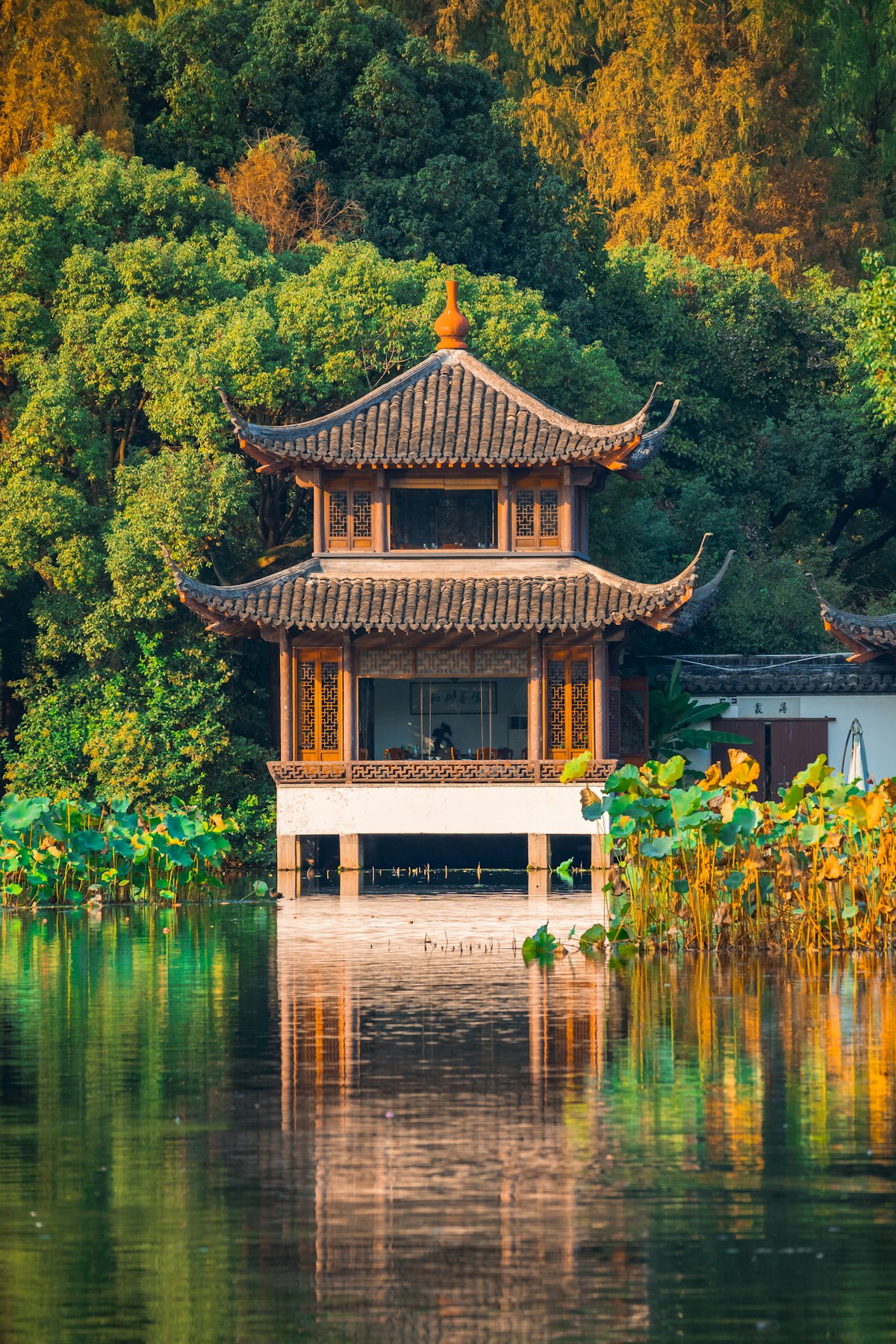
The city wraps around West Lake, a 6.5-square-kilometer body of water that has inspired Chinese poetry, painting, and garden design for over a thousand years. The hills around it are covered in Longjing (Dragon Well) tea bushes. Temples hide in the forest. The whole place feels like someone designed a city around the concept of a deep breath.
Chinese travelers come here for romance. West Lake at sunrise, with mist on the water and willow branches trailing in the breeze, is the most romantic spot in China according to several centuries of poets, and they weren’t wrong.
For a foreign traveler, Hangzhou works as either a 2-day escape from Shanghai or a 3-4 day destination in its own right. The infrastructure is excellent. The subway connects everything. The food is distinct from what you’ll eat in Shanghai or Beijing. And the city has a gentleness that makes it an ideal recovery stop between bigger, more demanding destinations.
West Lake: How to Do It Right
West Lake (西湖, Xī Hú) is the reason Hangzhou exists as a destination. It’s also the easiest place to get wrong.
The mistake most people make
They walk. The lake circumference is about 15 kilometers. Walking the whole thing takes 4-5 hours and leaves you tired, sore, and resentful of a lake that was supposed to be magical.
The right way
Rent a bike. Shared bikes are everywhere in Hangzhou, they cost ¥1-2 per hour, and there are dedicated bike lanes around most of the lake. The full loop takes about 90 minutes at a relaxed pace.
If you don’t want to bike, the sightseeing bus costs ¥4 and loops the lake. Hop on, hop off.
What to actually see
The lake has “Ten Scenes” (西湖十景), a canonized list that dates back to the Southern Song Dynasty. Some are better than others. These are the ones worth your time:
Su Causeway (苏堤). A 2.8-kilometer strip of land cutting across the lake, lined with willow and peach trees. Walk or bike it early in the morning before the tour groups arrive. In spring, the peach blossoms are spectacular. In any season, the view of hills reflecting in water is why Hangzhou postcards exist.
Broken Bridge (断桥). It’s not actually broken. The name comes from how melting snow reveals the bridge’s arch in winter. It’s the most famous spot on the lake and the most crowded. Go at sunrise or don’t bother.
Three Pools Mirroring the Moon (三潭印月). Three small stone pagodas rising from the water. This is the image on the back of the ¥1 note. You need a boat to reach the island they’re on. Official boats depart from Hubin Second Park, ¥20-55 depending on the route. The island itself is pleasant. The view back toward the city skyline is the real reward.
Leifeng Pagoda (雷峰塔). A rebuilt pagoda on a hill overlooking the lake. The original collapsed in 1924. The replacement has escalators and an elevator, which sounds awful but means the top-floor view over the lake is accessible to everyone. Go an hour before sunset. The golden light on the water and hills is worth the ¥40 ticket.
Viewing Fish at Flower Pond (花港观鱼). A garden at the southern end of Su Causeway. Koi ponds, peonies in spring, pavilions for sitting and doing nothing. It’s the most peaceful of the Ten Scenes.
When to go
Dawn, or don’t go. West Lake transforms from a tourist circus to a quiet local park between 6:00 AM and 8:00 AM. You’ll see elderly swimmers, tai chi practitioners, and photographers with tripods. By 9:00 AM the tour buses arrive and the spell breaks.
Weekdays only. Weekends feel like a holiday everywhere, and during any actual Chinese holiday the lake area becomes a contact sport.
Tea Culture: The Hills Around the Lake
Hangzhou produces Longjing (龙井), China’s most famous green tea. The bushes grow on terraced hillsides within 30 minutes of downtown. The tea is flat-pressed, pale green, and tastes like roasted chestnuts and spring grass.
Where to experience it
Longjing Village (龙井村). The epicenter. Tea bushes climb the hills in neat terraces. Every house is also a tea shop. You can walk through the fields, watch tea being pan-roasted by hand (a skill that takes years to learn), and sit for a tasting.
A cup of fresh Longjing at a village tea house runs ¥30-80 depending on grade. Nobody expects you to buy a kilo of tea afterward. The sitting and drinking is the point.
The walk from Longjing Village down through the terraces to the China National Tea Museum takes about 45 minutes. It’s downhill, shaded, and beautiful. The museum is free and surprisingly good — it covers tea history, tea ceremony, and tea varieties from every province.
Meijiawu (梅家坞). Less touristy than Longjing, more of a working tea village. Better for buying tea if you want to bring some home. Same terraces, fewer tour groups, more actual tea farmers.
When to go
Spring (late March through April) is tea-picking season. The hills are green, the air is fresh, and you can watch the harvest happening in real time. The earliest, most tender spring harvest (Mingqian, “pre-Qingming”) sells for hundreds of dollars per kilogram. You don’t need to buy that grade. The late-spring or autumn harvest still tastes better than 90% of what’s sold as “Longjing” outside China.
Lingyin Temple: Buddhism in the Forest
Lingyin Temple (灵隐寺, “Temple of the Soul’s Retreat”) is one of China’s largest and wealthiest Buddhist temples, tucked into a forested valley northwest of the lake. It was founded in 328 AD. It feels like it.
What to see
Feilai Peak (飞来峰). Before you reach the temple, you walk through a valley with over 300 Buddhist stone carvings dating from the 10th to 14th centuries. Some are tiny. Some are carved into cave walls. They’re worn by centuries of rain and touching hands.
The halls. The main hall contains a 25-meter camphor wood Buddha seated on a lotus throne. It’s one of the largest seated wooden Buddhas in China. The side halls have 500 life-sized arhat statues, each with a different facial expression.
The atmosphere. Lingyin is an active temple. Monks chant. Incense burns thick in the courtyards. Worshippers bow and offer fruit. This is not a museum with a gift shop; it’s a functioning religious site. Dress respectfully (shoulders and knees covered) and keep your voice down.
Strategy. Go at 7:00 AM when the temple opens. By 9:00 AM the tour groups have arrived and the quiet spiritual atmosphere has been replaced by megaphones and selfie sticks. Tickets are ¥75 (covers Feilai Peak and the temple). The temple grounds are large enough that even on a busy day, the outer paths stay peaceful.
If you want a quieter temple experience, Faxisi Temple (法喜寺) is further up the hill. It’s smaller, less famous, and gets a fraction of Lingyin’s visitors. The walk between temples through bamboo forest is better than either temple individually.
What to Eat in Hangzhou
Hangzhou cuisine is part of the Zhejiang school: lighter than Sichuan, less sweet than Shanghai, focused on fresh ingredients and subtle flavors. The local philosophy is that food should taste like itself.
West Lake Vinegar Fish (西湖醋鱼). The signature dish. Grass carp poached and topped with a sweet-sour vinegar sauce the color of caramel. It’s divisive — some travelers find it bland. Others consider it the best fish they ate in China. Lou Wai Lou (楼外楼), a restaurant on the lake since 1848, makes the canonical version. ¥60-80.
Dongpo Pork (东坡肉). Named after Su Dongpo, an 11th-century poet and governor of Hangzhou who allegedly invented it. Pork belly braised in soy sauce, sugar, and Shaoxing wine until it collapses at the touch of a chopstick. One cube is enough. It’s extremely rich. ¥50-70 for a portion.
Longjing Shrimp (龙井虾仁). Small river shrimp stir-fried with fresh Longjing tea leaves. The tea adds a vegetal bitterness that cuts through the sweetness of the shrimp. More interesting than delicious, but worth ordering once. ¥80-100.
Pian’erchuan (片儿川). The Hangzhou noodle soup that nobody outside Zhejiang knows about. Preserved vegetables, sliced pork, and bamboo shoots in a light broth over fresh noodles. It costs ¥15-25 and tastes like something a grandmother would make. Kui Yuan Guan (奎元馆), open since 1867, is the reference version.
Jiaohua Ji (叫花鸡). “Beggar’s Chicken” — a whole chicken wrapped in lotus leaves and clay, then baked and cracked open at the table. The legend: a hungry beggar stole a chicken, wrapped it in mud to hide it, and cooked it over a fire. The clay trapped the steam and produced the most tender chicken imaginable. ¥80-120. Order it a day ahead at Lou Wai Lou.
For something simpler: Zhi Wei Guan (知味观) near the lake serves an excellent breakfast of shrimp wontons, xiaolongbao, and beef glass noodles. It’s counter service. Point at what you want. It works.
Xixi Wetlands: The Lake’s Quieter Cousin
Xixi National Wetland Park (西溪湿地) is 11 square kilometers of waterways, reed beds, and old villages 5 kilometers west of West Lake. It’s a completely different ecosystem — instead of manicured gardens and pagodas, you get wild water channels, wooden boats, and birds.
Take a boat through the canals. There are several routes. The full loop takes about 2 hours and costs ¥60 for the boat plus park entry (¥80). The boat stops at various islands with restored villages, persimmon trees, and mulberry groves.
Xixi is at its best in autumn when the reeds turn golden and the persimmons ripen. In spring, plum blossoms attract half of Hangzhou. Go on a weekday morning and you might have sections of the wetlands to yourself.
Practical Matters
Getting there
High-speed train from Shanghai Hongqiao to Hangzhou East Station: 45-60 minutes, ¥75-120, trains every 15-30 minutes throughout the day. Hangzhou East is connected to the city center by metro Line 1 (15-20 minutes to Longxiangqiao station near West Lake).
If you’re flying in, Hangzhou Xiaoshan Airport (HGH) is 27 kilometers east of the city. Metro Line 19 connects it to downtown in 45 minutes for about ¥15. A Didi costs ¥150-200 and takes 30-40 minutes without traffic.
From Beijing, the high-speed train takes about 4.5-5.5 hours. From Nanjing, about 1.5 hours.
Getting around
The metro is clean, modern, and covers most places you’ll want to go. Line 1 runs from the train station to Longxiangqiao (West Lake) and Wushan Square (Hefang Street). Single rides cost ¥2-6.
Shared bikes are the best way to explore the lake and tea villages. Alipay scans the QR code. Helmet optional. Bike lanes are excellent.
Didi works the same as everywhere else in China. Fares within the city core rarely exceed ¥30.
Where to stay
The area around Longxiangqiao metro station puts you within walking distance of the lake, Hefang Street, and multiple restaurant clusters. This is the most convenient location for a first visit.
If you want atmosphere over convenience, guesthouses near Lingyin Temple or in the hills around Longjing Village offer forest views and morning birdsong in exchange for a longer trip to restaurants and the metro.
Budget: ¥200-400 gets a clean chain hotel near Longxiangqiao. Mid-range: ¥500-800 buys a boutique guesthouse or international brand with lake proximity. High-end: Amantfayun, Four Seasons, and the West Lake State Guest House run ¥1,500-4,000 and deliver the kind of experience where someone brings you tea without asking.
A Simple 3-Day Itinerary
Day 1 — The lake. Rent a bike at dawn. Ride Su Causeway while the mist is still on the water. Stop at Flower Pond, then boat out to Three Pools. Lunch near the lake. Leifeng Pagoda in the late afternoon for the sunset view. Evening walk through Hefang Street — it’s touristy but the old-style architecture looks good at night.
Day 2 — The hills. Early morning at Lingyin Temple (arrive by 7:00 AM to beat the crush). Walk the Feilai Peak carvings while the light is still low. Late morning: taxi or bus up to Longjing Village. Walk through the tea terraces. Tea tasting at a village house. Descend to the Tea Museum. Evening: Dongpo Pork and a well-deserved beer somewhere near Wushan Square.
Day 3 — The wetlands or wherever you want. Xixi Wetlands for a morning boat ride if you’re still in explore mode. Or skip it and revisit your favorite stretch of the lake. Hangzhou rewards slow travel. Sitting by the water with a cup of Longjing and no agenda is a legitimate use of an afternoon.
If you only have two days, drop Day 3. The lake and the tea hills are the essential Hangzhou experience.
Hangzhou vs. Other Chinese Cities
If you’ve already done Beijing and Shanghai, Hangzhou fills a specific gap. Beijing is imperial and monumental. Shanghai is modern and fast. Hangzhou is neither — it’s the city that reminds you Chinese civilization also values stillness, beauty, and the taste of fresh tea on a hillside.
Suzhou gets compared to Hangzhou often. They’re both classical garden cities near Shanghai. Suzhou is about enclosed, designed beauty — walls within walls, gardens that unfold like puzzles. Hangzhou is about open beauty — a lake you can see across, hills you can walk into, tea bushes growing in the middle of a metropolis. Suzhou for the gardens. Hangzhou for the landscape. Both if you have time.
Hangzhou is not a city that tries to impress you. It doesn’t need to. The lake has been doing the work for 1,200 years.