Longji Rice Terraces Guide: Is It Worth the Drive from Yangshuo? (2026)
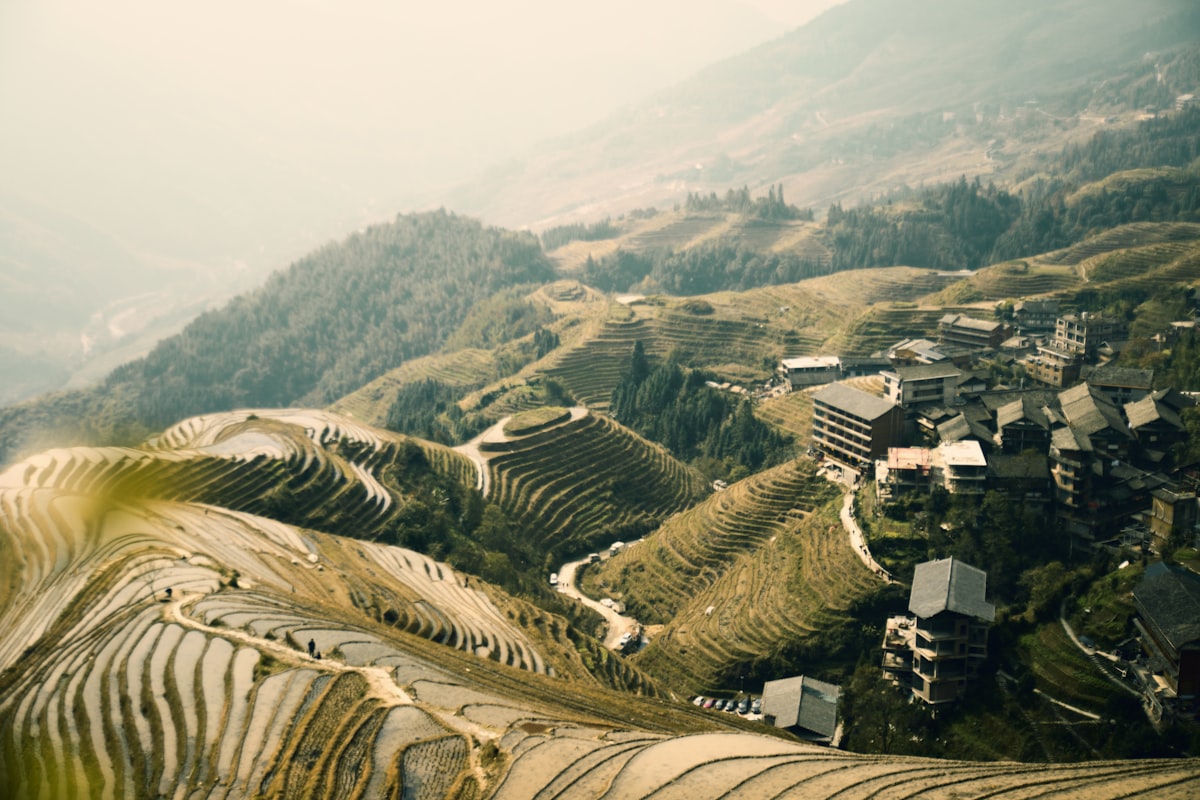
There’s a moment when you reach the viewpoint at Longji. Rice terraces — hundreds of them — cascade down the mountainside in elegant curves, each one a mirror of still water reflecting the sky. The Zhuang and Yao people have been building and farming these terraces for 650 years.
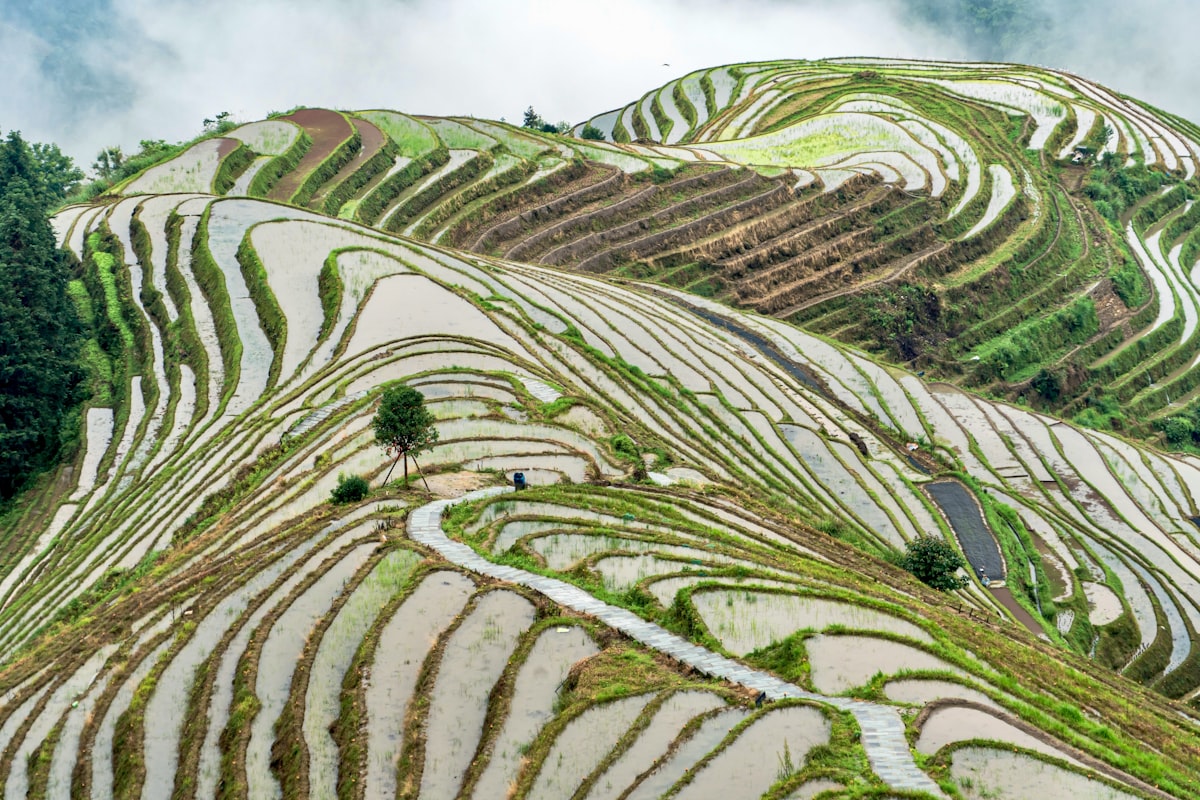
The question is: should you spend 4+ hours in a car to see them when Yangshuo’s karst peaks are right outside your window?
For some travelers, Longji is the highlight of their entire China trip. For others, it’s an exhausting detour that eats a day they’d wish they’d spent cycling through the karst countryside.
This guide helps you decide which camp you’re in.
Quick Facts
| Detail | Info |
|---|---|
| Location | ~80km north of Guilin, ~2–2.5 hrs drive |
| From Yangshuo | ~4 hrs one way (minimum) |
| Entrance fee | ¥80/person (valid 48 hours, covers Ping’an, Jinkeng/Dazhai, and Guzhuang) |
| Best season | Mid-May to early June (water mirrors) or late Sep to mid-October (golden harvest) |
| Cable car | Available at Jinkeng/Dazhai only — ¥55 one-way, ¥100 round-trip to Golden Buddha Peak |
| Stay overnight? | Strongly recommended — sunrise from the terraces is the whole point |
| Languages | Zhuang and Yao minority languages spoken. Basic Mandarin at guesthouses. Very limited English. |
| Altitude | 800–1,100m — cooler than Guilin, bring layers |
| Cash | Essential — few ATMs in the villages |
The “Is It Worth It?” Decision Tree
This is the honest answer most travel guides won’t give you. Longji is incredible — but it’s not for every itinerary.
| Your Situation | Verdict |
|---|---|
| You have 3–4 days total in Yangshuo | SKIP. The 8+ hours round-trip driving eats too much time. Yangshuo’s karst scenery is exceptional on its own. Save Longji for your next trip. |
| You have 5+ days in Guilin/Yangshuo | GO. You have time. Make it a day trip from Guilin, or better — stay overnight. |
| You’re a photographer | GO. The terraces at sunrise, filled with water, are some of the best photography in China. Bring a tripod. |
| You’re visiting mid-May to early June | GO. This is peak water mirror season — the paddies are flooded, and each terrace reflects the sky. This is THE shot. |
| You’re visiting late Sep to mid-October | GO. Golden harvest season. The rice glows yellow-gold in afternoon light. Equally spectacular. |
| You’re visiting November to mid-April | SKIP. Brown bare fields. The magic is gone. Snow is possible in winter but rare. |
| You love hiking and ethnic minority culture | GO. The villages are authentic, the hiking between viewpoints is beautiful, and the Zhuang/Yao cultures are fascinating. |
| You’re traveling with young kids or elderly family | CAUTION. The stone paths are steep, uneven, and slippery when wet. Jinkeng + cable car round-trip is the only practical option. |
| Heavy rain is forecast | SKIP. Stone paths become dangerously slick, and visibility can drop to near zero. |
The short version: If your trip coincides with the water mirror or golden harvest seasons and you have at least 5 days, go. If you’re here in the off-season or are tightly packed into 3–4 Yangshuo days, skip it and spend your time at our Guilin & Yangshuo guide instead.
Ping’an vs Jinkeng/Dazhai — Which Village?
Longji isn’t one place. It’s a collection of Zhuang and Yao minority villages spread across the terraced valley, each with a different character. The two main choices:
| Ping’an (平安壮寨) | Jinkeng/Dazhai (金坑大寨) | |
|---|---|---|
| Ethnic group | Zhuang minority | Yao minority |
| Terrace style | Elegant, classic curves, smaller scale, more intimate | Massive, dramatic, the largest terrace area in Longji |
| Famous viewpoints | ”Seven Stars Accompany the Moon” + “Nine Dragons and Five Tigers” | Three viewpoints: West Hill Music, Thousand-Layer Staircase, Golden Buddha Peak |
| Cable car? | No — walking only | Yes — ¥55 one-way, ¥100 round-trip to Golden Buddha Peak |
| Hiking difficulty | Moderate (well-paved stone paths, shorter distances between viewpoints) | Moderate to hard (longer distances, steeper inclines) |
| Crowds | More popular with Chinese tour groups | Slightly fewer, especially at upper viewpoints |
| Best for | Comfortable walking, classic terrace photos, day trippers, more restaurant options | Photographers, dramatic scenery, cable car accessibility, larger scale |
| Accommodation | More guesthouses and restaurants, better evening atmosphere | Basic but adequate — a handful of guesthouses with terrace views |
| Village atmosphere | Busier, more developed tourism infrastructure | Quieter, more rustic, fewer shops and restaurants |
Which One for Your Trip?
For a single day trip: Jinkeng/Dazhai + cable car to Golden Buddha Peak. You get the most dramatic, large-scale views with minimal physical effort. The cable car takes about 20 minutes each way and the panoramic view from the top is the best single viewpoint in all of Longji. Walk down through the terraces for a closer look (about 45–60 minutes), or take the cable car both ways if you’re tired or short on time.
For an overnight stay: Ping’an. The village has more character, more dinner options, and both famous viewpoints are walkable from the village center. Sunrise at “Seven Stars Accompany the Moon” is the classic Longji shot. You’ll have time to hike between viewpoints, explore the village lanes, and soak in the atmosphere without rushing.
For photographers: Stay overnight at Jinkeng. The scale is unmatched, the light at Golden Buddha Peak at sunrise is spectacular, and there are three distinct viewpoints offering completely different compositions.
For accessibility: Jinkeng + cable car round-trip. It’s the only option that avoids the steep stone staircases entirely.
The Seasons — What You’ll Actually See
The terraces look completely different depending on when you visit. This is the most important thing to understand before you commit to the drive:
| Period | What the Terraces Look Like | Rating |
|---|---|---|
| Mid-May to early June | WATER MIRRORS. Paddies flooded, each terrace a mirror reflecting the sky, clouds, and sunrise. This is what’s on the postcards. | ★★★★★ |
| Late Sep to mid-October | GOLDEN HARVEST. Rice is yellow-gold, heavy with grain, ready to cut. Glowing in late afternoon light. Harvest happens fast — within 1–2 weeks once it starts. | ★★★★★ |
| Mid-June to early September | VIBRANT GREEN. Rice growing tall, lush uniform green carpet across the mountainsides. Pretty and photogenic, but less dramatic than the mirror or golden phases. Hot and humid. | ★★★★ |
| November to mid-April | BARE/BROWN. Fields empty, earth exposed. The structure of the terraces is still visible, but the color and life are gone. Snow possible in January–February (rare but beautiful if it happens). Only visit if you specifically want solitude. | ★★ |
Best single weeks: Last week of May (water mirrors at absolute peak) or first week of October (golden harvest before cutting begins).
Golden Week warning: Avoid October 1–7 entirely. Chinese National Day holiday transforms Longji’s narrow stone paths into shoulder-to-shoulder crowds. The viewpoints become standing-room-only, and sunset/sunrise spots fill an hour before the light happens. If your dates fall during Golden Week, skip Longji entirely.
Weather note: The terraces sit at 800–1,100m elevation. It’s consistently 5–10°C cooler than Guilin city. Morning mist is common year-round — it’s actually good for photography, creating layers of fog between the terrace levels. But dense fog means zero visibility. Check the forecast the day before and be ready to adjust plans. Bring a light jacket even in summer.
Logistics — How to Get There
Getting to Longji
| Option | From Guilin | From Yangshuo |
|---|---|---|
| Chartered car (best) | ¥300–400 round trip, ~2–2.5 hrs each way. Driver waits while you explore. Arrange through your hotel or Didi. | ¥500–700 round trip, ~4+ hrs each way. Very long day — leave by 6:00 AM. |
| Direct bus | Guilin Qintan Bus Station. ¥50–65, ~2.5 hrs. Multiple departures 7:00 AM–3:30 PM. Routes to Ping’an or Jinkeng/Dazhai. | Not practical — requires bus to Guilin first, then another bus to Longji. Adds 2+ hours. |
| Organized tour | ¥300–500/person from Guilin. Includes transport + entrance + guide. Book via Trip.com or your hotel. | Rare from Yangshuo. Better to position yourself in Guilin the night before. |
| Self-drive | ~2–2.5 hrs. Park at scenic area entrance, then shuttle or walk in. Private cars aren’t allowed into the village areas. | ~4+ hrs each way. Same parking restriction applies. |
Day Trip Timeline (from Guilin)
- 7:30 AM — Depart Guilin by chartered car
- 9:30–10:00 AM — Arrive at Longji scenic area entrance. Buy tickets (¥80). Transfer to village shuttle or walk
- 10:30 AM — Cable car up (Jinkeng) or begin hike to first viewpoint (Ping’an)
- 12:00 PM — Lunch at a village guesthouse: bamboo rice (竹筒饭), stir-fried local vegetables, Yao-style cured pork
- 1:00 PM — Second viewpoint or hike between viewpoints
- 3:00–3:30 PM — Begin descending
- 4:00 PM — Depart for Guilin
- 6:30 PM — Back in Guilin
The Overnight Option (Recommended)
- Day 1: Arrive mid-afternoon. Check into guesthouse (¥200–800/night depending on standard). Sunset from the nearest viewpoint with a beer or tea.
- Day 2: Sunrise at 5:30 AM — the terraces at dawn, filled with water, are the entire reason to stay overnight. Breakfast at the guesthouse. Hike to a second viewpoint. Depart by noon.
The Yangshuo Problem
Let’s be blunt: doing Longji as a day trip from Yangshuo is brutal. You’re looking at 8+ hours of driving in a single day. If Longji is a priority, spend the night before in Guilin and make it a day trip from there — or better yet, stay overnight at the terraces. The Guilin-to-Longji drive is under 3 hours; the Yangshuo-to-Longji route nearly doubles that.
If you’re coming from Yangshuo and determined to visit Longji, consider this: Yangshuo → Guilin by bus or train (1.5 hrs), overnight in Guilin, then Longji day trip the next morning. Much more civilized. For more on getting between cities, see our China high-speed rail guide.
What to Expect at the Terraces
A Living Landscape
Longji isn’t a tourist attraction that was built for visitors — it’s a living agricultural landscape that’s been cultivated continuously for 650 years. The Zhuang (Ping’an) and Yao (Jinkeng/Dazhai) minority groups still live here, farm here, and maintain the terraces by hand. You’ll see farmers working the paddies with water buffalo, traditional wooden stilt houses (吊脚楼) built into the hillsides, and irrigation channels that have functioned for centuries.
The terraces are an engineering marvel. Each individual paddy is leveled by hand. The water system — fed by mountain springs and rainfall — distributes water from the highest terraces down through hundreds of levels without pumps. This is why the terraces are sometimes called the “Dragon’s Backbone” — the ridgelines of terraces look like the scales on a dragon’s back, spiraling up the mountain.
The Yao Women’s Hair
Yao women in the Jinkeng area are famous for their extremely long hair — some over 1.8 meters — which they cut only once in their lives, at age 16–18, as part of a coming-of-age ceremony. The uncut hair is then coiled and worn as part of their traditional headdress.
In Jinkeng, some older Yao women perform hair-unwrapping demonstrations for visitors. It’s genuinely striking to see hair that’s never been cut in 60+ years unwound to its full length. A small tip (¥10–20) is appropriate if you stop to watch.
A note on Huangluo Yao Village: There’s a separate “Long Hair Village” (黄洛瑶寨) marketed as a tourist attraction near Longji. It offers hair-unwrapping shows and cultural performances but has minimal terrace views. Skip it unless the hair tradition specifically interests you — the real terraces are elsewhere.
Shopping & Scams
Village paths are lined with small stalls selling embroidered textiles, silver jewelry, local teas, and dried chili. Browsing is fine. Some travelers report being pressured to buy — a firm “bu yao, xie xie” (不要谢谢 — “no thank you”) works. The vendors are persistent but not aggressive.
Photo-then-charge scam: This has been reported at Longji. Someone in traditional dress poses near you, a companion takes a photo of you together, then they chase you demanding ¥50–80 for the photo. Politely but firmly refuse to pay. If you want a photo of or with someone in traditional dress, ask first and agree on any payment beforehand. A ¥10–20 tip is standard and appreciated.
Photography Guide
When and Where
- Sunrise: This is the whole point of staying overnight. Terraces filled with water act as mirrors for the dawn sky — gold, pink, orange reflecting across dozens of levels at once. Tripod essential. Arrive 30 minutes before sunrise. “Seven Stars Accompany the Moon” at Ping’an and Golden Buddha Peak at Jinkeng are the classic sunrise spots.
- After rain: Mist rises from the valleys between terraces, creating layers of fog at different elevations. This is your best chance at an atmospheric, moody, award-worthy shot. Wait out the rain at a guesthouse with tea, then head out when it clears.
- Golden hour (late afternoon): In harvest season (Sep–Oct), the low afternoon sun turns the golden rice electric. Shoot from an east-facing viewpoint looking west.
Gear
- Wide-angle (16–35mm): For sweeping terrace views that capture the scale — multiple levels of terraces receding into the distance.
- Telephoto (70–200mm): To compress terrace layers and isolate patterns, textures, and individual workers in the paddies.
- Tripod: Non-negotiable for sunrise and sunset. The light is low and you’ll want sharp detail across the depth of the terraces.
- Polarizing filter: Cuts glare off the water surfaces, revealing the mud patterns beneath the flooded paddies.
- Drone: Technically restricted at Longji. Check current regulations before flying. Enforcement varies — some photographers fly without issue, others are stopped. The aerial perspective is spectacular, but don’t count on it.
Composition Tips
- Leading lines: The terrace ridges create natural leading lines that draw the eye through the frame. Position yourself so the ridges flow diagonally.
- Reflections: In water mirror season (May–June), shoot low and close to the water surface to maximize reflections of sky and clouds.
- People for scale: A farmer working in a distant paddy or a figure on a path provides scale — the terraces are so vast they can look abstract without a human reference point.
- Clothing for self-portraits: Red or white clothing contrasts beautifully against green rice, golden harvest, or reflective water. Traditional Yao red outfits are particularly striking against the green terraces.
Practical Tips
Cash is not optional. There are very few ATMs in the villages, and the ones that exist are unreliable. Bring enough RMB for your entrance fee, meals, guesthouse, cable car, and any shopping. ¥300–500 per person for a day trip, ¥600–1,000 for an overnight.
Wear non-slip shoes. The stone paths have been polished smooth by decades of foot traffic. When wet — which is often, given the mist and rain at this elevation — they become dangerously slippery. Hiking shoes with good grip or sturdy hiking sandals (like Tevas or Chacos) work well. Fashion sneakers with smooth soles are a bad idea. Flip-flops are asking for an injury.
Pack light. Large luggage can be stored at the scenic entrance (¥10/day). You’ll be walking a lot — up stairs, down stairs, along narrow paths between paddies. A small daypack only. If staying overnight, one small backpack for your overnight things is plenty.
The stairs are real. Between viewpoints, between villages, everywhere — there are stone stairs. Hundreds of them. If stairs or steep inclines are a problem, Jinkeng + cable car round-trip is your only viable option for seeing the terraces with minimal climbing.
Mosquito repellent is essential in summer and autumn. The paddies are standing water, which means mosquitoes. Apply repellent before you start walking.
Book guesthouses in advance during peak seasons: May–June, September–October, and all Chinese public holidays. The best guesthouses with terrace-view rooms book out weeks ahead.
English is very limited. Guesthouse staff may know a handful of words. Restaurant menus may or may not have English. Download an offline Chinese translation app (Google Translate with downloaded Chinese pack, or Pleco) before you go. Pointing at dishes and smiling works fine.
Bring layers. It’s 5–10°C cooler than Guilin at 800–1,100m elevation. Mornings are chilly even in summer. A light fleece or windbreaker is useful year-round.
Check the weather the day before. Heavy rain means two things: dangerously slippery paths and potential zero visibility from fog at the viewpoints. If the forecast shows solid rain all day, consider rescheduling.
Cost Breakdown
| Item | Day Trip (¥) | Overnight (¥) |
|---|---|---|
| Entrance fee (valid 48 hrs) | ¥80 | ¥80 |
| Transport — chartered car from Guilin (per car, split 2–4 ways) | ¥150–200/person | ¥150–200/person |
| Transport — shared/direct bus from Guilin | ¥50–65/person | ¥50–65/person |
| Cable car (Jinkeng, round-trip) | ¥100 | ¥100 |
| Lunch | ¥40–80 | ¥40–80 |
| Dinner + Breakfast | — | ¥60–120 |
| Guesthouse (double room) | — | ¥200–800 |
| Total (per person, chartered car) | ¥370–460 | ¥630–1,380 |
| Total (per person, bus) | ¥270–325 | ¥530–1,280 |
| Total in USD (approx.) | $38–64 | $74–193 |
Prices are per person unless noted. Chartered car cost assumes 2–3 people splitting the fare. Guesthouse prices vary dramatically — ¥200 gets you a basic room in a family-run house, ¥800 gets you a boutique room with floor-to-ceiling terrace views.
Common Mistakes
-
Visiting November–April expecting the “mirror terraces.” You’ll get brown dirt. The photos you’ve seen online were taken in May–June or September–October. Off-season visitors consistently report disappointment.
-
Not bringing cash. No ATMs in the villages. No WeChat Pay or Alipay accepted everywhere (many small vendors are cash-only). You don’t want to be unable to pay for lunch or your guesthouse.
-
Wearing fashion shoes on wet stone paths. The paths are polished stone. When wet, they’re ice. Hiking shoes or sturdy sandals with grip only.
-
Trying to do Longji as a day trip from Yangshuo. This means 8+ hours of driving in a single day. You’ll spend more time in the car than at the terraces. Stay in Guilin the night before, or overnight at the terraces themselves.
-
Not bringing a tripod for sunrise. The light is low, the terraces are deep, and you need sharpness front to back. Handheld shots at dawn will disappoint you when you look at them later.
-
Visiting during Golden Week (October 1–7). The narrow stone paths between viewpoints become genuinely dangerous with crowds. Sunrise spots fill an hour before dawn. Skip it.
-
Not checking the weather. Heavy rain = slippery paths + near-zero visibility from fog. If the forecast is solid rain, change your plans.
-
Paying the “photo charge” scam. Don’t pay ¥50–80 if someone demands money for a photo you didn’t agree to. Offer ¥10–20 if you voluntarily take a photo of someone in traditional dress and want to be courteous.
-
Expecting English. It’s a remote minority village area in rural Guangxi. Download offline translation before you go.
Bottom Line
Longji isn’t for everyone.
If you have 3–4 days in Yangshuo, skip it — the karst scenery is enough, and you’ll resent losing a full day to driving. If you’re visiting between November and April, skip it — the bare brown terraces won’t match the photos in your head.
But if you have 5+ days in the Guilin area, visit in May–June or September–October, and can spare a day and a half… the terraces at sunrise, filled with water, reflecting the sky in a hundred different mirrors at once — that’s one of the great sights in China.
Spend the night. Wake up early. Bring your tripod.
You’ll understand why people have been farming these mountains for 650 years.