Xi'an Food Guide: Roujiamo, Yangrou Paomo & the Muslim Quarter's Real Eats (2026)
Xi’an is where China’s greatest food cultures collided. The Silk Road brought Persian, Central Asian, and Middle Eastern influences through this city for over a thousand years. The Muslim Hui community — descendants of those traders — built an entire culinary tradition that exists nowhere else in China. The surrounding Shaanxi province contributed the bold, wheat-based, sour-spicy northern Chinese cooking that defines the region. This is not Beijing food. This is not Shanghai food. This is Xi’an, and food is the reason some travelers come here and skip the Terracotta Warriors entirely.
If you are still planning your trip, start with our Xi’an first-timer guide. And if you have not set up mobile payment yet, read our China mobile payment guide — you will need Alipay for almost every stall and restaurant in this guide.
The Big Five: Must-Eat Dishes
These five dishes are the Xi’an canon. Skip them and you skipped the city.
1. Roujiamo (肉夹馍) — “Chinese Hamburger” Is a Terrible Description
Stop calling roujiamo a Chinese hamburger. It is a fist-sized disk of flatbread — shatteringly crisp outside, pillowy and steaming inside — split open and stuffed with chopped, long-braised meat that has been simmered for hours with star anise, cassia bark, cumin, and Sichuan peppercorns until it collapses into strands. The bread is the secret: it is baked in a clay oven (not a pan, not a griddle) until the surface blisters into tiger-skin spots. When you bite through the crust, the steam escapes, and the bread’s inside catches every drop of the meat’s spiced fat.
In the Muslim Quarter, the filling is beef or lamb. Outside it, in the rest of the city, pork is the classic — specifically la zhi (腊汁) pork, which is pork belly slow-braised in a master stock that some shops have maintained for decades.
Price: ¥8–15 ($1.10–2.10) at street stalls; ¥15–25 ($2.10–3.50) at sit-down restaurants.
Where to find the best:
- Fan Ji (樊记肉夹馍) — This is the pork roujiamo temple. Operating since 1925. The meat is dark, deeply spiced, and the bread is baked to order. Multiple locations; the one near the Drum Tower is easiest to find.
- Muslim Quarter stalls — For beef/lamb roujiamo, look for a stall where the bread is visibly being baked fresh behind the counter. If you see someone pulling flatbreads out of a clay oven with tongs, join that queue. If the bread is sitting in a steamer tray being reheated, keep walking.
- Liu Jixiao (刘纪孝腊牛肉) on Xiyangshi — Dry-cured beef sandwiches that draw queues around the block. ¥20.
How to order: “一个肉夹馍” (yī gè ròu jiā mó — one roujiamo). In the Muslim Quarter, add “牛肉的” (niú ròu de — beef) or “羊肉的” (yáng ròu de — lamb) to specify. At Fan Ji, the default is pork — glorious, glorious pork.
2. Yangrou Paomo (羊肉泡馍) — The Xi’an Dish That Takes Work
This is the dish that defines Xi’an, and it demands more from you than any other meal in China. Here is how it works:
You sit down. The server brings you an empty wide-rimmed bowl and one or two rounds of dense, unleavened flatbread (馍). No broth yet — just you and the bread. Now you tear. The bread must be torn into pieces smaller than a fingernail — locals say the size of a soybean. This takes 15 to 25 minutes. Your table will be covered in a light dusting of bread crumbs. The grandmother at the next table will be done before you. This is normal. Do not rush. The smaller you tear, the more surface area for the broth to absorb, and the better the final dish will be.
When you finish, a server takes your bowl back to the kitchen. The torn bread is cooked in a rich, milky lamb bone broth with thin-sliced mutton, vermicelli noodles, wood ear fungus, and sometimes tofu. The bread absorbs the broth but stays chewy — it does not disintegrate. The bowl returns to you steaming, topped with chopped cilantro and a side of pickled garlic cloves and chili paste.
That first spoonful — the soaked bread, the lamb, the broth — is one of the great bites in Chinese food.
Price: ¥25–40 ($3.50–5.60) at most shops; ¥40–60 ($5.60–8.40) at the famous names.
Where to go:
- Lao Sun Jia (老孙家泡馍) near Bell Tower — The historic name. Big dining halls, English-friendly, reliable. The broth is deep and the mutton is sliced thin as paper.
- Tongshengxiang (同盛祥) also near Bell Tower — Another old-guard institution. Their broth has a slightly stronger star anise profile. Slightly fancier dining room.
- Lao Mi Family Dayu Paomo (老米家大雨泡馍) on Xiyangshi — The Muslim Quarter legend. More rustic, arguably better broth. Queues form by 11:30 AM.
- Yizhenlou (一真楼) on Dapiyuan — Rich bone broth, generous portions, less touristy.
How to order: “一碗羊肉泡馍” (yī wǎn yáng ròu pào mó — one bowl lamb paomo). Most shops offer two grades: “普通” (pǔ tōng, standard) and “优质” (yōu zhì, premium). Premium gets you more mutton and a richer broth. Pay the extra ¥10–15 — it is worth it. If 20 minutes of bread-tearing sounds exhausting, some shops offer machine-chopped bread (机切馍, jī qiē mó), but locals will absolutely notice, and you will lose the ritual that makes paomo what it is.
3. Biangbiang Noodles (biangbiang面) — The Belt Noodles with the Impossible Character
The character “biang” has 58 strokes. It is one of the most complex Chinese characters still in regular use, and every noodle shop in Xi’an displays it proudly on their sign. Google it on your phone — it looks like a medieval manuscript crammed into a single glyph. There is a nursery rhyme that children learn just to remember how to write it.
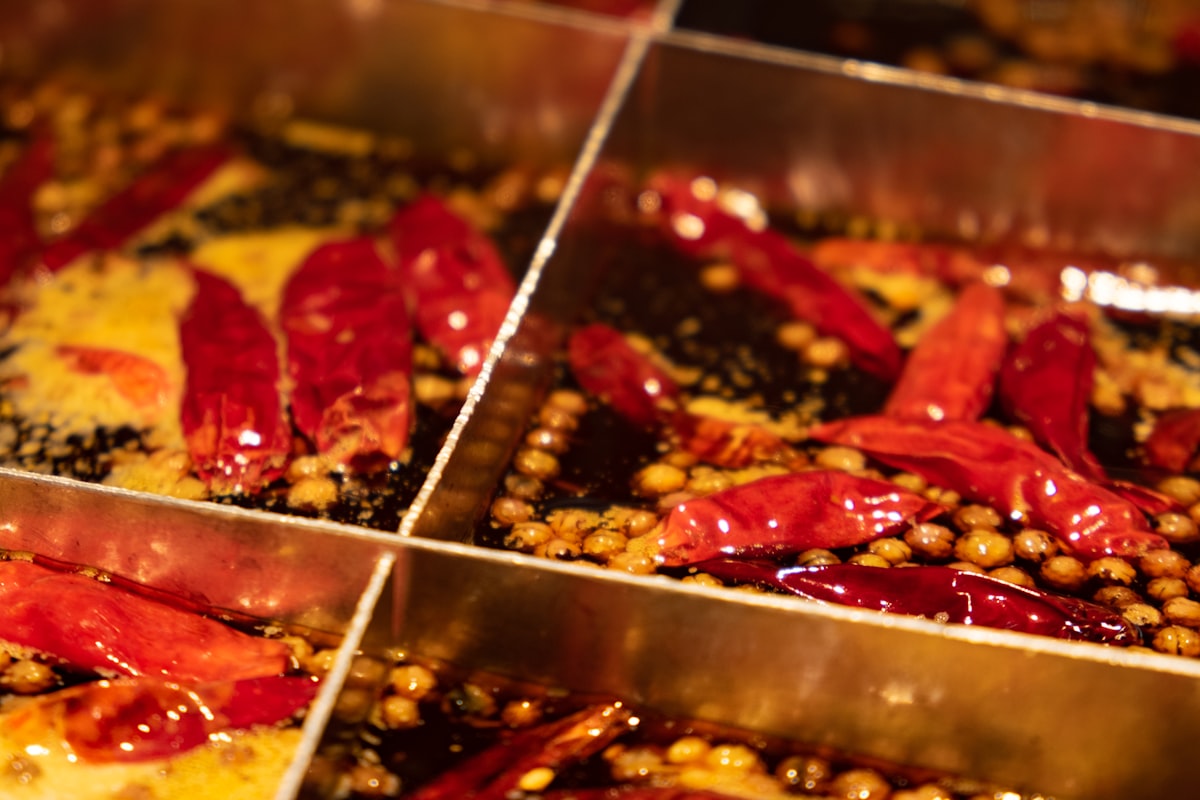
The noodles themselves are equally bold: hand-pulled wheat noodles as wide as a belt, thick and aggressively chewy, laid in a wide bowl and topped with a blizzard of chili flakes, minced garlic, chopped scallion, salt, and sometimes blanched bok choy or bean sprouts. The server brings the bowl to your table. Then — the moment — a ladle of smoking-hot oil is poured over the top. The chili sizzles. The garlic blooms. The scallions release their fragrance into the air. You mix it all together with chopsticks until every strand is coated red.
The taste is pure Shaanxi: wheat-forward, sour from black vinegar, hot from the chili oil, garlicky, salty. It is comfort food cranked to maximum volume.
Price: ¥12–20 ($1.70–2.80) at casual shops; ¥20–30 ($2.80–4.20) at sit-down restaurants.
Where to find it:
- Biangbiang Noodle King (biangbiang面王) near the Drum Tower — Tourist-friendly but legit. Menu has pictures. The biangbiang with tomato-egg and pork is the crowd pleaser; the version with hot chili oil (油泼, yóu pō) is the one locals order.
- Any noodle shop with the biang character on the sign — If the sign has that absurdly complex character and the cook is pulling noodles by hand in the window, you are in the right place. These shops are everywhere in the alleys behind the Bell Tower.
How to order: “一碗biangbiang面” followed by pointing at the menu. If you want the classic oil-splash version: “油泼biangbiang面” (yóu pō biangbiang miàn). If you want the tomato-egg version: “西红柿鸡蛋biangbiang面” (xī hóng shì jī dàn biangbiang miàn). Add “不要辣” (bù yào là) if you genuinely cannot handle heat — but the chili oil is the point of the dish.
4. Lamb Skewers (羊肉串) — The Smell That Defines the Muslim Quarter
Walk into the Muslim Quarter after 6 PM and the first thing that hits you is not a sight — it is the smell. Charcoal smoke, sizzling lamb fat, and cumin — heavy, smoky, nose-filling cumin. Follow that smell.
Xi’an lamb skewers are built on a deceptively simple formula: small cubes of lamb (alternating fat and lean) threaded onto thin metal or bamboo skewers, grilled over open charcoal, dusted generously with cumin, chili flakes, salt, and sometimes Sichuan pepper. The fat renders and drips onto the coals, sending up plumes of fragrant smoke that baste the meat as it cooks. Each skewer takes maybe three minutes over the fire. You eat them standing up, one hand holding the skewer, the other shading your mouth as you bite the hot meat off the stick.
Eat five. Eat ten. They are ¥1–3 each at basic stalls, ¥3–5 at the sit-down barbecue restaurants, and you will watch locals demolish twenty without blinking.
Where to go:
- Gaojia Lamb Skewers (高家烤肉) — The most famous skewer shop in the quarter. Simple, smoky, consistent. They use only charcoal (never electric), and the queue tells you everything.
- Hasang Barbecue (哈桑烤肉) on Sajinqiao — Locals’ pick. Salt-seasoned rather than cumin-heavy, which lets the lamb flavor come through. ¥40 for a full meal’s worth.
- Side alleys off Xiyangshi and Dapiyuan — Look for charcoal smoke and a crowd of locals queueing. If the grill is electric, walk on. If the smoke is visible from 20 meters away, join the crowd.
How to order: Usually you just grab a handful and the vendor counts at the end. If you need to order verbally: “十串羊肉串” (shí chuàn yáng ròu chuàn — ten lamb skewers). “辣” (là) means spicy, “不辣” (bù là) means not spicy — but cumin will still be on them regardless.
5. Soup Dumplings / Guantang Baozi (灌汤包子) — Xi’an’s Lamb-Broth Bombs
Shanghai has xiaolongbao. Xi’an has guantang baozi. They are cousins, not twins.
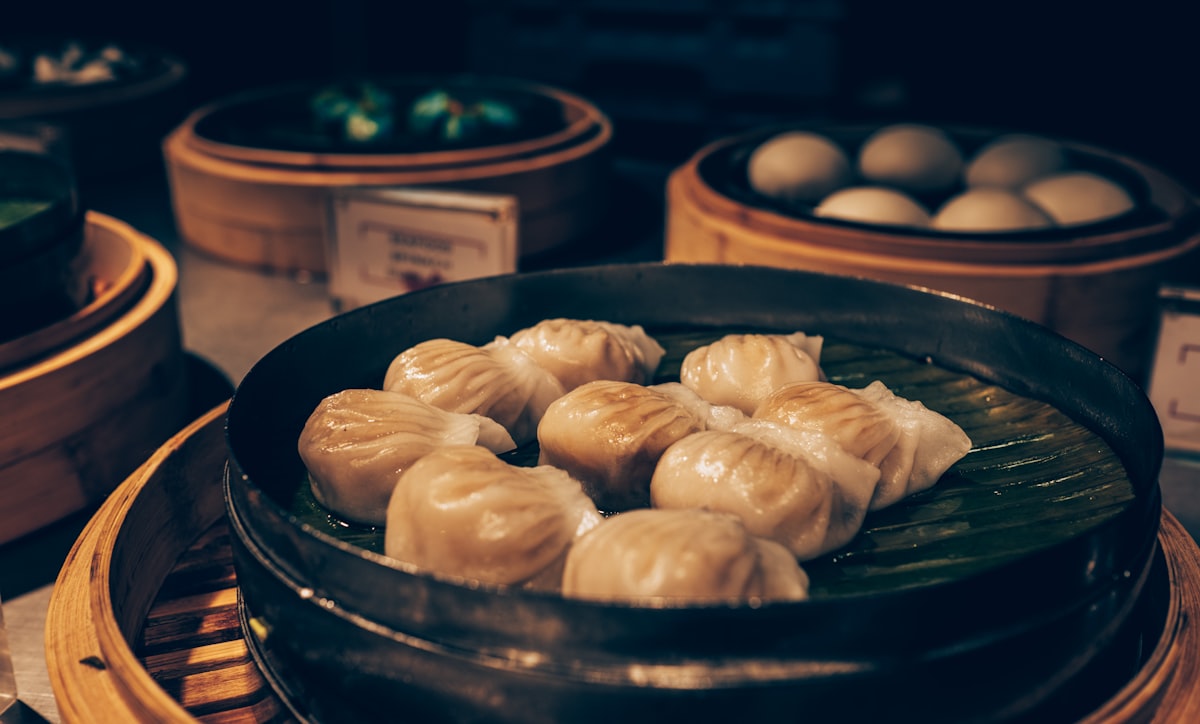
Xi’an soup dumplings have a thicker, chewier wheat wrapper — more substantial than the tissue-thin skin of a Shanghai xiaolongbao. The filling is minced lamb (not pork — remember, Muslim Quarter rules) mixed with aspic that melts during steaming into a hot, savory lamb broth. When you pick one up with chopsticks, you can feel the liquid sloshing inside.
The Xi’an way to eat them: lift the dumpling carefully (a bamboo steamer basket means they will not stick), place it in your spoon, bite a small hole in the skin, and slurp the broth out first — careful, it is lava-hot. Then eat the wrapper and filling in one bite, ideally after dipping in a dish of dark Shaanxi vinegar mixed with chili oil. The vinegar cuts the richness of the lamb broth. The chili adds a slow-building warmth.
Price: ¥20–35 ($2.80–4.90) for a steamer basket of 8–10 dumplings.
Where to go:
- Jia San (贾三灌汤包子) on Beiyuanmen (the Muslim Quarter main street) — This is the name. Multiple floors, always busy, and deservedly so. Their dumplings have exactly 18 folds, the wrappers are thin but never break, and the lamb broth inside is clear and intense. The beef version (牛肉灌汤包) is also excellent. Order one basket of each.
- Ruibaozhai (瑞宝斋) — New in 2026, serving excellent sour soup dumplings. Beef and chive filling in a hot-and-sour broth. ¥20/person. A fresh addition to the scene.
How to order: “一笼灌汤包子” (yī lóng guàn tāng bāo zi — one steamer of soup dumplings). Specify “羊肉的” (yáng ròu de — lamb) or “牛肉的” (niú ròu de — beef). At Jia San, ask for the vinegar and chili oil if they are not already on your table.
Beyond the Big Five: Deep Cuts Worth Finding
The Big Five are the non-negotiables. These are the dishes that turn a food trip into an obsession.
Liangpi (凉皮) — Cold Skin Noodles
A dish that defines Xi’an summers but is eaten year-round. Wide, slippery wheat-starch noodles — translucent, bouncy, served cold — tossed with shredded cucumber, bean sprouts, a thick sesame paste, black vinegar, and a generous spoonful of chili oil. The texture is the point: the noodles slide rather than chew, and the sesame paste clings to every strand. It is refreshing, spicy, nutty, and costs almost nothing.
Price: ¥8–15 ($1.10–2.10). Where: Shengzhiwang Cold Noodles (盛志望麻酱酿皮) on Dapiyuan is the most famous. Look for shops with a glass case showing trays of the pale noodles.
Hulutou (葫芦头) — “Gourd Head” Soup
The name comes from the shape of the pig intestine slices in the soup, which curl into rings that supposedly resemble gourd segments. This is pork intestine soup — rich, peppery, with flatbread torn in (paomo-style) and a broth heavy on white pepper and Sichuan peppercorn. It sounds intimidating. It tastes like the best pork ramen broth you have never had. Critically: you will NOT find this in the Muslim Quarter, because Hui Muslims do not eat pork. Seek it out in the city center or near the South Gate.
Price: ¥25–40 ($3.50–5.60). Where: Chunfasheng (春发生) near the South Gate is the historic name.
Zenggao (甑糕) — The Xi’an Breakfast
Sweet glutinous rice layered with jujubes (red dates) and kidney beans, steamed for hours in a giant pot until the rice is soft as pudding and the dates have melted into a dark, sweet jam. Sold from street carts in the early morning — the vendor scoops it from the steaming pot into a small takeout box with a wooden paddle. Eat it standing on the sidewalk while it is still hot enough to burn your tongue. This is the #1 Xi’an breakfast, and it disappears by 9 AM.
Price: ¥5–10 ($0.70–1.40). Where: Pangzi Zenggao (胖子甑糕) on Sajinqiao. Arrive before 8:30 AM or it will be gone.
More Worth Knowing
- Huluji (呼啦鸡) — Whole chicken roasted in a clay oven, street-style. The skin is crisp, the meat is pull-apart tender, and it is typically rubbed with cumin and chili. ¥40–60 ($5.60–8.40). Find it on Beiguangji Street.
- Shizi Bing (柿子饼) — Dried persimmon cakes, pressed flat and sometimes filled with walnut or red bean paste. Sweet, chewy, shelf-stable. The perfect snack to carry in your bag for later. ¥10–20 ($1.40–2.80) for a bag.
- Osmanthus Rice Wine (桂花稠酒) — Sweet, low-alcohol fermented rice wine infused with osmanthus flowers. Served warm in winter, cold in summer. Fragrant, slightly fizzy, and about 2–3% alcohol — more of a dessert drink than real booze. The traditional Xi’an drink. ¥10–20 ($1.40–2.80) a bowl.
- Shanshisan Ice Cream (陕拾叁) — Creative ice cream shop on Xiyangshi making flavors from fermented glutinous rice, chili oil, and local fruits. A modern twist after a traditional meal. ¥15–25 ($2.10–3.50) for two scoops.
- Ma Er Sour Soup Dumplings (马二酸汤水饺) on Sajinqiao — Jiaozi (dumplings, not the soup-filled kind) swimming in a hot-and-sour broth. ¥25 ($3.50) for a generous bowl.
The Muslim Quarter Strategy
Here is the single most important thing to understand about the Xi’an Muslim Quarter: the main street is a tourist trap, and the side alleys are the real thing.
The main street — Beiyuanmen (北院门): This is what you see in every Xi’an travel photo. Red lanterns, wide pedestrian walkway, neon signs in English. It is lined with candy shops, souvenir stalls, selfie-stick vendors, and restaurants with glossy picture menus in six languages. The skewer stalls cater to tourists. The “smoking ice cream” exists for Instagram. Walk through it exactly once — start at the Drum Tower, walk north, take a photo of the red lanterns, and then LEAVE the main street.
The REAL Muslim Quarter is the side alleys:
| Alley | What to Eat | Vibe |
|---|---|---|
| Xiyangshi (西羊市) | Roujiamo, lamb skewers, zenggao, Liu Jixiao cured beef, paomo | The main food alley. Dense with stalls, local-heavy, runs parallel to Beiyuanmen. Walk the full length from east to west. |
| Dapiyuan (大皮院) | Dingjia Crispy Fried Beef (丁家小酥肉), Shengzhiwang liangpi, Shi Jia Baozi (石家包子), Grandma Hua Plum Soup (花奶奶酸梅汤), Yizhenlou paomo | Quieter, more seated restaurants than street stalls. Deeper local vibe. Time-honored brands that have been here for decades. |
| Sajinqiao (洒金桥) | Zenggao, hulitang (breakfast soup), Ma Er sour soup dumplings, Hasang barbecue | Early morning street. Go between 7–9 AM for the breakfast scene. Locals eating standing at counters. Almost no English. |
| Miaohoujie (庙后街) | Yangrou paomo shops operating 30+ years, hulutou stalls, fried dough | The deepest cut. Entirely local. No English menus. Some of the oldest paomo shops in the city. |
| Beiguangji (北广济街) | Jia Jia Tuo Tuo Mo (贾家饦饦馍) — fresh flatbreads for ¥1 each, traditional pastries, huluji chicken | Staples and pastries. This is where locals buy their daily bread. Nothing touristy about it. |
The strategy, step by step:
- Enter the Muslim Quarter from the Drum Tower (Bell Tower Metro Station, Line 2, Exit C).
- Walk north on Beiyuanmen for about 100 meters — just enough to absorb the red-lantern atmosphere.
- Turn right into Xiyangshi (西羊市). This is where the food starts. Walk the full length of Xiyangshi, eating as you go. Roujiamo at one stall, a few lamb skewers at the next, a cup of sour plum drink to wash it down.
- Xiyangshi ends at Beiguangji. Turn left → then right onto Dapiyuan (大皮院). This is your seated-eating stretch. Sit down for Dingjia Crispy Fried Beef or a proper bowl of paomo at Yizhenlou.
- If you still have capacity, loop back through Miaohoujie for one more round of skewers or an old-guard paomo shop.
- If it is morning, start instead at Sajinqiao (洒金桥) — Metro Line 1, Sajinqiao Station, Exit B. Walk south, eating zenggao and hulitang for breakfast, and connect into the network of alleys from the north.
Budget 2–3 hours minimum. Go hungry. The Muslim Quarter is open 24/7 for walking, with food stalls typically operating from 10:00 AM to 11:00 PM. The sweet spot is 5:00–9:00 PM, when the night market atmosphere kicks in and the charcoal grills are firing on all cylinders.
Halal Context — What You Need to Know
The Muslim Quarter is a living Hui Muslim neighborhood with over a thousand years of history, anchored by the Great Mosque (大清真寺), one of the oldest and largest mosques in China. This is not a food court with a halal theme — it is a functioning religious and residential community. Here is what that means for you as a diner:
What is halal here: Every food vendor in the Muslim Quarter is halal-certified (清真, qīng zhēn). Look for the green-and-white halal sign on storefronts — it is the official certification. No pork. No alcohol. This is enforced seriously and consistently.
Good news for Muslim travelers: The entire Muslim Quarter is halal. You can eat anything from any stall without concern. This makes Xi’an arguably the best food city in China for halal-conscious travelers, alongside Beijing’s Niujie Muslim Street.
Good news for non-Muslim travelers: You will not miss the pork. The lamb in Xi’an is extraordinary — sourced from the grasslands of Shaanxi and Ningxia, with a clean, slightly gamey flavor that the cumin-heavy seasoning complements perfectly. The beef is similarly excellent. You will eat better lamb here than almost anywhere else in China.
What to be aware of:
- No alcohol in Muslim Quarter restaurants. Do not bring beer. Do not ask for beer. If you want a drink with dinner, sour plum soup (酸梅汤, suān méi tāng) and osmanthus rice wine (non-alcoholic versions are common) are the local pairings. For actual alcohol, eat outside the quarter.
- Dress respectfully. Shoulders covered, shorts knee-length or longer. You do not need to cover your hair (the Great Mosque asks women to cover, but this is not enforced on the street), but the area is conservative by Chinese standards. The Great Mosque has a ¥25 entry fee and is closed Friday mornings for prayers — non-Muslims cannot enter the prayer hall itself, but the courtyards and gardens are spectacular and worth the visit.
- Do not bring outside food into halal restaurants. Especially anything with pork. This should be obvious, but it occasionally needs saying.
- The Hui community built this. The food culture you are enjoying is the product of a specific ethnic and religious minority who have been in Xi’an for over a millennium. Tip: learning exactly one phrase — “很好吃” (hěn hǎo chī, “delicious!”) — and saying it to a vendor after you finish eating will earn you a smile every single time.
Breakfast in Xi’an
Xi’an mornings are a food experience that most tourists sleep through. Fix that.
| Dish | Chinese | What It Is | Price |
|---|---|---|---|
| Zenggao | 甑糕 | Sweet glutinous rice steamed with red dates and beans, scooped from a giant pot | ¥5–10 |
| Hulitang | 胡辣汤 | Spicy pepper soup with beef, tofu skin, vermicelli, and vegetables. Dip fried dough sticks (油条) in it. | ¥8–12 |
| Doufunao | 豆腐脑 | Soft tofu pudding served savory — soy sauce, chili oil, pickled vegetables, cilantro. Do not expect it sweet. | ¥5–8 |
| Youtiao | 油条 | Golden fried dough sticks — crisp outside, airy inside. The classic breakfast carb. | ¥2–4 |
| Rouwan Hulitang | 肉丸胡辣汤 | The meatball version of hulitang — beef meatballs in the pepper soup. Heartier. | ¥12–15 |
Where to go for breakfast:
- Sajinqiao (洒金桥) is the breakfast street. Arrive by 7:30 AM. Start with zenggao from Pangzi Zenggao (胖子甑糕), then find Liweiyi Meatball Spicy Soup (李唯一肉丸胡辣汤) for a bowl of hulitang. Watch the neighborhood wake up around you.
- Any residential street with morning vendors — Follow the steam. If you see a giant pot and a queue of people in work clothes, get in that line.
How to Order Without Speaking Chinese
You can eat yourself into a food coma in Xi’an without a word of Mandarin. The tools have gotten better.
QR code scan-to-order is increasingly common in the Muslim Quarter’s sit-down restaurants. Your table will have a QR code — scan it with Alipay, and you will see a picture menu (often with some English). Tap what you want, confirm, and food appears. This is the single biggest improvement for foreign diners in the last five years.
For street stalls and smaller shops, the menu may be a handwritten sign in Chinese only. Two strategies: (1) Pull up Dianping (大众点评) on your phone and scroll the photo gallery — point at what looks good. (2) Use Alipay’s built-in camera translation feature to decode characters in real time. Both work.
Essential phrases:
| English | Chinese | Pinyin | When to Use |
|---|---|---|---|
| I want this | 我要这个 | wǒ yào zhè ge | Pointing at a menu item or photo |
| No spicy | 不要辣 | bù yào là | When you need a break from chili oil |
| Delicious! | 很好吃 | hěn hǎo chī | After you eat — servers light up when you say this |
| Check, please | 买单 | mǎi dān | When you are ready to pay |
| One serving | 一份 | yī fèn | Specifying quantity |
| One bowl | 一碗 | yī wǎn | For noodles and soups |
| Beef | 牛肉 | niú ròu | Specifying meat |
| Lamb | 羊肉 | yáng ròu | Specifying meat |
| Thank you | 谢谢 | xiè xiè | Always |
Payment reality: Most Muslim Quarter stalls and restaurants accept Alipay and WeChat Pay. Some smaller street vendors still prefer cash — carry ¥50–100 in small bills just in case. The Alipay ¥200 foreign-card transaction threshold matters here: if your sit-down dinner exceeds ¥200, split the payment with a friend or ask the server to divide the bill into two transactions. Read our full payment guide for the details.
Cost Expectations: What You Will Actually Spend
Xi’an is one of China’s most affordable food cities, and the Muslim Quarter — because it is street-food-heavy — is the most affordable part of an already affordable city. Here is what each tier looks like in 2026:
| Level | Per Person (¥) | Per Person ($) | What You Get |
|---|---|---|---|
| Single skewer | ¥1–3 | $0.15–0.40 | One lamb skewer |
| Street snack (roujiamo, liangpi) | ¥10–20 | $1.40–2.80 | A full snack serving |
| Noodle meal (biangbiang, casual) | ¥12–25 | $1.70–3.50 | A generous bowl of noodles |
| Yangrou paomo (standard) | ¥25–35 | $3.50–4.90 | Full paomo experience at most shops |
| Yangrou paomo (premium, famous shop) | ¥40–60 | $5.60–8.40 | Premium paomo at Lao Sun Jia or Tongshengxiang |
| Mid-range sit-down dinner | ¥60–120 | $8.40–17 | Multiple dishes, drinks, at a nice restaurant |
| Full Muslim Quarter eating session | ¥80–150 | $11–21 | Skewers, roujiamo, paomo, snacks, drinks — a thorough feed |
| High-end Xi’an cuisine | ¥150–300 | $21–42 | Creative/modern Xi’an food, usually outside the quarter |
The bottom-line number: You can eat extraordinarily well in Xi’an for under $20/day. Three full meals — a street breakfast, a Muslim Quarter lunch crawl, and a sit-down dinner — can be done for ¥100–180 ($14–25) total. Lean days (all street food, no sit-down) can run as low as ¥50–70 ($7–10).
Budget tips:
- Sour plum soup (酸梅汤) from Grandma Hua (花奶奶) is ¥5 and pairs perfectly with skewers. It is the cheapest and best beverage in the quarter.
- Tsingtao beer is widely available outside the Muslim Quarter for ¥8–15. Inside the quarter, stick to the plum soup or osmanthus wine.
- Tipping is not expected anywhere in Xi’an.
- Most sit-down restaurants in the Muslim Quarter do not add service charges.
Where to Eat by Area
The Muslim Quarter is the main event, but Xi’an’s food geography extends beyond it.
| Area | Best For | Notable Spots |
|---|---|---|
| Muslim Quarter — Side Alleys | Street food, skewers, yangrou paomo, breakfast | Xiyangshi, Dapiyuan, Sajinqiao, Miaohoujie (see strategy section above) |
| Near Bell Tower | Famous old-brand restaurants, grander dining rooms | Lao Sun Jia (老孙家), Tongshengxiang (同盛祥), Fan Ji Roujiamo (樊记肉夹馍) |
| South Gate / Yongningmen (永宁门) | Modern Xi’an cuisine, nicer restaurants, hulutou | Chunfasheng (春发生) for hulutou. Several creative Shaanxi restaurants in the area. |
| Near Shaanxi History Museum | Good lunch between sightseeing | Casual noodle shops, biangbiang noodle places within walking distance. Good for a midday refuel. |
| Qujiang New District (曲江新区) | High-end, creative Xi’an food | Modern interpretations of Shaanxi cuisine. Higher prices, more innovative presentations. |
| Big Wild Goose Pagoda area | Tourist-friendly dining, wider cuisine range | Mix of local and national chains. Not the best Xi’an food, but convenient if you are already there for the pagoda. |
Common Mistakes (And How to Avoid Them)
1. Only eating on the Muslim Quarter main street (Beiyuanmen). This is the #1 Xi’an food mistake. The main street is a tourist corridor. The food is overpriced, the quality is lower, and the stalls with the biggest English signs and longest tourist queues are the ones serving the least authentic food. Turn right into Xiyangshi the moment you see it. Your meal improves immediately.
2. Tearing paomo bread too large. The server will not send it back, but the final dish will be wrong — the bread will not fully absorb the broth, and you will be eating a bowl of lamb soup with soggy croutons instead of paomo. Smaller than a fingernail. Smaller. Keep going.
3. Not knowing about the ¥200 Alipay fee threshold. Foreign cards on Alipay sometimes hit a processing delay for transactions over ¥200. Split payments with a friend or ask the server to break the bill into two charges. Read the full payment guide so this does not blindside you.
4. Coming to the Muslim Quarter not hungry. You will see food you want within 30 seconds of turning onto Xiyangshi. If you have already eaten, you will be watching other people eat roujiamo while nursing a cup of sour plum soup, and that is a sad way to spend an evening. Arrive empty. Plan your day around this.
5. Skipping the breakfast streets. Xi’an mornings — Sajinqiao at 7:30 AM, zenggao steaming in the cold morning air, hulitang ladled into bowls for workers on their way to the subway — are a food experience that most tourists never see because they are asleep in their hotel. Set an alarm. This is worth it.
6. Only ordering what you recognize. Roujiamo is safe and delicious. Lamb skewers are approachable and satisfying. But Xi’an food rewards curiosity. Order one unknown thing per meal — the zenggao, the hulitang, the osmanthus wine. The best bite of your trip will probably be something you could not have described before you tasted it.
7. Assuming every Chinese food city is the same. Beijing is imperial northern food. Shanghai is sweet, oily, seafood-heavy eastern food. Chengdu and Chongqing are numbing-spicy Sichuan food. Xi’an is wheat-based, lamb-heavy, cumin-driven Silk Road food with halal Hui tradition layered on top. Eat what the region does best. In Xi’an, that means roujiamo, paomo, biangbiang, and lamb skewers — not mapo tofu or soup dumplings (even though Xi’an does have excellent soup dumplings).
8. Trying to do the Muslim Quarter in 30 minutes. This is not a food court. It is a neighborhood of alleyways with hundreds of food vendors, and the joy is in wandering from one to the next, eating as you go. Two hours minimum. Three is better.
The Bottom Line
Xi’an is the city where food becomes the reason you extend your stay by a day. The Terracotta Warriors are a UNESCO site and a genuine wonder — but the food in the Muslim Quarter side alleys, eaten properly, at dusk, with charcoal smoke in the air and a handful of skewers and a bowl of biangbiang noodles in front of you, is the memory that will bring you back.
The strategy is simple: skip the main street. Walk the alleys. Tear your own bread. Eat the things you cannot pronounce. Say “很好吃” to the vendor who grilled your skewers. Come hungry, stay curious, and budget an extra day — because once you have tasted Yangrou Paomo, you will want it again before you leave.
Xi’an has been feeding Silk Road travelers for two thousand years. You are in very good hands.