Yangshuo by E-Bike: Best Cycling Routes, Bamboo Rafting & Photo Spots (2026)
The best thing in Yangshuo doesn’t have a ticket booth. It’s an e-bike, a paved path through rice paddies, and karst peaks in every direction.
No tour bus. No schedule. You stop when you want — for a farmer herding water buffalo across the road, for sugar cane juice at a roadside stall, for a view that makes you pull over and just stare.
This is how you actually experience Yangshuo: on two electric wheels, with the wind in your face and mountains that look like Chinese paintings on both sides. This guide covers every cycling route worth riding, the bamboo raft section that beats the famous Li River cruise, and exactly where to be when the light is perfect.
If you’re planning your first visit to the region, start with our Guilin & Yangshuo first-timer guide. For paying your way through rural Guangxi, see our China mobile payment guide.
How to Rent an E-Bike
Every guesthouse, street shop, and hotel in Yangshuo rents e-bikes. You literally cannot walk 100 meters on West Street without seeing a row of them. Here’s what you need to know:
| Detail | Info |
|---|---|
| Price | ¥30-60/day. Negotiate if renting for multiple days — most shops will do ¥50/day for a 2-3 day rental. |
| Where | Everywhere. Guesthouses have their own fleets. Street shops line West Street and the roads leading out of town. Your hotel front desk is the easiest option. |
| What to check | Battery level first — ask “电池满吗?” (diàn chí mǎn ma? — is the battery full?). Then check brakes, tire pressure, and lights. Take a photo of the bike before you leave. |
| Deposit | ¥200-300 cash or a photo of your passport. Some shops hold your passport — avoid these. Offer cash deposit instead. |
| Return time | Usually by 7-8 PM. Confirm when you rent. |
| License needed? | No. E-bikes in Yangshuo are regulated as electric bicycles — no license, no registration. |
| Helmet | Usually provided. Wear it — rural roads have unexpected potholes and the occasional wandering buffalo. |
| Navigation | Amap (高德地图/Gaode). Download Yangshuo offline maps before heading out — cell service gets spotty in the countryside. Google Maps is unreliable here. |
| Range | A full charge gets you 50-70 km on flat terrain. For the Epic Loop (41 km), start with a full battery and ask for a newer bike. |
One traveler’s real-world test: a 70 km ride on a single charge proved doable, but the battery was nearly drained. For peace of mind on long routes, rent from a shop with newer bikes.
The Cycling Routes — 6 Rides, Ranked
Route 1: Ten-Mile Gallery (十里画廊) — The Starter Ride
| Detail | Info |
|---|---|
| Distance | 7-10 km one way |
| Difficulty | Easy |
| Terrain | Flat, paved, dedicated bike lane separated from the main road |
| Best time | Late afternoon (3-5 PM) for sunset at Gongnong Bridge |
| Route | Yangshuo town → Gongnong Bridge → Big Banyan Tree → Moon Hill → return |
| Stops | Gongnong Bridge at sunset (bamboo rafts gliding through golden light — the money shot), Big Banyan Tree (1,400-year-old tree, ¥20 entry), Moon Hill (¥15, 1-hour hike to the moon-shaped arch) |
This is where everyone starts, and for good reason. The bike lane is separated from vehicle traffic. The scenery is relentlessly beautiful — karst peaks on both sides, rice paddies stretching to the base of the mountains, water buffalo grazing in the fields. It’s beginner-friendly, photogenic, and impossible to get lost.
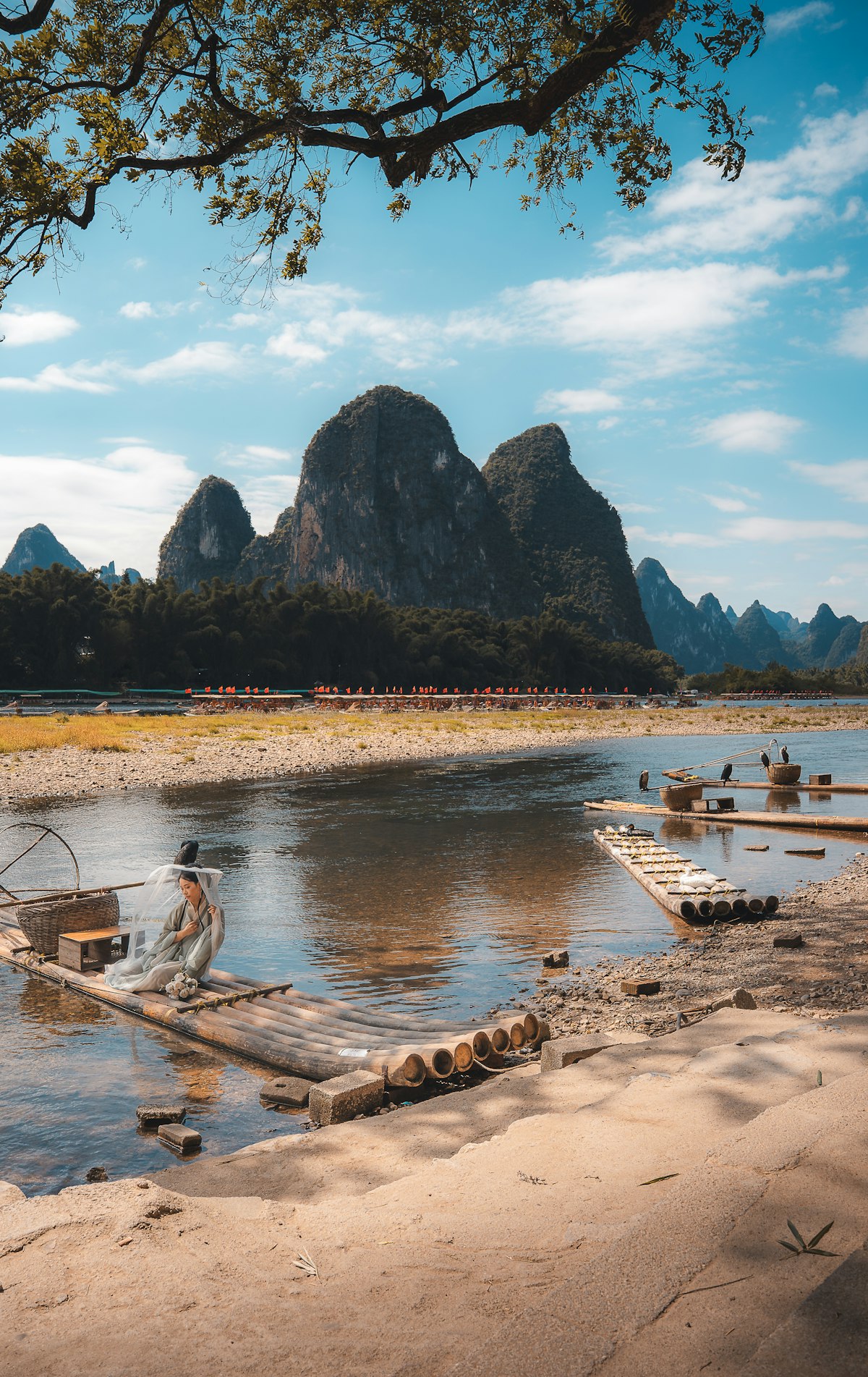
The sunset at Gongnong Bridge (工农桥, roughly 5-7 PM depending on season) is the shot everyone chases: bamboo rafts drifting through karst peaks lit gold, the river catching the last light. Arrive by 5 PM to stake out a spot on the bridge railing. Do this route on Day 1 to get oriented — it builds confidence for the longer rides.
Route 2: Yulong River Loop — The Best Half-Day Ride
| Detail | Info |
|---|---|
| Distance | 19 km loop |
| Difficulty | Easy-Moderate |
| Terrain | Mostly flat paved roads. Some unpaved riverside sections — packed dirt, rideable on any e-bike. |
| Best time | Morning (start by 8 AM) for soft light and zero crowds |
| Route | Yangshuo → Jima Wharf → Chaoyang Weir → riverside path → Jiuxian Village → Yulong Bridge → return via main road |
| Stops | Chaoyang Weir (朝阳坝 — wade into the shallow river, cool your feet, watch bamboo rafts slide over the dam), Jiuxian Village (旧县 — Qing Dynasty courtyard houses, not commercialized, stone-paved lanes), Yulong Bridge (遇龙桥 — 600-year-old stone arch, perfect photo from the riverbank below) |
This is the ride that makes people fall in love with Yangshuo. The riverside section between Chaoyang Weir and Jiuxian is the highlight — a narrow path hugging the riverbank, bamboo groves arching overhead, rafts passing silently below. It feels worlds away from the Ten-Mile Gallery’s bike lane.
At Jiuxian, park your bike and wander the village lanes. Unlike West Street, this is a real village where people live — laundry hangs from Qing Dynasty courtyard houses, chickens scratch in the lanes, and an elderly woman might invite you in for tea if you linger long enough.
The return leg follows the main road back to Yangshuo — faster, less scenic, but an easy cruise after the riverside magic.
Route 3: Fuli Bridge Detour — The Secret Photo Spot
| Detail | Info |
|---|---|
| Distance | ~25 km round trip from Yangshuo |
| Difficulty | Moderate |
| Terrain | Paved roads to the bridge. Riverside paths for photo angles. |
| Best time | Early morning (7-9 AM) for mirror-still water and perfect bridge reflections |
| Route | Yangshuo → north along the Yulong River → Fuli Bridge → return |
Fuli Bridge (富里桥) is a 500-year-old Ming Dynasty stone arch spanning the Yulong River. On still mornings, the arch and its reflection form a perfect full circle in the water — one of the most photogenic compositions in Guangxi, and almost nobody is there.
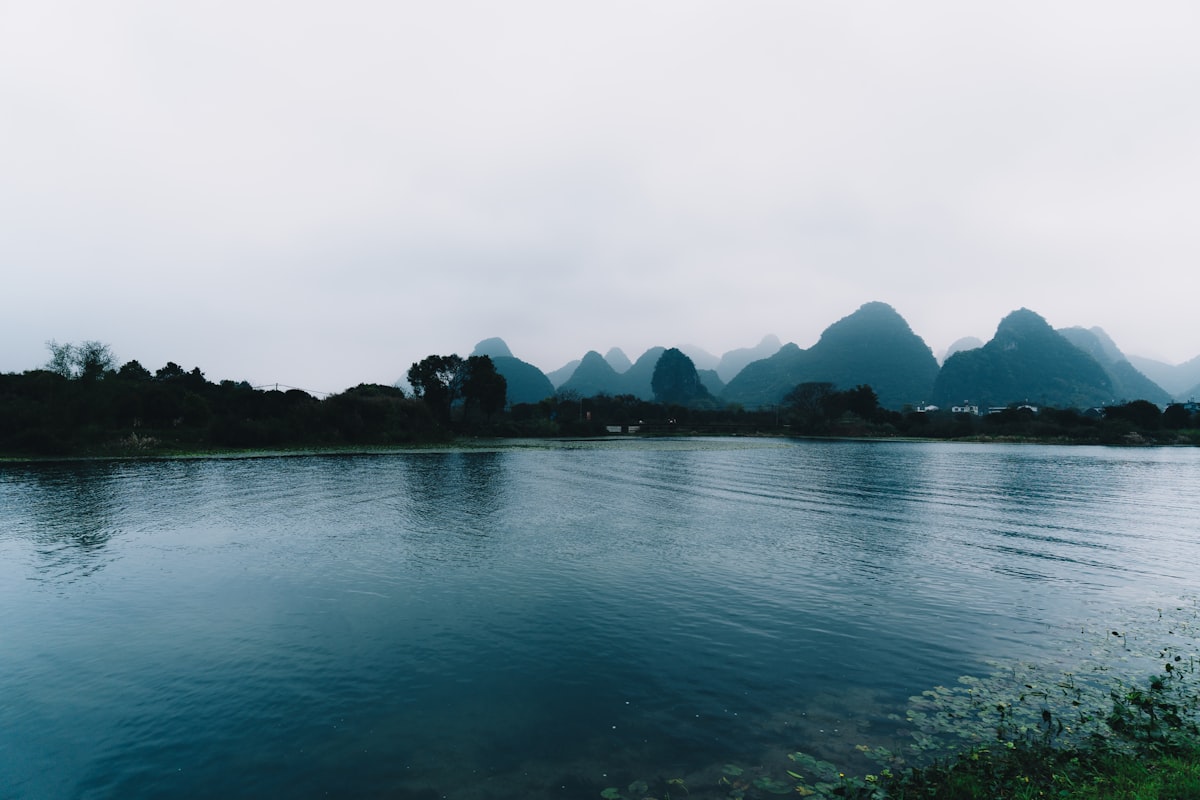
Most tourists never leave the Ten-Mile Gallery. Fuli Bridge gets a fraction of the visitors. Bring your camera — the best shot is from the riverbank below the bridge, shooting up at the stone arch with karst peaks layered in the background. A wide-angle lens captures the full circle reflection. Go at 7 AM and you’ll likely have it to yourself.
There’s a bamboo raft viewing platform nearby (~¥20/person for a raft photo prop with oil-paper umbrellas — worth it for the shot). The east-side reed clusters make excellent natural frames.
Outfit tip: White, beige, or soft pastel clothing harmonizes with the grey stone and green landscape. Hanfu rentals are available in Yangshuo if you want the full ink-painting look.
Route 4: The Epic Countryside Loop — For the Adventurous
| Detail | Info |
|---|---|
| Distance | 41 km |
| Difficulty | Challenging |
| Terrain | Mixed — paved roads, packed-dirt farm tracks, one Li River ferry crossing |
| Best time | Full day — start by 7 AM, back by 4 PM |
| Route | Yangshuo → Baisha → Fuli → Li River ferry → Xingping area roads → return via south loop |
This is deep countryside. Virtually zero tourists. The route takes you through ancient hamlets where farmers still work paddies by hand, past water buffalo wallowing in irrigation channels, and across the Li River on a small ferry where you and your bike share deck space with locals carrying vegetables to market.
The Li River ferry crossing costs ¥5 — you wheel your e-bike onto a small boat, cross in 10 minutes, and continue on the other side. The navigation is part of the adventure: bring offline Amap maps, ask locals when the map doesn’t match the road (it won’t, sometimes), and budget extra time. Getting a little lost on this route isn’t a bug — it’s how you find things no guidebook covers.
Battery warning: Start with a full charge. Consider renting from a shop with newer batteries for this route. If your battery indicator drops below 30% on the return leg, switch to the lowest power-assist mode and head directly back — don’t detour.
What to bring: Water (2 liters minimum — shops are sparse on the rural sections), sunscreen, snacks, a fully charged phone with offline maps, and cash (small village stalls may not accept digital payments).
Route 5: Baisha Town Market Ride
| Detail | Info |
|---|---|
| Distance | 29 km round trip |
| Difficulty | Moderate |
| Terrain | Paved roads throughout |
| Timing | Market days only — dates ending in 1, 4, or 7 (1st, 4th, 7th, 11th, 14th, 17th, 21st, 24th, 27th of each month). Market runs roughly 8 AM-4 PM. |
| Best time | Morning — arrive by 8:30 AM for the fullest market |
| Route | Yangshuo → Baisha town → Xian Gui Bridge → Yulong Bridge → return |
Baisha hosts the largest rural farmers market in the Yangshuo region. On market days, the town transforms: farmers spread tarps loaded with produce, live chickens squawk in bamboo cages, old men play cards on upturned crates, and the air smells of wood fire and fresh ginger.
This is not a tourist market. Nobody is selling “I Climbed Moon Hill” T-shirts. This is where locals buy their week’s vegetables, get their knives sharpened, and eat Baisha rice cakes from vendors who’ve been working the same spot for 30 years.
The 900-year-old Xian Gui Bridge (仙桂桥) sits along the route — a single-arch stone bridge from the Song Dynasty, still standing, still used. Worth the stop. Yulong Bridge is the natural turnaround point before heading back to Yangshuo.
Bring cash — many market vendors don’t accept WeChat or Alipay. Small bills (¥5, ¥10, ¥20) are ideal.
Route 6: Xianggong Mountain Sunrise Ride
The most rewarding ride in Yangshuo — and the most demanding.
You leave Yangshuo in the dark, around 4:30 AM, riding 30+ km to Xianggong Mountain (相公山). The e-bike makes this feasible — on a pedal bike it would be a sufferfest. The road is paved but unlit in sections, so use your bike’s headlight and bring a backup phone flashlight.
At the mountain base, you park your bike, pay ¥60 at the gate (¥30 for students with ID), and climb 15-20 minutes up stone steps to the viewing platform. There are four levels — keep climbing to the top platform for the widest panoramic view.
The payoff: sunrise over the Li River’s famous S-bend. Karst peaks emerge from mist, the river catches the first light, and the valley fills with golden haze. It’s the most photographed landscape in Guangxi — and for 15 minutes at dawn, you understand why.
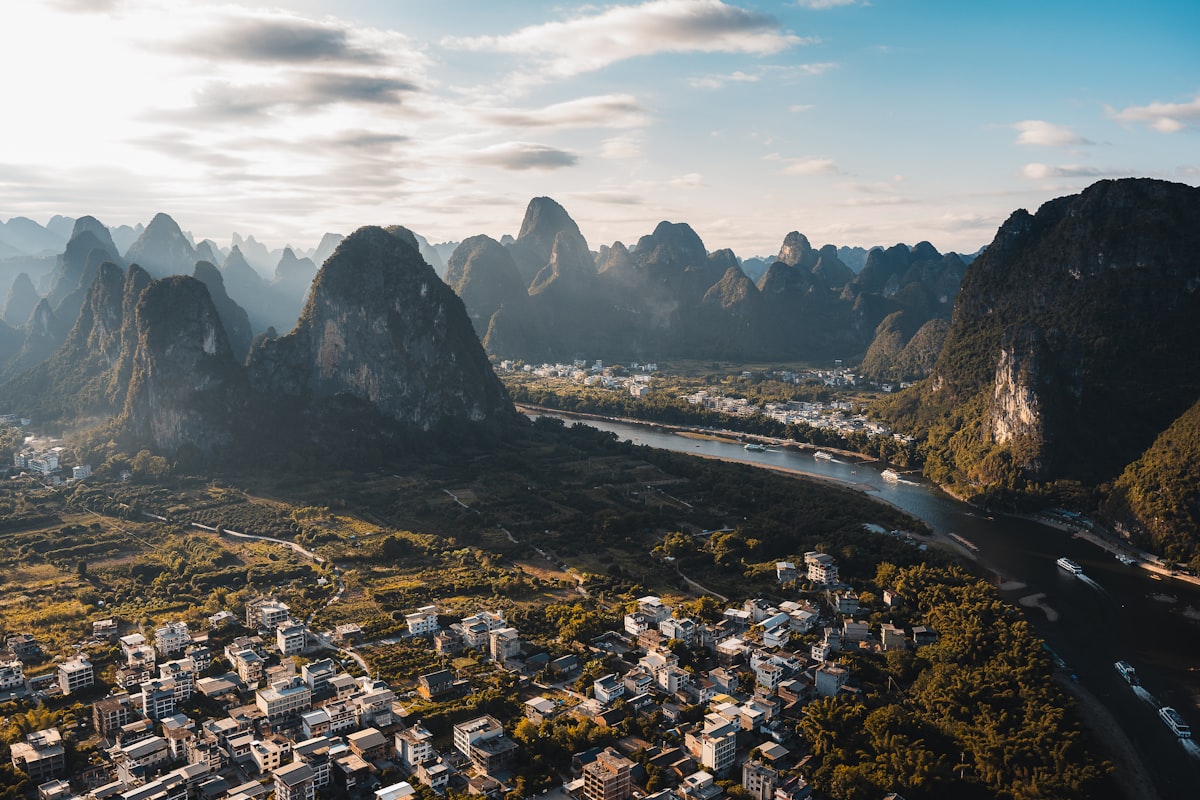
Best months for sunrise: July-December for clear visibility. Best months for sea of clouds: April-June, especially the morning after overnight rain.
Yulong River Bamboo Rafting — The Complete Guide
This is the bamboo rafting experience you actually want. Human-powered bamboo poles. Quiet. Intimate. Not the motorized Li River cruise — a completely different animal.
The Yulong River rafts are authentic bamboo platforms, poled by a boatman standing at the back. No engine. No noise. Just the sound of water against bamboo and the splash of weir crossings. This is what “bamboo rafting through Chinese landscape paintings” is supposed to feel like.
Sections Compared
| Section | Duration | Rapids/Weirs | Price (¥ per raft, 2 people) | Best For |
|---|---|---|---|---|
| Jinlong Bridge → Jiuxian (金龙桥→旧县) | ~90 min | 9 drops | ¥255/raft | The classic. Most scenic stretch, most fun weirs. |
| Jima Wharf → Gongnong Bridge (骥马→工农桥) | ~90 min | 9 drops | ¥200-255/raft | Best value. Longer than Shuiedi, easier to book. |
| Shuiedi → Gongnong Bridge (水厄底→工农桥) | ~30-50 min | 4 drops | ¥160-200/raft | The “famous one” — but shortest and hardest to book. |
| Fuli Bridge → Sancha Mouth (富里桥→三岔口) | ~60 min | Gentle | ¥290/raft (4-person raft) | Unique — 4-person raft, different scenery, less busy. |
Which to pick: Jima Wharf (骥马) is the sweet spot. It’s longer than Shuiedi, has more weirs, is easier to book, and has been consistently recommended by recent travelers. Jinlong Bridge → Jiuxian is slightly more scenic but farther from town. Fuli Bridge is the hidden gem — 4-person rafts mean you can go as a group.
How to Book
Tickets are released at 8 PM the night before through the official Yulong River scenic area WeChat mini-program (search “遇龙河” in WeChat). They sell out fast — especially on weekends, holidays, and for the Shuiedi section.
What you need to know:
- Each raft seats exactly 2 people. Solo travelers must buy both seats (pay for the empty spot, roughly the price of a single ticket supplement ~¥35-80 extra depending on section).
- Maximum combined weight: 160 kg per raft.
- Minimum height for children: 1.0 meter. Children under 1m are not allowed on the rafts.
- Seniors over 70 and pregnant women are not permitted.
- Rafting operates 8:30 AM - 5:00 PM daily. Last check-in is 4:30 PM — arrive late and your ticket is non-refundable.
- Rafting may be suspended during heavy rain or flooding (most common June-August).
Third-party booking: Trip.com, Klook, and local guesthouses can book for you, often bundled with transfers. This costs slightly more but removes the 8 PM scramble — useful during peak season.
What to Expect & What to Wear
You will get wet. The weir drops send water splashing over the raft. This is part of the fun.
- Footwear: Sandals or water shoes. Not sneakers. Not white anything.
- Phone: In a waterproof pouch, on a lanyard around your neck. The Yulong River has claimed many phones.
- Bag: Don’t bring a backpack — there’s no dry storage on the raft. Leave it at your guesthouse.
- Tip for the boatman: ¥20-30 — they may paddle slower through scenic sections, point out photo angles, and tell you the names of the peaks. Optional but appreciated.
- Sun protection: Hat + sunscreen. The river reflects UV like a mirror.
- Timing: First slot of the morning (~8 AM) on a weekday gives you the quietest river. Late afternoon (3-4 PM) offers golden light for photos.
The Li River Cruise Alternative
Some travelers default to the big Li River cruise boat from Guilin to Yangshuo (motorized, 4-5 hours, ~¥300+, hundreds of passengers). After doing both, the Yulong River bamboo raft wins for intimacy, photography, and the feeling of actually being in the landscape rather than observing it from a deck. If you can only do one: Yulong bamboo rafting.
Photo Spots — When to Be Where
The difference between a good Yangshuo photo and a great one is usually timing. Here’s the definitive schedule:
| Spot | Best Time | Arrive By | Cost | What You Get |
|---|---|---|---|---|
| Xianggong Mountain (相公山) | Sunrise (5:30-6:30 AM summer, 6:30-7:30 AM winter) | 5:15 AM | ¥60 (¥30 student) | Panoramic Li River S-bend, sea of mist after rain, four viewing platforms |
| Gongnong Bridge (工农桥) | Sunset (5-7 PM) | 5:00 PM | Free | Bamboo rafts gliding through golden light, karst peaks silhouetted |
| Fuli Bridge (富里桥) | Early morning (7-9 AM) | 7:00 AM | Free | Perfect mirror circle of Ming Dynasty arch + karst backdrop |
| Laozhai Mountain (老寨山) | Sunset | 4:30 PM (30-40 min climb) | Free | 180-degree Li River bend + Xingping town from above |
| 20 RMB Viewpoint (20元背景) | Morning mist or dusk | 7:00 AM | Free | Yuanbao Mountain at Yellow Cloth Shoal — the banknote view |
| Yulong Bridge (遇龙桥) | Morning (8-10 AM) | 8:00 AM | Free | 600-year-old stone arch with river and karst peaks |
| Moon Hill (月亮山) | Late afternoon | 4:00 PM | ¥15 | Frame people inside the moon-shaped arch hole |
Laozhai Mountain — The Best Free View in Guangxi
Laozhai Mountain (老寨山) in Xingping is a steep climb — 1,100+ stone steps, some sections with iron ladders bolted into the rock. Not for anyone with a fear of heights or mobility issues. But the view from the summit is the best free panorama in Guangxi: a 180-degree sweep of the Li River bending through karst peaks, Xingping Ancient Town below, and layers of mountains fading into blue haze.
The trail was built in 1999 by a Japanese traveler who fell in love with Xingping, married a local woman, and stayed. He maintained the trail himself for years. That’s the kind of place this is.
Climb takes 30-40 minutes each way. Bring water. Wear grippy shoes. No toilets on the trail. The late afternoon light (3-5 PM) paints the karst in gold — time your climb to hit the summit an hour before sunset.
Yunding Coffee Alternative
Near Xianggong Mountain, there’s a coffee shop/viewpoint area called Yunding (云顶) that offers equally spectacular sunrise views over the Li River — without the ¥60 entry fee and without the platform crowds. Ask your guesthouse staff for directions. The coffee isn’t bad either.
Photography Gear Recommendations
- Wide-angle lens (16-35mm or equivalent): Non-negotiable for karst panoramas, Fuli Bridge circle reflection, and Xianggong Mountain. The scale of the landscape demands it.
- Telephoto (70-200mm): Compresses the karst peaks into layered silhouettes. The shot from Gongnong Bridge at sunset with a telephoto — raft in the foreground, layers of peaks behind — is calendar-worthy.
- Tripod: For Xianggong Mountain sunrise and Gongnong Bridge sunset long exposures. A compact travel tripod is worth the weight on your e-bike rack.
- Mist advice: If it rained overnight and the morning is clearing, GO. That’s when mist clings to the peaks in the most cinematic way — wrapping around the karst like a Song Dynasty scroll painting.
- What to wear for photos: White, beige, and soft pastels harmonize with the green-and-blue landscape. Bright red creates dramatic contrast against the karst. Avoid busy patterns — the landscape is the subject.
Other Outdoor Activities
Cycling and rafting are the main events, but Yangshuo is also China’s premier outdoor adventure destination. Here’s what else is worth your time:
| Activity | Details | Price (¥) | Price ($) | Best Season |
|---|---|---|---|---|
| Rock Climbing | 300+ bolted limestone routes, all levels from beginner (5.6) to expert (5.14). Popular crags: Moon Hill, The Egg, Wine Bottle Cliff, Twin Gates. English-speaking guides available. Half-day includes all gear. | ¥300-600/half day | $42-84 | Oct-Nov, Feb-Mar (avoid summer heat on the rock) |
| Hot Air Balloon (tethered) | Tethered ride above karst peaks — goes up, hovers, comes down. ~5 minutes in the air. Great for photos, quick thrill. | ¥160/person | $22 | Year-round, weather permitting |
| Hot Air Balloon (free flight) | Full free-floating flight over the karst landscape. Much more expensive, much more memorable. Book well ahead. | ¥800-1,200/person | $112-168 | Year-round, weather permitting |
| Impression Liu Sanjie | Zhang Yimou’s outdoor light and music show. 600 performers on the Li River itself — the river IS the stage. Section C middle row offers best value (full view, reasonable price). | ¥200-600 | $28-84 | Year-round, nightly |
| Cooking Class | Learn to make Guilin rice noodles (桂林米粉) or Yangshuo beer fish (啤酒鱼). Half-day, includes market visit and eating everything you cook. | ¥150-300 | $21-42 | Year-round |
| Kayaking | Guided kayak tours on the Li or Yulong rivers. Different perspective from the rafts — you’re at water level, silent, in control. | ¥200-400/half day | $28-56 | April-October |
Yangshuo is China’s premier rock climbing destination — the limestone karst that looks beautiful from below is even better when you’re on it. Even if you’ve never climbed before, the beginner routes are accessible and the guides are experienced. A half-day intro course gets you on real rock, not a gym wall.
What to Wear & Bring
For Cycling
- Comfortable athletic clothes — you’re on a bike for hours, not at a photo shoot
- Closed-toe sneakers with grip
- Sunglasses + sunscreen (the Guangxi sun is strong, even through haze)
- A small daypack for water, snacks, sunscreen, and your camera
- Light jacket or long-sleeve layer for early morning rides (even summer mornings can be cool)
For Bamboo Rafting
- Shorts or quick-dry pants — your lower half WILL get wet
- Sandals or water shoes (not flip-flops — they’ll float away)
- Waterproof phone pouch on a lanyard
- Sun hat or cap
- Do NOT bring: backpack (no dry storage), white shoes, anything you’d be upset about getting river water on
For Photography
- Wide-angle lens for karst panoramas and bridge circle reflections
- Telephoto (70-200mm) to compress layered peaks
- Tripod for sunrise/sunset
- Lens cloth — Guangxi humidity fogs lenses constantly
- Fully charged camera battery + spare (cold mornings drain batteries faster than you expect)
How to Avoid the Crowds
Yangshuo gets busy. Domestic tourism is no joke — tour buses roll in from Guilin by 9:30 AM and the Ten-Mile Gallery bike lane turns into a highway of rental e-bikes by 10 AM. Here’s how to stay ahead:
| Strategy | Details |
|---|---|
| Start early | Begin cycling before 8 AM. You get 2-3 hours of near-empty roads before the crowds arrive. Morning light on the karst is softer anyway. |
| Raft on weekday mornings | Book the first slot (~8 AM) on a Tuesday, Wednesday, or Thursday. Weekends sell out faster and the river is noticeably busier. |
| Ten-Mile Gallery timing | The bike lane is busiest 10 AM-4 PM. Do it 7-9 AM or 4-6 PM for breathing room. Late afternoon has better light too. |
| Xianggong Mountain weekdays | Weekdays are moderately busy. Weekends: arrive by 5 AM to get a spot at the front railing. The platform is not large. |
| The Epic Loop is always empty | Even during Golden Week, the 41 km countryside loop has almost nobody on it. Most tourists never leave the Ten-Mile Gallery. This is your guaranteed solitude route. |
| Fuli Bridge before 8 AM | Sunrise at Fuli Bridge with zero people is achievable on any day of the week. The bridge doesn’t appear on most group tour itineraries. |
Common Mistakes
I’ve watched travelers make these. Don’t be one of them.
| Mistake | Why It’s a Problem | Do This Instead |
|---|---|---|
| Renting a pedal bicycle for the Epic Loop | 41 km of mixed terrain on a single-speed rental bike in Guangxi heat is not an adventure — it’s suffering. | Get an e-bike. Every route on this list is better with electric assist. |
| Doing the Li River big boat cruise instead of Yulong bamboo rafting | Motorized, crowded, 4-5 hours on a diesel boat with 100+ people. You observe the landscape from a deck. | Bamboo raft on the Yulong — quiet, intimate, you’re IN the landscape. Shorter, better, cheaper. |
| Showing up at Shuiedi Wharf without a booking | Tickets sell out at 8 PM the night before. You will stand at the wharf watching other people board rafts. | Book via the WeChat mini-program at 8 PM the night before, or book through your guesthouse 1-2 days ahead. |
| Xianggong Mountain for sunset instead of sunrise | The sun rises behind the mountains — that’s THE shot. At sunset, the sun sets behind you and the mountains are in shadow. | Sunrise. Set your alarm for 4 AM. It’s worth it. |
| Not bringing water on cycling routes | Shops are sparse on rural routes, especially Routes 4 and 6. Guangxi heat plus hours of cycling equals dehydration. | 2 liters minimum per person. Buy it the night before — shops may not be open at 4:30 AM. |
| Wearing white shoes to the bamboo raft | The river water is muddy. The rafts are wet. The weir drops throw spray. White shoes will not survive. | Sandals, water shoes, or old sneakers you don’t care about. |
| Trusting Google Maps | Google Maps has poor rural China coverage. It will route you onto roads that don’t exist or miss bridges that do. | Amap (高德地图). Download offline maps before heading out. For the Epic Loop, carry a backup — screenshot key turns. |
| Skipping the e-bike because “I ride bikes at home” | Even if you’re a cyclist, the e-bike isn’t about fitness — it’s about range. It lets you reach Fuli Bridge, the Epic Loop, and Xianggong Mountain in a single day without being destroyed. | Rent the e-bike. Use pedal assist on low. Thank yourself at kilometer 35. |
Cost Summary
| Item | Price (¥) | Price ($) |
|---|---|---|
| E-bike rental (1 day) | ¥30-60 | $4-8 |
| E-bike rental (multi-day, per day) | ¥40-50 | $6-7 |
| Yulong bamboo raft (Jima → Gongnong, per person) | ¥100-128 | $14-18 |
| Yulong bamboo raft (Jinlong → Jiuxian, per person) | ¥128 | $18 |
| Xianggong Mountain entry | ¥60 (¥30 student) | $8 ($4) |
| Moon Hill entry | ¥15 | $2 |
| Big Banyan Tree entry | ¥20 | $3 |
| Li River ferry (Epic Loop) | ¥5 | $0.70 |
| Rock climbing (half-day guided) | ¥300-600 | $42-84 |
| Hot air balloon (tethered, ~5 min) | ¥160 | $22 |
| Hot air balloon (free flight) | ¥800-1,200 | $112-168 |
| Impression Liu Sanjie show | ¥200-600 | $28-84 |
| Cooking class (half-day) | ¥150-300 | $21-42 |
| Boatman tip (rafting) | ¥20-30 | $3-4 |
| Water + snacks for a long ride | ¥20-40 | $3-6 |
Yangshuo delivers exceptional scenery at prices that feel almost unreasonable. The best day — e-bike rental, bamboo rafting, sunset at Gongnong Bridge, dinner in town — costs under ¥200 ($28) per person.
The Bottom Line
The best day of your Yangshuo trip is the one without a plan.
Wake up early. Rent an e-bike. Point it toward the karst peaks and ride. Stop at a farmhouse for bamboo rice cooked in a hollow tube over a wood fire. Watch the sunset from Gongnong Bridge with a cold drink in your hand. Get lost on a dirt path and find a village where no one speaks English but everyone smiles.
The scenery hasn’t changed in a thousand years. The e-bike just makes it easier to find.
For first-time visitors getting their bearings, see our Guilin & Yangshuo first-timer guide. For navigating payments and apps in rural China, our China mobile payment guide covers everything from WeChat Pay setup to offline payment tricks when cell service disappears behind a karst peak.
Found a cycling route, rafting section, or photo spot that belongs on this list? Dropped your phone in the Yulong River and have advice for future travelers? Drop it in the comments — the best Yangshuo tips always come from people who learned the hard way.