China in June: Graduation Season, Budget Travel & the Pre-Summer Sweet Spot
Every English-language guide to China will tell you the same thing: spring and autumn are the best seasons. Visit in April, May, September, or October. June is summer, and summer is bad.
That advice is wrong. Or at least, it is incomplete enough to cost you a better trip.
June is the best month to visit China that nobody talks about. It is the window between spring crowds and summer chaos. Prices sit at their annual low before the July spike. The landscapes are as green as they get. And millions of Chinese university graduates are taking celebratory trips across the country, which means you get to see a side of Chinese travel culture that the standard itineraries miss entirely.
I have traveled China in every month over six years. June is the one I keep coming back to. Here is why.
Graduation travel: the June phenomenon English guides ignore
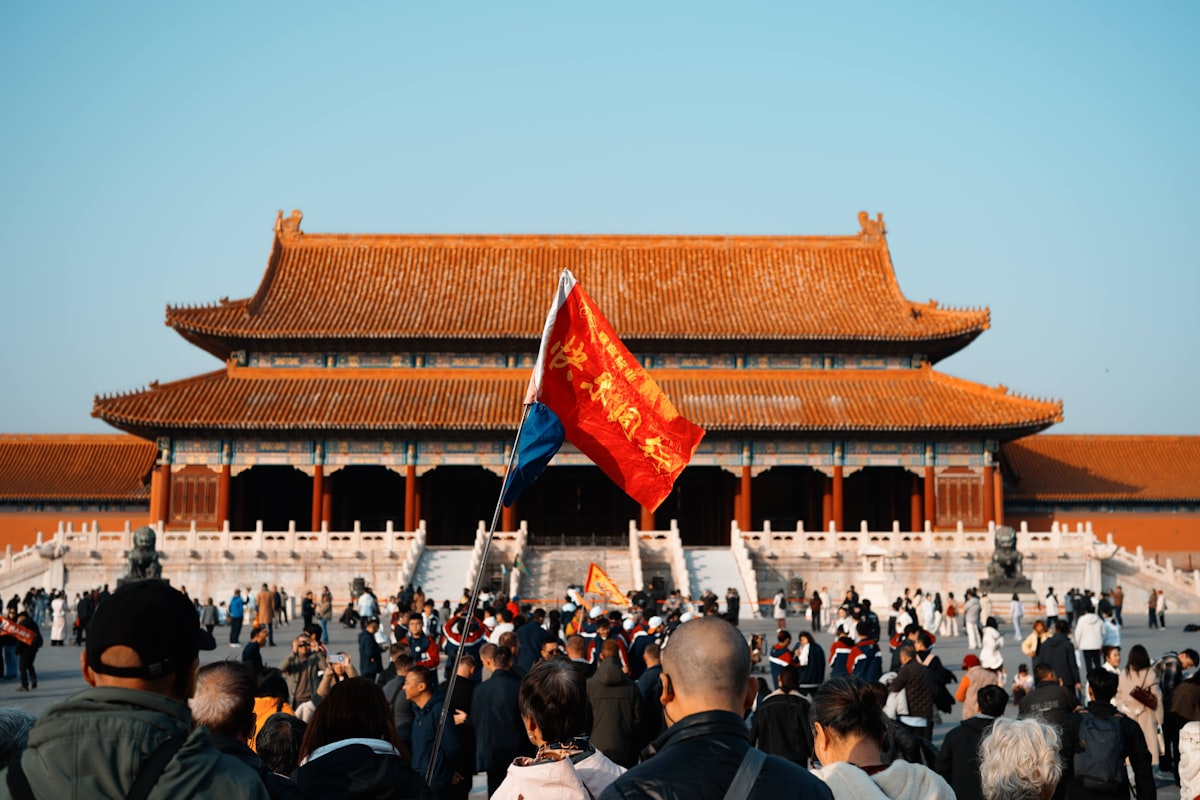
Walk through the old town of Lijiang in late June and you will notice something: groups of young people, fresh out of university, taking photos in matching T-shirts. In Yangshuo, they are posing on rented scooters against karst backdrops. At the Great Wall, they are unfurling banners with their university names.
This is 毕业旅行 (bìyè lǚxíng), graduation travel. It is not a niche activity. It is a rite of passage.
Every June, millions of Chinese university graduates take trips before entering the workforce. The tradition started in the 1990s as rising incomes made tourism accessible to students. Today it is woven into the rhythm of Chinese domestic travel. For many graduates, this is their last extended freedom before a lifetime of limited annual leave. They spend four to ten days traveling together, often in groups of four to eight, before scattering to jobs in different cities.
The destinations follow a pattern. Dali and Lijiang top the list for the romantic, laid-back vibe. Yangshuo draws the adventure crowd. Xiamen is the sentimental choice for seaside campus nostalgia. Chengdu and Chongqing attract the food-obsessed. Even Zhangjiajie and Qinghai Lake get their share.
What this means for you as a foreign traveler:
The upside. The energy is genuine. University campuses are full of graduates in cap and gown taking last photos under blooming scholar trees. You see impromptu guitar sessions in hostel courtyards. The atmosphere has a celebratory quality that does not exist in any other month. If you want to meet young Chinese travelers, June is the easiest time. Many speak English and are happy to practice it.
The logistics. Graduation travelers concentrate in specific destinations rather than spreading evenly. Dali, Lijiang, Yangshuo, and Xiamen get noticeably busier in the last ten days of June. Book accommodation in these cities two to three weeks ahead for late June dates. For every other destination in China, graduation travel is a background presence at most. Beijing, Xi’an, Chengdu, Guilin, Shanghai, and the entire western region operate at normal June volumes regardless.
The cultural angle. If you are in China during graduation season, university campuses are worth a detour. Peking University and Tsinghua University in Beijing, Zhejiang University in Hangzhou, and Wuhan University all have photogenic campuses that peak in June greenery. Graduates in their academic robes pose in front of landmarks, throw their caps, and take group shots that last hours. It is a slice of Chinese life that most foreign visitors never think to witness.
The June price window: real numbers
The single best reason to travel China in June is money. The pricing difference between June and July is not subtle.
Chinese school summer holidays start around July 1. That is the day domestic tourism shifts into high gear. Hotel prices in popular destinations rise 20-50%. Train tickets for popular routes sell out in minutes. Airfares climb. Attraction entrances get busier and harder to book.
June sits on the other side of that line. Here are real prices I tracked in 2025, comparing mid-June to mid-July for the same properties and routes.
| Item | Mid-June (¥) | Mid-July (¥) | June Savings |
|---|---|---|---|
| Mid-range hotel, Beijing (per night) | ¥380 | ¥520 | ~27% |
| Mid-range hotel, Guilin (per night) | ¥220 | ¥360 | ~39% |
| Mid-range hotel, Dali (per night) | ¥200 | ¥350 | ~43% |
| Flight, Beijing to Kunming | ¥680 | ¥1,100 | ~38% |
| Flight, Shanghai to Guilin | ¥450 | ¥780 | ~42% |
| High-speed rail, Beijing to Xi’an (2nd class) | ¥515 | ¥515 | Fixed price |
| Private room in Yangshuo guesthouse | ¥180 | ¥300 | ~40% |
| Forbidden City admission | ¥60 | ¥60 | Fixed price |
The pattern: accommodation and flights swing hard. Train tickets and attraction tickets are fixed. The savings come from where you sleep and how you get between cities. A two-week trip with four flights and thirteen nights of hotels can easily cost ¥3,000-5,000 less per person in June than the same trip in July. That is roughly $400-700 you keep.
Beyond the direct savings, June availability means better options at every price point. The guesthouse with the rooftop terrace that faces the rice terraces gets booked by May for July dates. In June, you can still get it. The window seat on the Guilin-to-Kunming high-speed rail is not a competitive sport in June. In July, that seat is gone at 8:01 AM on booking day.
June weather: the honest regional breakdown
June weather in China splits the country along roughly three axes: north versus south, high versus low altitude, and west versus east. Generalizations about “summer in China” collapse under these regional realities.
Beijing and northern China
Beijing in June is warm but not punishing. Daytime highs run 30-35°C with low humidity. Mornings before 10 AM and evenings after 5 PM are genuinely pleasant. The dry heat means shade actually works. You can walk the Great Wall, explore the hutongs, and sit in courtyard cafes without feeling like you are slowly poaching.
The Great Wall in June is worth calling out specifically. By June, the hills around Mutianyu and Jinshanling are thick with green. The wall snakes through forest rather than dry brown hillside. It photographs better than in spring, when the trees are still thin. And the crowds are nowhere near July levels. See our Great Wall section guide for choosing the right section.
Yangtze Delta: the plum rain question
Mid-June through early July is plum rain season (梅雨季, méiyǔ jì) in the Yangtze River Delta. Shanghai, Hangzhou, Suzhou, and Nanjing sit under persistent cloud cover with daily drizzle or light rain. Humidity runs 80-90%. Nothing dries. Your laundry hangs in hotel bathrooms for three days and comes out damp.
This sounds worse than it is. The rain is rarely heavy enough to cancel plans. It is more like living inside a cloud for two or three weeks: gray, damp, and occasionally misty in a way that makes the Jiangnan water towns look like ink paintings. The real adjustment is psychological. You will be damp. You will take fewer crisp blue-sky photos. You will spend more time in teahouses and museums than you planned.
If you are set on Shanghai and the water towns, June is workable. Bring quick-dry clothes, a light rain shell, and an umbrella. Do not bring suede shoes or anything that gets ruined by moisture. Accept the gray skies as part of the aesthetic. The upside: plum rain keeps the domestic tourists away, and you will have the water towns with far fewer selfie sticks.
For a full Shanghai itinerary, see our Shanghai 3-day itinerary and arrival guide.
South China: hot, humid, and incredibly green
Guilin, Yangshuo, and Guangzhou run 28-34°C with humidity that makes the air feel solid. It rains regularly, but unlike the Yangtze Delta’s persistent gray drizzle, southern rain comes in bursts. Morning is clear, afternoon brings a thunderstorm, evening clears again.
The compensation for the discomfort is visual. The Longji rice terraces are flooded and mirror the sky. The Li River runs full and fast. The karst peaks of Yangshuo are the greenest they will be all year. If you are going to Guilin, June is arguably the best month for the scenery alone. Bring mosquito repellent. Bring a rain jacket. Bring a second pair of shoes. The photos will justify all of it.
See our Guilin and Yangshuo guide and Longji rice terraces guide for planning.
Yunnan: the perfect June destination
Yunnan in June is what travel brochures pretend summer is like everywhere. Kunming sits at 1,900 meters and runs 18-25°C. Dali, at 2,000 meters, gives you 17-24°C with low humidity and a breeze off Erhai Lake. Shangri-La, at 3,200 meters, runs 10-20°C and wants a jacket at night.
The rainy season starts in June, but Yunnan rain is not plum rain. It arrives as afternoon showers that clear within an hour. Mornings are consistently sunny and clear. The landscape is lush from early summer rain without the overcast monotony of the east coast.
Wildflowers start emerging in the alpine meadows around Shangri-La. Trekking conditions on Tiger Leaping Gorge are ideal: trails are dry in the mornings, guesthouses are open but not full, and the views of Jade Dragon Snow Mountain are unobstructed. This is the window before July, when domestic tourists flood the ancient towns.
If you have one week in China in June and want the highest probability of perfect weather, go to Yunnan. See our Dali and Lijiang guide and Tiger Leaping Gorge guide.
Xinjiang and Ili: peak wildflower season
June is the best month of the year for Ili, Xinjiang. Late May through mid-June is peak wildflower season on the grasslands. The lavender fields near Huocheng bloom through late June. Nalati and Kalajun grasslands are at maximum green. Sayram Lake sits under blue skies at 2,073 meters with wildflowers on its shores.
Temperatures run 20-28°C during the day and 10-15°C at night. You sleep under a blanket. Kazakh herders are active with their flocks. Yurt stays are available without the July booking wars. The entire region is operating at its visual peak, and the July domestic wave has not yet arrived.
Getting to Ili requires a flight to Yining from Urumqi, or a long train ride. The logistics are real but the reward is China’s single best June destination. Our Ili Xinjiang guide covers routes, yurt logistics, and costs.
Tibet: open for the season
June marks the start of Tibet’s accessible season. The high passes have cleared of snow. Daytime temperatures in Lhasa run 15-24°C. Nights are cold but manageable. The monsoon has not yet reached the plateau, so skies stay clear through most of June. Permits are required and the logistics are involved, but if Tibet is on your list, June is one of the best windows.
Where to go in June, ranked
Based on weather, crowds, pricing, and scenery, here is how the destinations stack up for a June trip.
-
Yunnan (Dali, Lijiang, Shangri-La). The best weather in China in June. Warm days, cool nights, low humidity, and afternoon showers that clear fast. The ancient towns are lively but not crushed. Trekking is at its best. If you can only pick one region, pick this one.
-
Ili, Xinjiang. Peak wildflower season. Green grasslands to the horizon. Snow-capped mountains, turquoise lakes, Kazakh culture. The logistics require effort but the payoff is unmatched. Late May through mid-June is the window. By late June the flowers start fading and the July crowds begin arriving.
-
Guilin and Yangshuo. Rainy, yes. But the landscape in June is as beautiful as Chinese scenery gets. The flooded rice terraces and swollen Li River create the images you see on postcards. Accept the humidity and bring two pairs of shoes. The views are worth the sweat.
-
Zhangjiajie. The sandstone pillars look best in mist and cloud. June delivers exactly that. The forest cover is at maximum density. Mornings are cool at elevation. The park is busy but not July-level oppressive. Bring rain gear and aim for early mornings before the tour groups arrive.
-
Beijing. Warm and dry with green hills. The Great Wall in June is framed by foliage. Tourist numbers are thin compared to July. This is the last month to visit Beijing without aggressive pre-booking for the Forbidden City and major attractions. See our Beijing first-timer guide.
Honorable mention: Chengdu. Warm enough for outdoor tea houses and evening street food, not yet the July furnace. Panda bases are active in the cool mornings. Hot pot on a warm Chengdu evening with cold beer is close to perfect. See our Chengdu first-timer guide and panda base comparison.
Where to skip in June
Some places make less sense in June. These are not bad destinations. They are destinations where June is simply the wrong month.
Chongqing. The furnace effect starts in June and does not let up until October. 33-36°C with humidity that makes walking outside at noon a physical challenge. Hot pot in 35°C weather is an acquired taste that I have not acquired. Save Chongqing for March, April, October, or November. Our Chongqing guide has the details whenever you go.
Wuhan and Nanjing. The original furnace cities. June is when they start earning the label. Temperatures run 32-36°C with humidity in the 80%+ range. There are better months for both cities.
Shanghai during peak plum rain (roughly June 15-July 5). If Shanghai is on your itinerary, go in early June or wait until July when the plum rain breaks and the skies clear, even if the heat intensifies. Mid-to-late June Shanghai is three weeks of gray damp. Some people find this atmospheric. Most find it tedious.
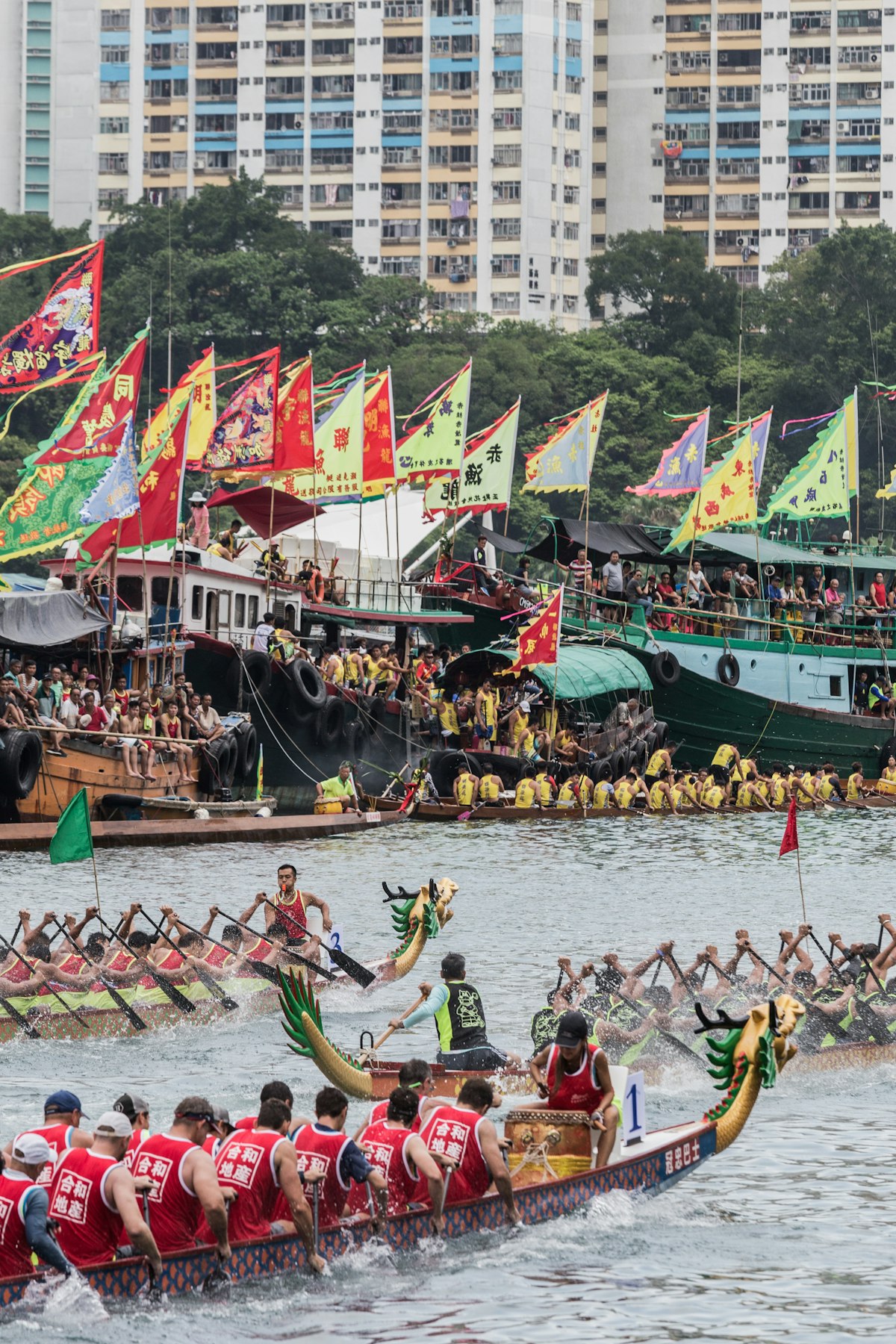
Dragon Boat Festival: June 19-21, 2026
When the Dragon Boat Festival falls in June, which it does most years including 2026, it adds a cultural layer to a June trip that costs nothing extra.
Dragon boat races happen on rivers across the country. Zongzi (sticky rice dumplings wrapped in bamboo leaves) appear in every convenience store and street stall for ¥5-15. The holiday brings a three-day weekend and a modest bump in domestic travel, but it is not Golden Week. It is not Spring Festival. Hotels in cities with major races fill up, but the disruption to normal travel is minor.
The best cities for watching races are Guangzhou (the biggest, loudest, and most competitive), Yueyang (the origin story, on the Miluo River where the tradition began), and Hangzhou (races on West Lake with the city’s scenery as backdrop). Hong Kong, Macau, and cities across southern China also host major events.
For a complete breakdown of where to watch, what to eat, and how the festival affects your travel plans, read our Dragon Boat Festival guide. For how this fits into the broader Chinese holiday calendar, the holiday survival guide maps out every holiday that could intersect with your trip.
A June trip budget: what you actually spend
A two-week June trip through a sensible route costs meaningfully less than the same trip in July. Here is a real budget for a 14-day mid-range itinerary: Beijing (4 nights) then Xi’an (2 nights) then Chengdu (3 nights) then Guilin/Yangshuo (3 nights) then fly out from Guilin.
| Category | June Cost (¥) | July Cost (¥) | Difference |
|---|---|---|---|
| Flights within China (3 segments) | ¥1,800 | ¥2,800 | -¥1,000 |
| Hotels (13 nights, mid-range) | ¥3,900 | ¥5,200 | -¥1,300 |
| High-speed rail (2 segments) | ¥750 | ¥780 | -¥30 |
| Food and drink (14 days) | ¥2,800 | ¥2,800 | ¥0 |
| Attractions and activities | ¥1,200 | ¥1,200 | ¥0 |
| Local transport (metro, bus, Didi) | ¥700 | ¥700 | ¥0 |
| Miscellaneous (SIM, laundry, snacks) | ¥500 | ¥500 | ¥0 |
| Total | ¥11,650 | ¥13,980 | -¥2,330 |
That is about $320 less per person in June, roughly a 17% savings. Most of the savings come from flights and hotels. The rest of the trip costs the same regardless of month.
If you are backpacking, the savings percentage is even higher because accommodation is a larger share of a smaller total budget. A hostel dorm bed in Yangshuo that costs ¥60 in June can hit ¥120 in July. That is a 50% increase on your single largest daily expense. Multiplied across two weeks, the difference between a ¥250/day June trip and a ¥320/day July trip becomes real money.
The backpacker monthly math: 14 days at ¥250/day = ¥3,500 in June. Fourteen days at ¥320/day = ¥4,480 in July. The ¥980 difference covers a round-trip flight from Chengdu to Shangri-La with change left over for three days of yak butter tea.
What to pack for China in June
June packing is about managing three things: heat in the north, rain in the south, and mosquitoes everywhere below the Yangtze. The solution is not complicated.
Rain shell. A lightweight, breathable rain jacket that packs into its own pocket. Not a plastic poncho. Not an umbrella alone. You need something you can wear while walking through Yangshuo rice paddies or Beijing summer thunderstorms. The jacket should breathe because you will be wearing it in 28°C humidity.
Quick-dry clothing. Cotton jeans take two days to dry in plum rain conditions. Synthetic or merino layers dry overnight. Two pairs of quick-dry pants and three quick-dry shirts are enough for a June trip if you wash them in the sink. Most Chinese hotels provide slippers and have hot water kettles for tea, which also work for laundry.
Mosquito repellent. Essential. Bring DEET-based repellent from home. Chinese mosquito products are formulated for less aggressive mosquitoes than the ones in Guilin and Yunnan’s rainy season. At dusk in Yangshuo or near any body of water south of the Yangtze, you will understand why this matters.
Sun protection. June sun in Beijing and Xi’an is intense and dry. A compact UV umbrella works for both sun and rain. Chinese people use umbrellas for sun protection constantly. Join them. Sunscreen should come from home: Chinese sunscreen is expensive, comes in tiny bottles, and most brands include skin-whitening ingredients you may not want.
Footwear. Two pairs. One pair that can get wet (trail runners or quick-dry sneakers) and one pair that stays dry (sandals or second sneakers). Walking around in wet shoes for three days leads to problems that ruin trips.
Power bank. Your phone is your map, translator, payment device, and camera. June heat drains batteries faster. A 20,000 mAh power bank costs ¥100-150 and keeps everything running through long outdoor days.
Modesty piece. A light scarf or overshirt for temple visits. Shoulders and knees should be covered at religious sites. Most major temples are relaxed about enforcement, but smaller active monasteries, especially in Tibetan areas, are stricter and you will feel more comfortable respecting the norm.
The graduation season photo tip
If you are into street photography or people photography, June on Chinese university campuses offers scenes that do not exist in any other month. Graduates in academic dress pose under hundred-year-old trees at Peking University. Groups throw their caps in front of Tsinghua University’s classical gates. At Wuhan University, the cherry blossoms are long gone but the campus architecture and June greenery make a worthy backdrop for graduation portraits.
Most campuses are open to the public. Some require registration at the gate. Peking University and Tsinghua require advance booking through their WeChat mini-programs. Smaller universities generally let you walk in. Be unobtrusive. Do not interrupt graduation photos. But if you ask politely, groups are often happy to let you take a few shots.
The contrast between Western graduation culture and Chinese graduation culture is also worth noticing. Chinese graduates wear academic dress in the Western style, but the group photo rituals are more elaborate. Banners, matching outfits under gowns, coordinated poses, and hours-long photo sessions in campus landmarks are normal. It is more theatrical and more communal than the Western equivalent. June is the only month you can witness this.
If you remember four things
One, June is the cheapest summer month by a margin that matters. Hotels and flights cost 30-50% less than July. The savings are real and they buy you a longer trip or a nicer place to sleep.
Two, the weather is uneven and that is fine. Accept that Shanghai will be damp and Guilin will be humid. Pick destinations that match June conditions. Yunnan is perfect. Ili is at peak. Beijing is pleasant. You do not need perfect weather everywhere. You need the right destinations for the right month.
Three, graduation travel is a cultural event hiding in plain sight. It shapes the atmosphere in certain cities during late June. It fills hostels with young Chinese travelers who might be the most interesting people you meet on your trip. And it costs nothing to observe or join.
Four, the Dragon Boat Festival in 2026 falls on June 19-21. Find a river, watch a race, eat a zongzi. It is the kind of cultural experience that happens whether you plan for it or not, and planning for it makes it better.
June is China’s travel sweet spot. The standard advice says spring and autumn. The standard advice is not wrong. But it leaves out the month that gives you green mountains, empty sections of the Great Wall, wildflower meadows, flooded rice terraces, and a graduation travel culture that no English guidebook covers. All for less money than the same trip four weeks later.
June is not the second-best month to visit China. For a certain kind of traveler, it is the best one.
Related guides
- China in Summer 2026 Guide — The full June-through-August playbook
- Dragon Boat Festival Guide — Races, zongzi, and where to watch on June 19-21
- First-Time China Guide — Visas, apps, payments, and everything before you go
- China Travel Budget Guide — Real daily costs by city tier and travel style