China for Tea Lovers: A Regional Guide to Longjing, Oolong, and Pu'er, from the Plantations to the Cup (2026)
Tea was invented in China. Not “popularized” or “perfected” — invented. According to legend, the Emperor Shennong was boiling water under a tree in 2737 BC when leaves drifted into his pot. He drank the result and tea was born.
The history since then has been a 4,700-year refinement of what those leaves can become. China produces every category of tea — green, white, yellow, oolong, black, and dark (fermented) — and each major type comes from a specific region with its own microclimate, processing tradition, and flavor fingerprint.
For travelers, tea is also a map. Follow the tea and you follow China’s geography: misty mountains in Zhejiang, dramatic rock formations in Fujian, ancient forests in Yunnan, and a set of experiences that go far beyond buying souvenir tins at the airport.
This guide covers China’s three most important tea regions, what makes each tea unique, and how to visit the places where they grow.
Hangzhou and Zhejiang: Longjing Green Tea
Longjing (龙井, “Dragon Well”) is China’s most famous green tea. It’s grown on hillsides around West Lake in Hangzhou, and the best grades come from a tiny area of about 168 square kilometers designated as the West Lake Longjing protected origin.
What makes Longjing special
Longjing leaves are flat-pressed — each leaf is individually pressed against a hot wok by a tea master’s bare hand, a technique called shou chao (手炒) that takes years to learn. The result is a flat, smooth, spear-shaped leaf that brews into a pale green-gold liquor.
The taste: roasted chestnuts, fresh-cut grass, and a sweetness that lingers at the back of the throat. It’s delicate. It’s not meant to be drunk with food. Longjing is a morning tea, best enjoyed in a glass cup so you can watch the leaves float, unfurl, and slowly sink.
The grades, from highest to lowest: Mingqian (明前, picked before Qingming Festival in early April), Yuqian (雨前, picked before the Grain Rain in late April), and later harvests. Mingqian tea sells for ¥3,000-6,800 per jin (500g) at retail. A small 50g tin of good Mingqian runs ¥300-680.
Where to experience Longjing
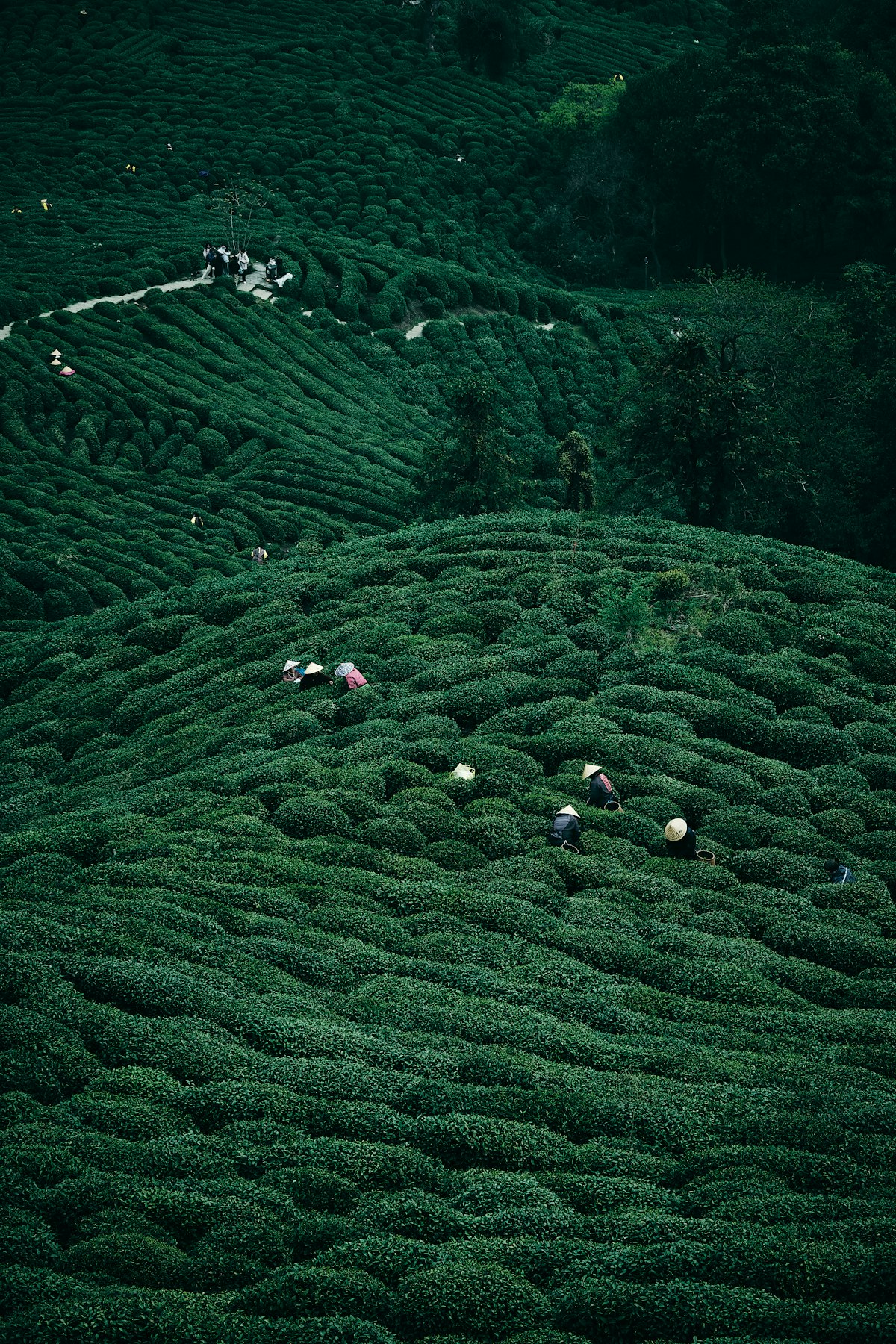
Longjing Village (龙井村) is the epicenter. The village sits in a valley surrounded by tea terraces climbing the hills. Every house is both a home and a tea shop. Walk through the fields, watch tea being roasted in woks over charcoal, sit for a tasting. The walk from Longjing Village down through the Manjuelong Valley to the China National Tea Museum takes about an hour and is one of the best urban-to-nature transitions in China.
Meijiawu (梅家坞) is 15 minutes from Longjing Village by car and noticeably less crowded. It’s a working tea village where farmers are more likely to be processing tea than selling it to tourists. Better for buying if you want to bring tea home. The tea tastes the same — same cultivar, same hills, same processing.
The China National Tea Museum (中国茶叶博物馆) has two branches near the lake. The Shuangfeng main branch covers tea history, tea varieties from every Chinese province, and tea ceremony traditions. The Longjing branch sits inside the tea fields themselves. Both are free. Both are worth 2-3 hours.
Tea season in Hangzhou
Spring (late March through April) is tea-picking season. The hills are green, the air smells like fresh leaves, and tea masters are roasting in every village. This is the best time to visit if you want to see the full process.
Tea picking experiences cost ¥50-100 per person for an hour of picking and a roasting demonstration. The Longjing Village Tea Cultural Experience Center runs organized sessions. Many village homestays include picking as part of the stay.
Autumn (October-November) is the best compromise: good weather, fewer crowds, osmanthus flowers blooming everywhere, and the autumn tea harvest provides a quieter version of the tea experience.
Fujian: Rock Oolong and Iron Goddess
Fujian province, on China’s southeast coast across from Taiwan, is oolong country. Oolong is a semi-oxidized tea — between green (unoxidized) and black (fully oxidized) — and within the category, the range is enormous. A light Tieguanyin tastes floral and green. A dark Wuyi rock oolong tastes like roasted stone fruit and charcoal.
Wuyi Mountains: Rock Oolong (Yancha)
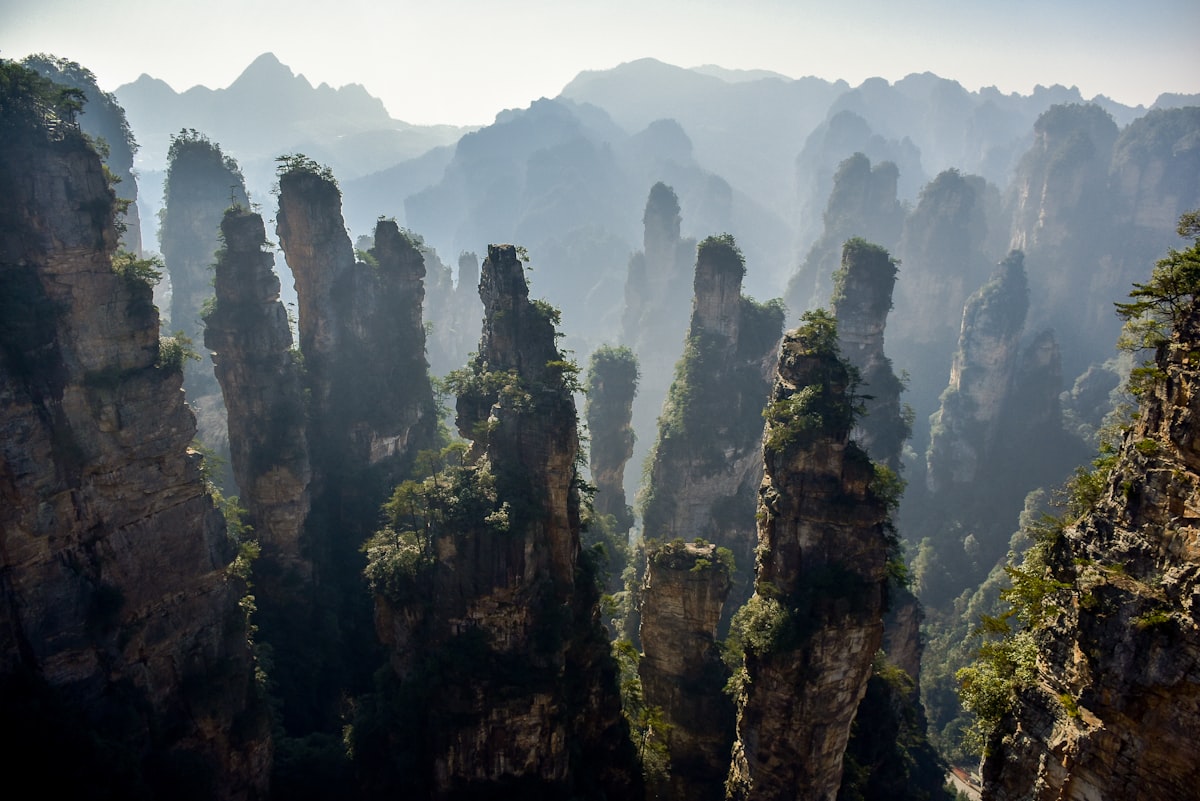
The Wuyi Mountains (武夷山) in northern Fujian are a UNESCO World Heritage site, a landscape of dramatic cliffs, winding rivers, and tea bushes growing in rocky crevices. The mineral-rich soil gives Wuyi oolongs their defining characteristic: yan yun (岩韵), “rock rhyme” or “rock taste” — a mineral, slightly smoky depth that tea drinkers spend years learning to identify.
The most famous Wuyi tea is Da Hong Pao (大红袍, “Big Red Robe”). The original six mother bushes, growing on a cliff face in the Wuyi scenic area, are over 350 years old and no longer harvested. Cuttings from those bushes have produced thousands of descendant trees, and tea from those descendants still commands ¥1,000-5,000 per jin.
Other Wuyi rock oolongs worth knowing: Shui Xian (水仙, “Water Sprite”) — richer, darker, more roasted; Rou Gui (肉桂, “Cinnamon”) — spicier, with a warming finish; and Qi Lan (奇兰, “Strange Orchid”) — lighter, more floral.
Wuyi Mountain is a destination in itself. The scenic area has bamboo rafting on the Nine Bend River, hiking trails through the rock formations, and tea shops in the nearby town where you can taste rock oolongs at every price point. The best time is spring (March-May) for the harvest or autumn (September-November) for comfortable hiking weather.
Anxi: Tieguanyin
About 300 kilometers south of Wuyi, Anxi County (安溪) is the home of Tieguanyin (铁观音, “Iron Goddess of Mercy”), China’s most popular oolong. Tieguanyin comes in two styles: light (qing xiang, “clear fragrance”) — floral, green, almost orchid-like, lightly oxidized; and traditional (nong xiang, “rich fragrance”) — darker, more roasted, with a longer finish.
Anxi has been growing tea for 1,300 years. The terraced tea fields cover entire mountainsides. The China Tea Capital tea market in Anxi is one of the largest wholesale tea markets in the country. The Tieguanyin Tea Museum, inside a tea factory, walks through the full production process from leaf to cup.
Anxi is accessible by high-speed train from Xiamen (about 40 minutes) or by bus from Quanzhou. The tea villages are scattered through the mountains; a taxi or private driver makes getting between them manageable.
Fujian Tea Ceremony: Gongfu Cha
Fujian is the origin of gongfu cha (功夫茶), the formal Chinese tea ceremony using small clay teapots and tiny cups. The same leaves are steeped 5-15 times, each infusion extracting a different facet of the tea’s character. The teapot — ideally a Yixing clay pot seasoned by years of use — is part of the ritual. A good Yixing pot from a Dingshu Town workshop costs ¥500-5,000 and will outlive you.
Yunnan: Pu’er and the Ancient Tea Forests
Yunnan province, in China’s far southwest, is where tea began. The tea plant (Camellia sinensis) evolved in the forests of what is now Yunnan, and some tea trees still growing here are over 1,000 years old. The most famous of these ancient trees, in Xishuangbanna and Pu’er Prefecture, produce leaves that sell for thousands of dollars per kilogram at auction.
What makes pu’er different
Pu’er (普洱) is a fermented dark tea — the only tea that improves with age. Like wine, a pu’er cake from 2005 tastes different from one pressed in 2018, and a well-stored cake from the 1990s can sell for ¥10,000 or more.
There are two types:
Sheng (raw) pu’er. Leaves are picked, sun-dried, steamed, and pressed into cakes. They then age naturally over years or decades, slowly darkening and developing complexity. Young sheng is bright, grassy, and slightly bitter. Aged sheng is smooth, earthy, and sweet, with notes of dried fruit, camphor, and old books.
Shou (ripe) pu’er. Developed in the 1970s to meet demand for aged tea without the waiting time. Leaves are piled, wetted, and allowed to ferment with microbial action over weeks — an accelerated version of the natural aging process. The result is dark, smooth, earthy, and approachable immediately. Tastes like forest floor and dark chocolate.
Where to experience pu’er
Xishuangbanna (西双版纳). The southernmost prefecture in Yunnan, bordering Laos and Myanmar. Tropical climate. Dai minority culture. The Six Famous Tea Mountains (六大茶山) in Xishuangbanna have been producing pu’er for over 1,000 years. Some tea trees in the ancient gardens here are 500-800 years old.
The tea experience in Xishuangbanna is immersive. You can hike through ancient tea forests, watch tea being processed in village workshops, and drink pu’er with the farmers who grew it. The village of Nannuoshan (南糯山) is one of the best for this — accessible, beautiful, and full of tea producers who welcome visitors.
Pu’er City (普洱市). Named after the tea, this city in southern Yunnan is the processing and trading hub. The Pu’er Tea Museum covers the history, and the surrounding mountains contain tea gardens and ancient trees. Jingmai Mountain (景迈山), a UNESCO World Heritage site about 2 hours from Pu’er City, has tea gardens that have been continuously cultivated for over 1,800 years. The Bulang and Dai minority tea farmers here use traditional cultivation methods that predate the modern tea industry.
Lincang (临沧). Northwest of Pu’er City, Lincang is another major pu’er region. The ancient tea tree at Jinxiu Village is estimated to be 3,200 years old — possibly the oldest cultivated tea tree in the world.
The Tea Horse Road
Pu’er was the starting point of the ancient Tea Horse Road (茶马古道), a network of trade routes that carried tea from Yunnan into Tibet, and from there to India and beyond. Tea was compressed into cakes or bricks, loaded onto mules, and carried for months through mountain passes over 4,000 meters. In Tibet, pu’er tea was traded for horses, which were essential for Chinese military campaigns.
Sections of the Tea Horse Road still exist as hiking trails in Yunnan and Sichuan. The Shaxi Ancient Town near Dali was a major stop on the route and retains its Ming-era market square and caravanserai-style inns.
Other Tea Regions Worth Knowing
Huangshan (Yellow Mountain), Anhui. Home to Huangshan Maofeng (黄山毛峰), a green tea with a sweet, vegetal flavor, and Keemun (祁门红茶), one of China’s finest black teas, with notes of cocoa and orchid. Huangshan itself is one of China’s most beautiful mountains.
Mount Emei, Sichuan. Zhu Ye Qing (竹叶青, “Bamboo Leaf Green”) — a green tea with a clean, sweet taste grown on the slopes of one of China’s four sacred Buddhist mountains.
Suzhou, Jiangsu. Biluochun (碧螺春, “Green Snail Spring”) — a green tea rolled into tiny spiral shapes, grown among fruit trees whose blossoms supposedly perfume the tea leaves. Delicate, fruity, one of China’s top-ten teas.
Chaozhou, Guangdong. Fenghuang Dancong (凤凰单丛, “Phoenix Single Bush”) — a complex oolong with distinctive natural aromas. Different bushes produce teas that taste like honey, almond, orange blossom, or ginger flower. The gongfu cha ceremony in Chaozhou is the most formal and demanding in China.
How to Plan a Tea Trip
One week, three teas. Fly into Hangzhou for Longjing (2 days). Train to Huangshan for Maofeng and Keemun (2 days). Train to Shanghai, fly home (1 day). This covers green and black tea with manageable travel.
Two weeks, deep dive. Start in Hangzhou. Fly to Xiamen, train to Wuyi Mountain for rock oolong, down to Anxi for Tieguanyin (5-6 days total in Fujian). Fly to Kunming, head to Pu’er or Xishuangbanna for pu’er tea (4-5 days). This covers green, oolong, and dark tea with some variety in geography.
One month, all-in. Add Sichuan (Zhu Ye Qing at Mount Emei), Suzhou (Biluochun), and Chaozhou (Fenghuang Dancong and gongfu cha) to the two-week itinerary.
Tea-buying advice
Buy tea where it grows. The best Longjing sold in Shanghai is inferior to an average Longjing bought from a farmer in Meijiawu who processed it three days ago and will let you taste it before you pay.
Taste before buying. A good tea seller expects you to want to taste. If they push you to buy without tasting, walk away. The transaction model at a proper tea house or farmer’s shop is: sit, taste several teas, discuss what you like, buy what you actually want. There is no pressure to buy everything you taste.
Bring vacuum-sealed packaging. Most tea goes stale within months if exposed to air, heat, or light. Good tea shops will vacuum-seal your purchase in foil bags. Ask for it.
For pu’er cakes, buy what you like the taste of now, not what someone tells you will be valuable in ten years. Aging pu’er is a skill. Storing pu’er properly requires controlled humidity and temperature. A cake that sits in a dry apartment for five years won’t age; it will just go stale.
What Tea Travel Actually Feels Like
Tea regions share a rhythm. Morning mist on terraced hillsides. The smell of leaves withering in the sun. A farmer pouring boiled water into a glass cup, leaves spinning, the first sip clearing your head. The scenery is beautiful but the pace is what matters: slow, deliberate, oriented around a beverage that takes time to make and time to drink.
This is not adrenaline travel. It’s the opposite. It works best if you stop trying to optimize the itinerary and just sit somewhere with a cup in your hand. The tea will still be there when you’re ready for another round.